.webp&w=384&q=75)

Loading, please wait...
Loading, please wait...

Food-based dietary guidelines (FBDGs) serve as the foundation for public health nutrition, but their consistency varies significantly across borders. A recent systematic scoping review examined pediatric dietary guidelines across 43 European countries to compare their recommendations and development methodologies. The study reveals a fragmented landscape, emphasizing that while most countries provide guidance for children and adolescents aged 1 to 18, the specific advice often lacks uniformity.
The review analyzed 110 documents and found that 32 European countries utilize age-group-specific FBDGs. However, the number of age groups categorized by these nations ranges from one to eight. Similarly, the number of food groups defined in these guidelines varies between 2 and 13. Consequently, practitioners and parents face widely different mean values for recommended food intake across different regions. This lack of standardization makes it difficult to implement unified nutritional policies at a continental level.
Modern dietary guidelines are increasingly incorporating environmental considerations. The review highlights that 10 countries now provide specific information regarding sustainability and plant-based diets within their FBDGs. Furthermore, 18 countries address vegetarian diets, and 15 offer guidance on vegan diets for younger populations. This shift reflects a growing awareness of the intersection between human health and environmental impact. Nevertheless, the lack of specific details in many of these recommendations remains a significant gap.
The development processes for these guidelines also show low scientific transparency. Only a small fraction of countries—roughly 15.6%—published their findings in peer-reviewed journal articles. Most guidelines rely on internal scientific reports that may not undergo the same level of external scrutiny. Therefore, the researchers point to an urgent need for harmonizing the development of pediatric dietary guidelines. Creating a more cohesive framework would ensure that all children, regardless of their country of residence, receive evidence-based and consistent nutritional advice.
Countries differ significantly in how they categorize age groups and food groups. The median number of age groups is three, while the median number of food groups is seven. These variations lead to inconsistent quantitative recommendations for food intake across Europe.
Yes, but not universally. Only about 10 out of 32 countries with age-specific guidelines include information on sustainability and plant-based diets, though a higher number (18 countries) address vegetarian diets specifically.
Disclaimer: This content is for informational and educational purposes only. It does not constitute medical advice or professional services. Always seek the advice of your physician or other qualified health provider regarding a medical condition. Refer to the latest local and national guidelines for clinical practice.
References
Kilb M et al. European Food-Based Dietary Guidelines for Children and Adolescents: A Systematic Search and Scoping Review of Recommendations and Methodology. Nutr Rev. 2026 Apr 16. doi: undefined. PMID: 41988783.
Food and Agriculture Organization of the United Nations. Food-based dietary guidelines. Available at: https://www.fao.org/nutrition/education/food-dietary-guidelines/en/
World Health Organization. Healthy Diet. Available at: https://www.who.int/news-room/fact-sheets/detail/healthy-diet

Read summarized clinical updates, watch expert medical content, and earn CME certifications right from your smartphone.
Open your smartphone camera to scan and install.





A scoping review of 43 European countries reveals significant heterogeneity in pediatric dietary guidelines, pointing to a need for global harmonization....
6 months ago
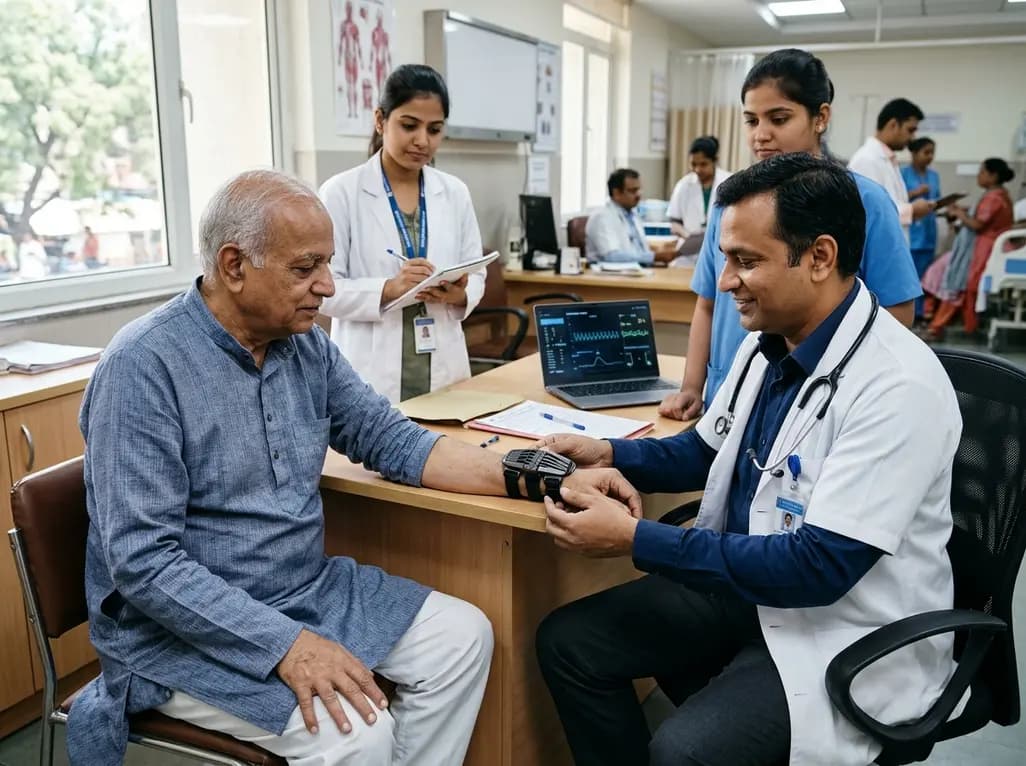
The TREM-AB open-label pilot study evaluated a wearable passive nonlinear vibration absorber for essential tremor. The Nonlinear Energy Sink bracelet reduced clinical Fahn-Tolosa-Marin tremor scores by 32.1% and electrophysiological tremor power by 49.2% with no adverse effects reported.
Today

A study in JAMIA Open shows lightweight open-source reasoning LLMs achieve up to 95% sensitivity and accelerate evidence synthesis screening by nearly twentyfold, presenting a cost-effective, scalable AI solution for biomedical research and systematic reviews.
Today
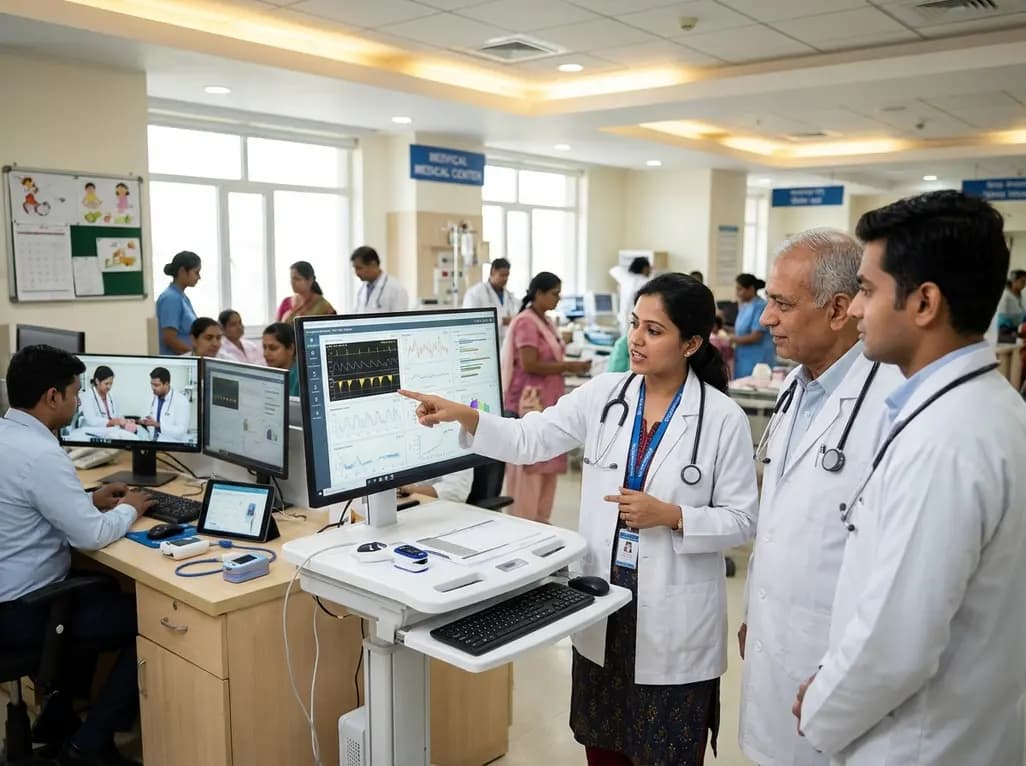
A landmark study details how an enterprise pediatric remote patient management model expanded from a single cardiology pilot to 16 diverse specialty programs by combining centralized digital operations with specialty clinical leadership.
Today

A comparative review of tension band wiring and intramedullary screw fixation in thumb metacarpophalangeal arthrodesis, evaluating union rates, hardware complications, and clinical outcomes.
Today

A breakthrough ultrathin multimodal sensor decouples physical hemodynamic monitoring from disposable electrochemical calibration, achieving long-term wearable glucose prediction with 81.36% accuracy and a 9.12% MARD. This offers a robust, drift-free solution for outpatient metabolic surveillance.
Today
