.webp&w=384&q=75)

Loading, please wait...
Loading, please wait...

Determining the postmortem submergence interval (PMSI) remains a significant challenge for medicolegal death investigators worldwide. A recent retrospective study has provided new insights into how human bodies decompose within anthropogenic aqueous environments. These settings include common household and recreational locations such as swimming pools, bathtubs, and hot tubs. Consequently, understanding these patterns is vital for forensic pathologists in India and globally when investigating drowning or immersion-related deaths.
Researchers examined 79 deceased adults recovered from these specific environments over a ten-year period. The study focused on identifying statistical relationships between the duration of immersion and visible decomposition changes across the head, torso, and limbs. Notably, the mean estimated interval for these cases was approximately 18.33 hours. The findings confirmed that specific physical markers serve as reliable indicators of time since death in water.
The research highlighted that the postmortem submergence interval is significantly related to several key decomposition stages. These include gaseous distension of the face and torso, skin discoloration, and marbling. Furthermore, skin sloughing on the limbs and torso provided measurable data for investigators. However, the study also emphasized that extrinsic and intrinsic factors can shift these timelines significantly. For instance, water temperature in a hot tub accelerates decay far more rapidly than in a standard pool.
Intrinsic covariates such as body mass index (BMI), height, and weight also play unique roles in the decomposition process. In addition, extrinsic factors like clothing and body position influence the onset of advanced changes. Multiple linear regression modeling showed that including these specific moderators improves the accuracy of PMSI estimations. Currently, one model predicts nearly two-thirds of the variance in these intervals, though more data on longer submergence periods is necessary for greater confidence.
Forensic experts must account for the environment's chemical composition, such as chlorine in pools, which can alter bacterial activity. Moreover, the anaerobic nature of submerged decomposition may lead to adipocere formation, which differs from terrestrial decay. Therefore, practitioners should utilize specialized scoring methods like the Total Aquatic Decomposition Score (TADS) alongside environmental data. This comprehensive approach ensures more robust evidence in legal proceedings involving aquatic fatalities.
The PMSI refers to the time elapsed between a body's entry into the water and its eventual recovery. It is a critical component in forensic investigations to establish the timeline of death in aquatic cases.
Water temperature is a primary driver of decay rates. Higher temperatures, such as those in hot tubs, significantly accelerate putrefaction and gaseous distension, whereas cooler pool water typically slows the process.
Yes, both are influential moderating factors. Clothing can provide a protective barrier that slows skin sloughing, while intrinsic factors like BMI affect the rate of gaseous changes and buoyancy.
Disclaimer: This content is for informational and educational purposes only and does not constitute medical or legal advice. It is intended for healthcare professionals and forensic specialists. Refer to the latest local and national guidelines for clinical practice.
References
Lam VC et al. Postmortem submergence interval (PMSI) and human decomposition in anthropogenically constructed aqueous environments (pools, bathtubs, hot tubs, and spas). J Forensic Sci. 2026 Mar 29. doi: 10.1111/1556-4029.70316. PMID: 41906193.
Petrik MS et al. Examination of Factors Surrounding Human Decomposition in Freshwater: A Review of Body Recoveries and Coroner Cases in British Columbia. Canadian Society of Forensic Science Journal. 2004;37(1):9-17.
Kumar A et al. Estimation of postmortem submersion interval using total aquatic decomposition scores of human cadavers from Punjab. J Forensic Sci. 2025 Apr 18. doi: 10.1111/1556-4029.70040.
"
Read summarized clinical updates, watch expert medical content, and earn CME certifications right from your smartphone.
Open your smartphone camera to scan and install.





Recent forensic research analyzes how decomposition in pools and bathtubs relates to the postmortem submergence interval (PMSI) and influencing covariates....
6 months ago
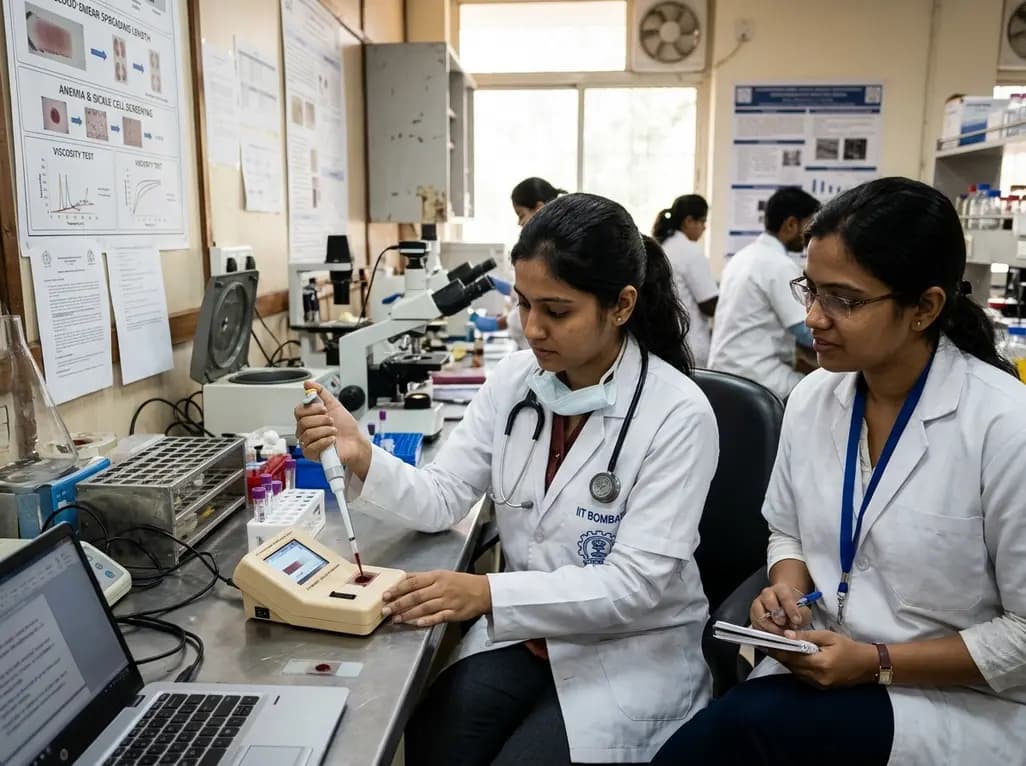
Researchers at IIT Bombay have engineered an automated, cost-effective point-of-care device that diagnoses anaemia and sickle cell disease from a single drop of blood. By measuring blood smear spreading length, this portable tool assesses blood viscosity to offer rapid screening in resource-limited healthcare centers.
Today
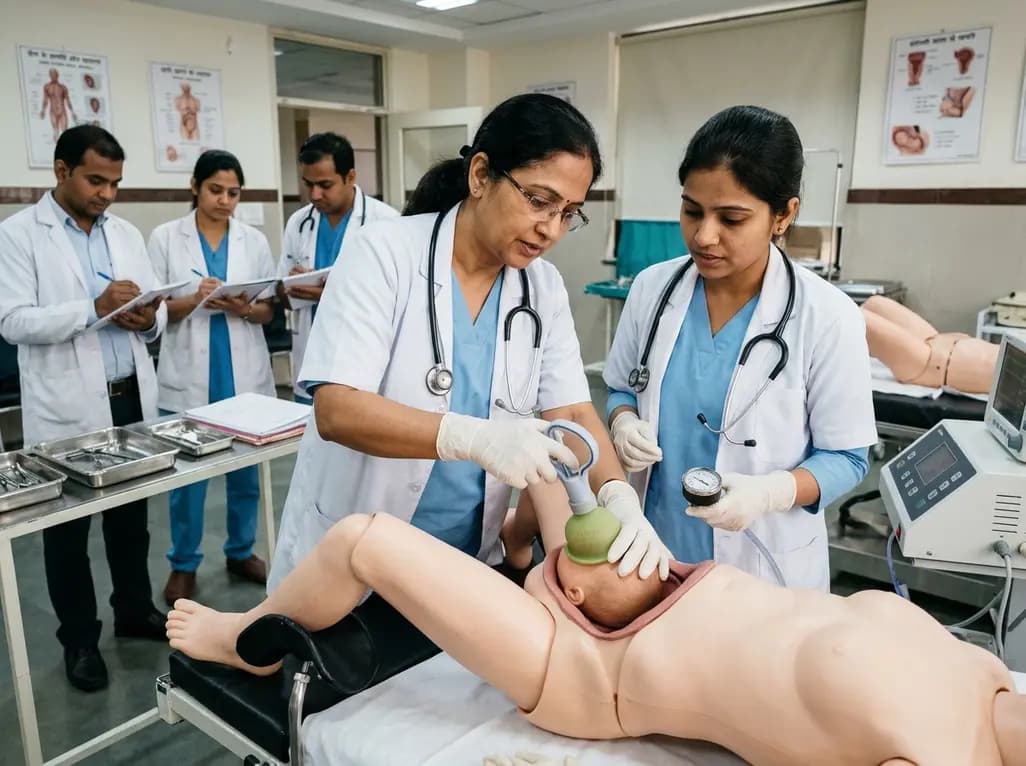
A multicenter study evaluates whether standardized simulation training reduces cup detachment during vacuum-assisted vaginal birth. Evidence-based simulation equips obstetricians to improve cup placement, reduce maternal-fetal trauma, and optimize clinical decision-making during operative deliveries.
Today

A breakthrough ultrathin multimodal sensor decouples physical hemodynamic monitoring from disposable electrochemical calibration, achieving long-term wearable glucose prediction with 81.36% accuracy and a 9.12% MARD. This offers a robust, drift-free solution for outpatient metabolic surveillance.
Today

A comparative review of tension band wiring and intramedullary screw fixation in thumb metacarpophalangeal arthrodesis, evaluating union rates, hardware complications, and clinical outcomes.
Today

Following regulatory scrutiny from FSSAI regarding promotional representations and lean muscle preservation claims, Dr. Reddy's Laboratories and Nestlé Health Science are currently reviewing the branding and marketing strategy for their joint nutritional supplement Celevida GLP+.
Today
