.webp&w=384&q=75)

Loading, please wait...
Loading, please wait...

Clinicians frequently encounter the enlargement of the subarachnoid space (ESS) in infants presenting with macrocephaly. While this condition often causes parental anxiety, recent evidence suggests that most cases remain benign. A significant study recently characterized ventricular measurements to better understand the morphological changes in these children. By evaluating a cohort of 101 children, researchers provided clarity on whether these structural changes necessitate neurosurgical intervention or specialized developmental support.
Researchers utilized the Evans Index (EI), bicaudate index (BCI), and cella media index (CMI) to quantify ventricular size accurately. Interestingly, the study found that these indices were only slightly above or near normal limits for most infants. For instance, males showed a mean EI of 0.30, while females followed closely with a mean of 0.29. Consequently, these findings distinguish ESS from true hydrocephalus, where ventriculomegaly is typically much more pronounced. Furthermore, the mean craniocortical width of approximately 9.92 mm confirms that the fluid accumulation is primarily extra-axial rather than intraventricular.
Although neurosurgical intervention was not required for any child in the cohort, developmental concerns remained prevalent. Specifically, over 56% of patients required speech and language therapy referrals. Additionally, physiotherapy and occupational therapy were necessary for a notable portion of the group. Therefore, the focus of management should shift from surgical monitoring to facilitating developmental potential through pediatric community services. Continued neurosurgical surveillance should be reserved for cases where the diagnosis is uncertain or if signs of raised intracranial pressure emerge.
No, they are different conditions. While hydrocephalus involves increased pressure and significant ventricular enlargement, ESS is usually a benign accumulation of fluid outside the brain with near-normal ventricles.
Data indicates that surgical intervention is rarely, if ever, needed for ESS. Most cases are self-limiting and do not involve raised intracranial pressure.
Many children with ESS exhibit mild developmental delays or macrocephaly-related motor lags. Early referral to speech, physical, or occupational therapy helps them achieve their full developmental potential.
Disclaimer: This content is for informational and educational purposes only. It does not constitute medical advice or a professional relationship. Refer to the latest local and national guidelines for clinical practice.
References
1. Chen SW et al. Ventricular indices in infants with enlargement of the subarachnoid space. J Neurosurg Pediatr. 2026 Apr 10. doi: 10.3171/2025.11.PEDS25305. PMID: 41962159.
2. Zahl SM, et al. Benign external hydrocephalus: a review, with emphasis on management. Neurosurg Rev. 2011;34(4):417-432.
3. Singh M, et al. Evaluation of the Evan's and Bicaudate Index for Rural Population in Central India using Computed Tomography. J Neurosci Rural Pract. 2020;11(1):114-118.

Read summarized clinical updates, watch expert medical content, and earn CME certifications right from your smartphone.
Open your smartphone camera to scan and install.





A study of 101 infants with subarachnoid space enlargement shows mild ventriculomegaly and a high need for therapy but no surgical intervention....
6 months ago
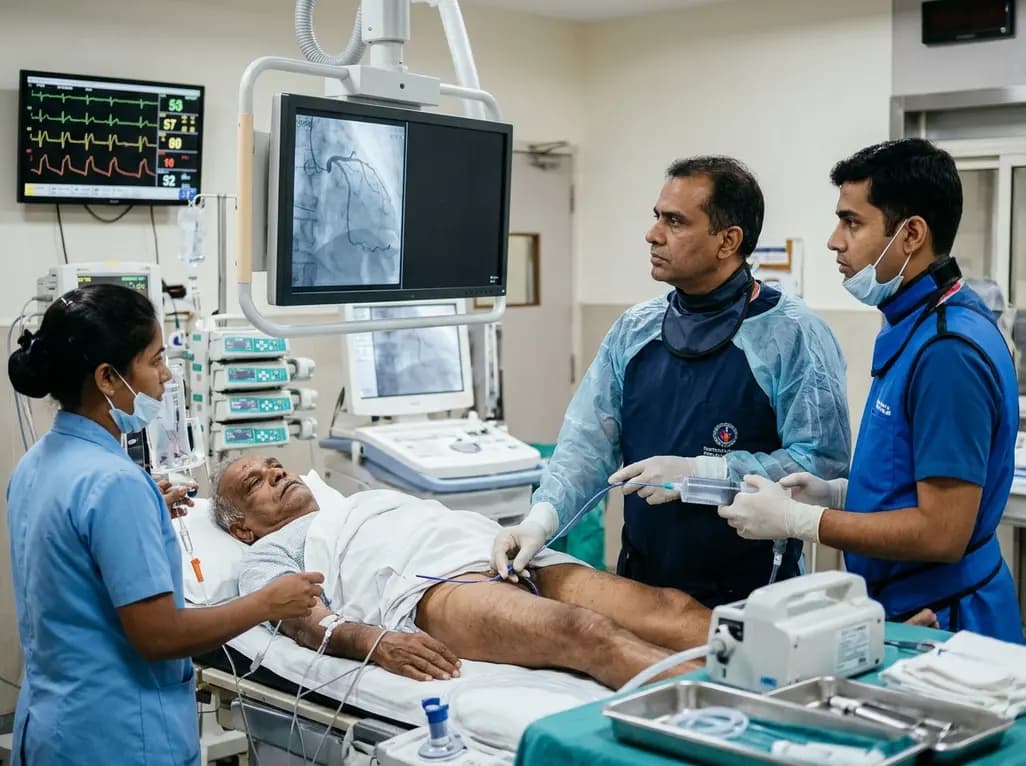
An elderly man with partially repaired Tetralogy of Fallot presented with STEMI caused by coronary embolism rather than atherosclerosis. Successful treatment with sustained mechanical aspiration thrombectomy underscores the vital need for high clinical vigilance in adult congenital heart disease.
Today

Demanding exhaustive hormonal profiling can inadvertently discourage clinical studies involving females. Methodological standards must align with the specific scientific question to expand, not restrict, equitable evidence for women.
Today

A recent study demonstrates that spinal oxygen sensors do not require mitochondrial electron transport to trigger sympathetic excitation during acute hypoxia, revealing new insights into how mitochondrial oxidative stress modulates autonomic tone in cardiovascular and neurological diseases.
Today

A novel calcium polyphosphate coacervate enables injectable bone implants with in situ hierarchical porosity via phase separation and gas foaming, significantly enhancing cell proliferation, energy metabolism, and osteogenic differentiation for minimally invasive bone defect repair.
Today

Following regulatory scrutiny from FSSAI regarding promotional representations and lean muscle preservation claims, Dr. Reddy's Laboratories and Nestlé Health Science are currently reviewing the branding and marketing strategy for their joint nutritional supplement Celevida GLP+.
Today
