.webp&w=384&q=75)

Loading, please wait...
Loading, please wait...

Osteochondral tissues typically possess a very limited capacity for self-healing due to their avascular nature. Consequently, treating degenerative diseases and traumatic injuries remains a complex challenge for clinicians in India and abroad. To address this, osteochondral tissue engineering has emerged as a ground-breaking interdisciplinary solution. This approach effectively combines smart biomaterials, specific cell types, and bioactive molecules to regenerate functional bone and cartilage tissue.
Recently, researchers have turned their attention to electrically conductive materials to mimic the electromechanical properties of native tissues. Carbon-based materials, such as graphene and carbon nanotubes, facilitate superior scaffold-cell interactions. These materials promote critical cellular processes including adhesion, migration, and proliferation. Furthermore, they accelerate both osteogenic and chondrogenic differentiation by providing essential bioelectric cues directly to the injury site.
Metal-oxide nanoparticles also show significant potential for delivering localized electrical stimulation. This technology improves cellular communication and ensures better tissue integration within the host. Similarly, conductive polymers like polyaniline (PANI) and polypyrrole (PPy) offer a unique mix of biocompatibility and mechanical flexibility. Consequently, these polymers serve as excellent candidates for advanced, tunable scaffold designs. By providing both structural and electrical cues, these smart composites represent a new generation of clinical repair strategies.
In addition to structural support, these "smart" scaffolds actively guide cell behavior through electromechanical signaling. Current studies examine how the integration of conductive materials influences the activity of osteocytes and chondrocytes. Therefore, this technology could lead to more durable and clinically effective treatments for complex defects. As the field evolves, these electrically active systems will likely redefine standard orthopedic interventions for joint regeneration.
It uses conductive materials like graphene or specialized polymers within scaffolds to mimic the body\'s natural electrical signals. This stimulation helps cells grow and differentiate into bone or cartilage more effectively.
Carbon-based materials (graphene), metal-oxide nanoparticles, and conductive polymers (PANI, PPy) are highly effective. They offer a balance of electrical conductivity, biocompatibility, and mechanical strength needed for joint repair.
Because cartilage has no blood supply, it cannot heal itself well. These electrically active scaffolds provide the necessary signals and structure to force the regeneration of tissue that would otherwise remain damaged.
Disclaimer: This content is for informational and educational purposes only. It does not constitute medical advice or professional services. Readers should consult with a qualified healthcare professional for specific medical concerns. Refer to the latest local and national guidelines for clinical practice.
References
Yeni ŞB et al. Electrically active biomaterials for osteochondral tissue engineering: a review. J Biomater Sci Polym Ed. 2026 Mar 03. doi: 10.1080/09205063.2026.2638414. PMID: 41774465.
He J, et al. Conductive Scaffolds for Bone Tissue Engineering: Current State and Future Outlook. Biomedicines. 2023.
Semeraro F, et al. Beyond Biomaterials: Engineering Bioactive Hydrogels for Osteochondral Regeneration. Gels. 2025.

Read summarized clinical updates, watch expert medical content, and earn CME certifications right from your smartphone.
Open your smartphone camera to scan and install.





This review explores how electrically active biomaterials like graphene and conductive polymers enhance osteochondral tissue engineering and joint repair....
7 months ago
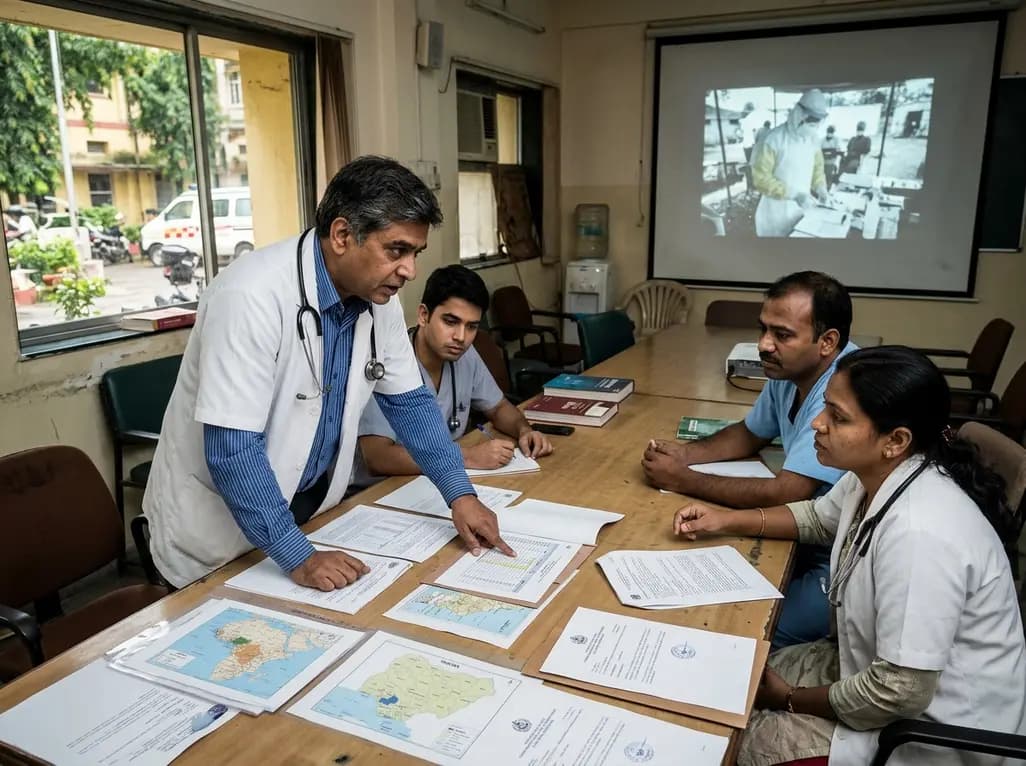
Following Nigeria's first recorded Ebola case linked to regional travel, the Africa CDC has convened an emergency ministerial summit. This alert underscores critical clinical priorities for healthcare professionals, including differentiating early viral infection from malaria, implementing barrier nursing, and triage.
Today

Leucine Rich Bio has introduced South Asia's first comprehensive vaginal microbiome test, BugSpeaks. By profiling microbial dysbiosis, pathogens, and antimicrobial resistance, this next-generation diagnostic platform provides clinicians with deeper insights into recurrent infections, fertility, and reproductive health.
Today

Review how tailored exercise programs benefit frail older patients with heart failure. Explore pathophysiological mechanisms, individualized training prescriptions, and strategies to overcome adherence barriers in clinical practice.
Today

This comparative study evaluates posterior labral tears with and without glenohumeral instability, highlighting distinct demographic patterns, MRI underestimation in stable shoulders, and successful arthroscopic repair outcomes.
Today

A clinical study demonstrates that early intervention with tocilizumab, either as monotherapy or bridged with corticosteroids, achieves significant proptosis reduction and resolves active inflammation in treatment-naive thyroid eye disease.
Today
