.webp&w=384&q=75)

Loading, please wait...
Loading, please wait...

Global health experts are raising alarms as new data links dietary risk factors to a surge in heart-related mortality. In 2023 alone, poor nutrition contributed to 5.91 million cardiovascular deaths. Furthermore, high sodium intake and low fruit consumption emerged as the top culprits. While medical technology improves, the absolute number of lives lost continues to rise due to aging populations and processed food consumption.
The study highlights that China and India bear the heaviest burden. Specifically, India recorded 1.11 million deaths linked to poor diet. Consequently, the analysis indicates that ischaemic heart disease and stroke are the primary outcomes. Additionally, men experience a significantly higher mortality burden compared to women. Therefore, healthcare providers must focus on nutritional counseling as a primary prevention strategy.
Researchers noted that high-income regions struggle mostly with high sodium intake. However, low-income regions face challenges with inadequate fruit and whole grain consumption. For instance, Pacific Island nations see a nutrition transition where processed imports replace local produce. Thus, structural interventions like mandatory food labeling are now essential for public health.
Q1: Which dietary factor is the leading risk for cardiovascular death?
High sodium intake is the primary dietary risk factor globally for cardiovascular disease mortality and disability-adjusted life years (DALYs).
Q2: How many heart-related deaths were attributed to poor diet in India in 2023?
India recorded 1.11 million diet-related cardiovascular deaths, which is the second-highest absolute number of lives lost globally after China.
Disclaimer: This content is for informational and educational purposes only. It does not constitute medical advice or replace professional judgment. Refer to the latest local and national guidelines for clinical practice.
References

Read summarized clinical updates, watch expert medical content, and earn CME certifications right from your smartphone.
Open your smartphone camera to scan and install.





A global analysis reveals that dietary risk factors, primarily high sodium and low fruit intake, caused 5.91 million cardiovascular deaths in 2023....
5 months ago

Recent epidemiological data reveals a dramatic surge in summer heat mortality driven by human-induced climate warming. This analysis explores the pathophysiological impacts on cardiac and renal systems, diagnostic dilemmas in death certification, and essential emergency cooling protocols for acute clinical care.
Today
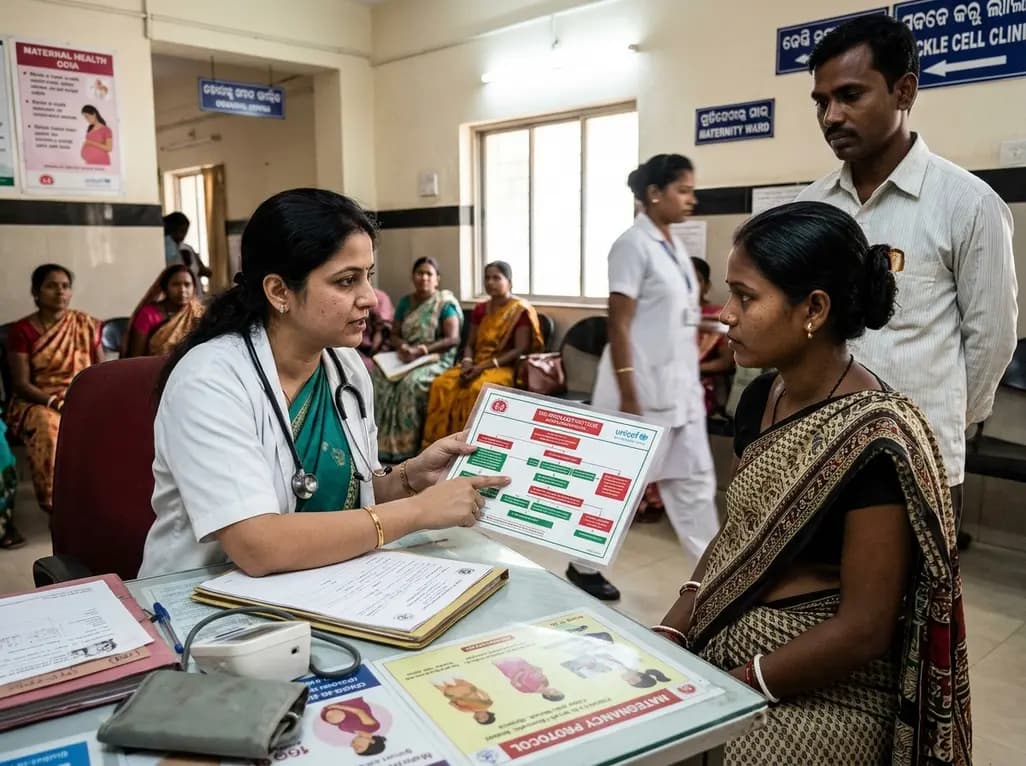
Odisha has established India's first state-level clinical protocol specifically tailored for pregnant women with sickle cell disease. Developed with NHM and UNICEF, the framework provides structured antenatal screening, crisis mitigation, standardized referral pathways, and specialized interdisciplinary care.
Today

India is advancing preventive healthcare by integrating genomics, artificial intelligence, and quantum technologies. With the SANGAM programme sequencing one million Indian genomes, clinicians can unlock personalized therapies, detect cardiometabolic risks early, and curb the burden of diabetes and heart disease.
Today

A randomized controlled trial demonstrates that an eight-week dual-task training intervention significantly improves static and dynamic postural control over standard balance exercises in individuals with chronic ankle instability, addressing critical neurocognitive deficits during athletic and daily activities.
Today

A retrospective cohort study of 7,716 ICU patients from the MIMIC-IV database demonstrates that Gradient Boosting Decision Trees significantly outperform traditional SOFA scores in predicting in-hospital mortality among patients with sepsis and diabetes, with SHAP analysis providing clinical interpretability.
Today
