.webp&w=384&q=75)

Loading, please wait...
Loading, please wait...

The landmark 5-year follow-up data from the DiRECT trial provides clear evidence regarding diabetes remission cost-effectiveness. Recent results show that an intensive weight management program significantly improves long-term health outcomes while reducing overall healthcare costs. Consequently, this intervention offers a sustainable solution for managing Type 2 Diabetes (T2DM) in primary care settings.
Over the five-year period, participants in the intervention arm achieved an average weight loss of 6.1 kg. Furthermore, approximately 10% of these individuals remained in remission from T2DM at the five-year mark. Notably, the total discounted healthcare cost savings per participant amounted to £2,091, excluding the initial intervention costs. Therefore, the program demonstrates both clinical efficacy and financial viability.
The researchers calculated an Incremental Cost-Effectiveness Ratio (ICER) of £13,541 per Quality-Adjusted Life-Year (QALY). This figure falls well below the standard willingness-to-pay thresholds used in many global healthcare systems. Moreover, the probability of the intervention being cost-effective reaches 98% at a £20,000 per QALY threshold. In contrast to standard care, this approach provides more life-years in remission and a better quality of life for patients.
Healthcare providers should consider total diet replacement and structured support as a primary strategy for early T2DM. This model reduces the medication burden, specifically for anti-hypertensive and anti-diabetic drugs. Additionally, the long-term reduction in primary and secondary care contacts offsets the initial costs of the formula diet and practitioner visits. Ultimately, prioritizing weight-mediated remission can transform the economic landscape of diabetes care.
The intervention uses the Counterweight-Plus program, which includes a low-energy formula diet (825–853 kcal/day) for 12–20 weeks, followed by food reintroduction and long-term weight maintenance support.
Yes, the DiRECT trial showed that 10% of participants remained in remission at 5 years, with those maintaining significant weight loss having the highest success rates.
Disclaimer: This content is for informational and educational purposes only and does not constitute medical advice or a professional relationship. Always seek the advice of a qualified healthcare provider for any questions regarding a medical condition. Refer to the latest local and national guidelines for clinical practice.
References
Davies A et al. Cost-effectiveness of the diabetes remission clinical trial (DiRECT)/Counterweight-Plus weight management programme, based on 5-year follow-up. Diabet Med. 2026 Mar 29. doi: 10.1111/dme.70306. PMID: 41904649.
Lean MEJ, et al. 5-year follow-up of the randomised Diabetes Remission Clinical Trial (DiRECT) of continued support for weight loss maintenance in the UK: an extension study. Lancet Diabetes Endocrinol. 2024;12(4):233-246.
Arpan, Singh N, et al. Achieving Diabetes Remission: Current Guidelines and Emerging Pharmacotherapies in India. J Assoc Physicians India 2025;73(10):83-86.

Read summarized clinical updates, watch expert medical content, and earn CME certifications right from your smartphone.
Open your smartphone camera to scan and install.





The 5-year DiRECT trial results prove that intensive weight management for T2DM remission is highly cost-effective, saving £2,091 in healthcare costs per pa...
6 months ago
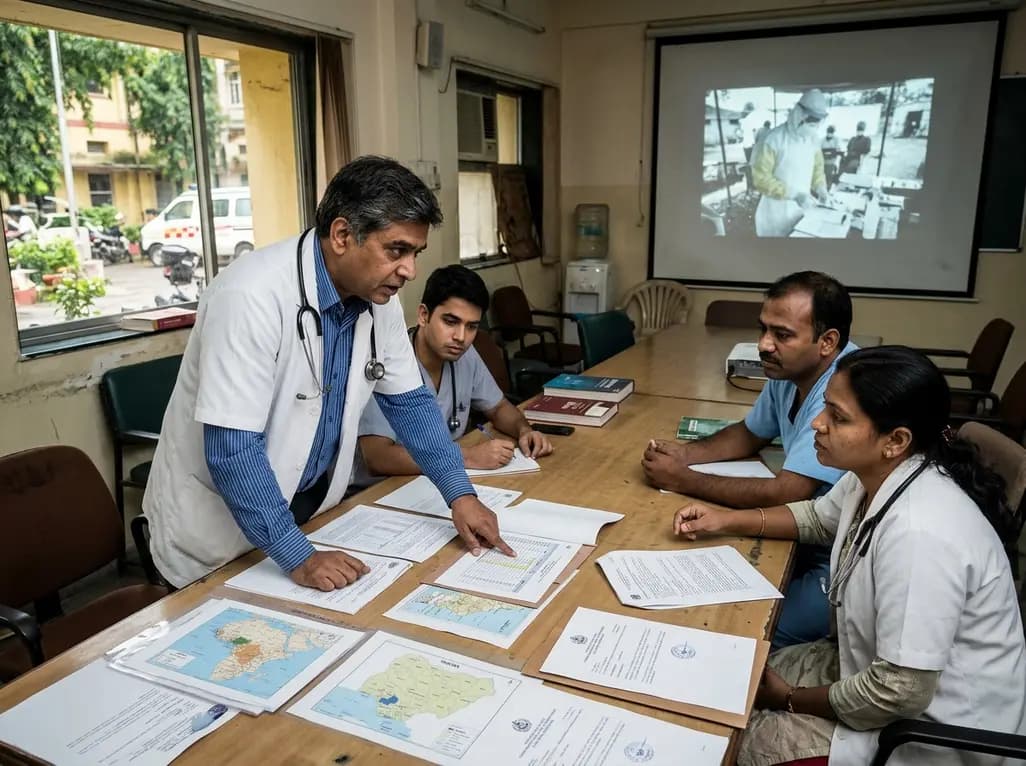
Following Nigeria's first recorded Ebola case linked to regional travel, the Africa CDC has convened an emergency ministerial summit. This alert underscores critical clinical priorities for healthcare professionals, including differentiating early viral infection from malaria, implementing barrier nursing, and triage.
Today

Leucine Rich Bio has introduced South Asia's first comprehensive vaginal microbiome test, BugSpeaks. By profiling microbial dysbiosis, pathogens, and antimicrobial resistance, this next-generation diagnostic platform provides clinicians with deeper insights into recurrent infections, fertility, and reproductive health.
Today

Review how tailored exercise programs benefit frail older patients with heart failure. Explore pathophysiological mechanisms, individualized training prescriptions, and strategies to overcome adherence barriers in clinical practice.
Today

This comparative study evaluates posterior labral tears with and without glenohumeral instability, highlighting distinct demographic patterns, MRI underestimation in stable shoulders, and successful arthroscopic repair outcomes.
Today

A clinical study demonstrates that early intervention with tocilizumab, either as monotherapy or bridged with corticosteroids, achieves significant proptosis reduction and resolves active inflammation in treatment-naive thyroid eye disease.
Today
