.webp&w=384&q=75)

Loading, please wait...
Loading, please wait...

High-resolution fluorescence microscopy serves as a critical tool for modern biological research. However, light scattering often hampers the ability to capture clear images deep within thick specimens. A recent study introduces deep volumetric super-resolution imaging through a novel technique called sparse scanning structured illumination microscopy (SS-SIM). This innovation successfully addresses the penetration depth limits typically encountered in conventional microscopy systems.
The SS-SIM system integrates rapid laser beam scanning with pixel-addressed intensity modulation and sCMOS detection. Consequently, it supports both one-photon and two-photon excitation modes. This flexibility allows researchers to achieve a spatial resolution of approximately 150 nm throughout the specimen. Remarkably, the system maintains a 1.6-fold lateral and 1.7-fold axial resolution enhancement compared to traditional wide-field techniques. Furthermore, the imaging depth reaches up to 600 µm, limited only by the objective's working distance.
Notably, SS-SIM provides a practical route for high-contrast visualization in complex environments. Dense biological samples that were once difficult to resolve are now accessible in three dimensions. Additionally, the system remains robust and simple to implement for various tissue types. Specifically, it expands the applicability of super-resolution to organoids, thick tissues, and small organisms. Therefore, this advancement offers a significant leap for volumetric analysis in regenerative medicine and pathology.
By combining super-resolution performance with deep penetration, SS-SIM facilitates the study of cellular architectures in their native states. Researchers can now observe intricate dynamics within thick specimens without the typical loss of contrast. This capability is particularly useful for oncology research where understanding the 3D tumor microenvironment is essential. Consequently, the technology provides a scalable solution for high-throughput volumetric imaging.
Traditional SIM is often restricted to thin samples due to its high sensitivity to light scattering. In contrast, SS-SIM uses sparse scanning and pixel-addressed modulation to maintain super-resolution at depths of several hundred micrometers.
SS-SIM achieves a lateral spatial resolution of approximately 150 nm. It provides nearly a twofold enhancement in both lateral and axial resolution over standard wide-field microscopy.
Disclaimer: This content is for informational and educational purposes only. It does not constitute medical advice, diagnosis, or treatment. Always seek the advice of your physician or other qualified health provider with any questions you may have regarding a medical condition. Refer to the latest local and national guidelines for clinical practice.
References

Read summarized clinical updates, watch expert medical content, and earn CME certifications right from your smartphone.
Open your smartphone camera to scan and install.





SS-SIM technology achieves 150 nm resolution at depths up to 600 µm, enabling high-contrast volumetric super-resolution imaging in thick biological tissues....
8 months ago

An observational study from the NIH All of Us Research Program reveals that adding a multi-ancestry polygenic risk score to machine learning models provides only modest improvements in predicting adult weight gain, underscoring the enduring significance of routine clinical and lifestyle factors.
Today

A study in JAMIA Open shows lightweight open-source reasoning LLMs achieve up to 95% sensitivity and accelerate evidence synthesis screening by nearly twentyfold, presenting a cost-effective, scalable AI solution for biomedical research and systematic reviews.
Yesterday
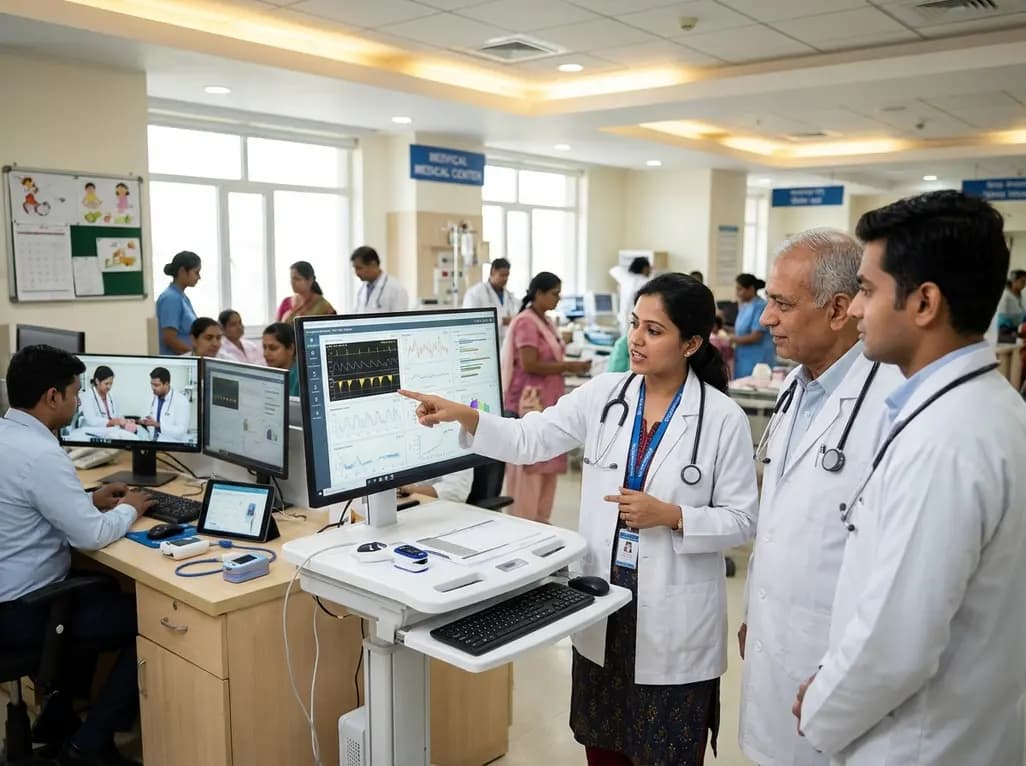
A landmark study details how an enterprise pediatric remote patient management model expanded from a single cardiology pilot to 16 diverse specialty programs by combining centralized digital operations with specialty clinical leadership.
Yesterday

A comparative review of tension band wiring and intramedullary screw fixation in thumb metacarpophalangeal arthrodesis, evaluating union rates, hardware complications, and clinical outcomes.
Yesterday
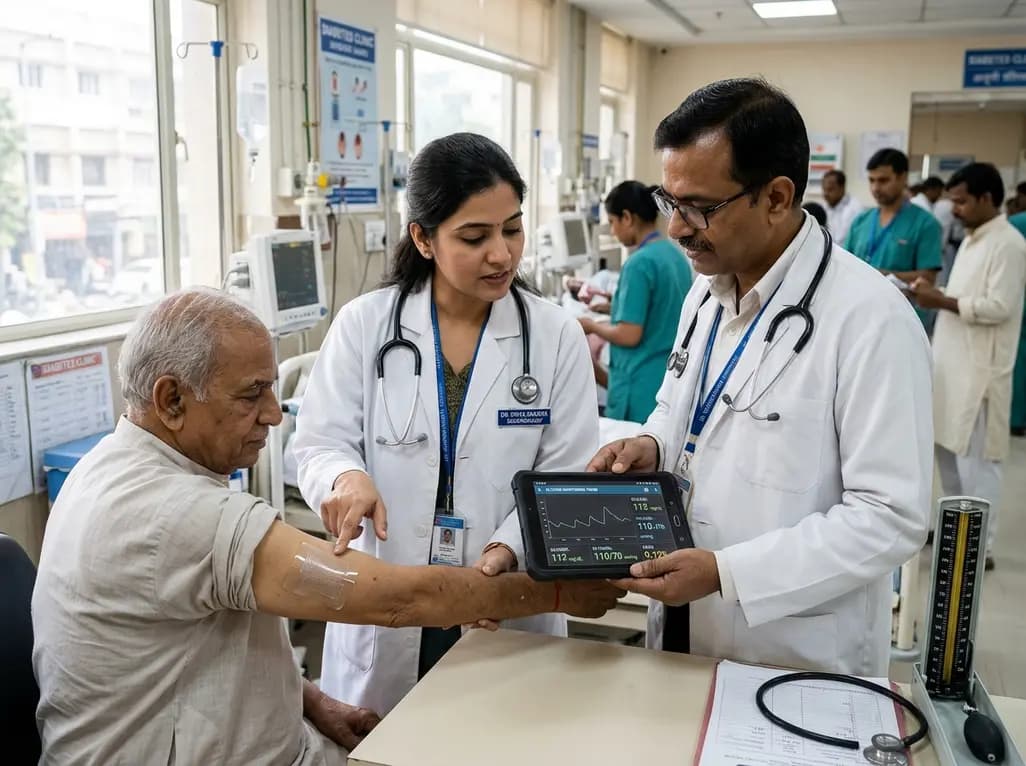
A breakthrough ultrathin multimodal sensor decouples physical hemodynamic monitoring from disposable electrochemical calibration, achieving long-term wearable glucose prediction with 81.36% accuracy and a 9.12% MARD. This offers a robust, drift-free solution for outpatient metabolic surveillance.
Yesterday
