.webp&w=384&q=75)

Loading, please wait...
Loading, please wait...

Complete removal often leads to pulpal exposure, which necessitates more complex treatments like root canals. Modern **deep caries removal methods** focus on maintaining pulp vitality by leaving a thin layer of affected dentin that can be sealed effectively.
Selective excavation is a one-step procedure where the restoration is placed immediately over the remaining affected dentin. Stepwise excavation involves two stages, allowing time for the pulp-dentin complex to react and form protective reparative dentin before the final removal.
Disclaimer: This content is for informational and educational purposes only. It does not constitute medical advice or a professional relationship. Refer to the latest local and national guidelines for clinical practice.
References
Gałan K et al. Treatment methods for deep carious lesions in permanent teeth: A literature review. Dent Med Probl. 2026 Feb 12. doi: 10.17219/dmp/188208. PMID: 41676852.
Schwendicke F, et al. Managing Carious Lesions: Consensus Recommendations on Carious Tissue Removal. Adv Dent Res. 2016;28(2):58-67. doi: 10.1177/0022034516639271.
Bjørndal L, et al. Randomized Clinical Trials on Deep Carious Lesions: 5-Year Follow-up. J Dent Res. 2017;96(7):747-753. doi: 10.1177/0022034517702835.

Read summarized clinical updates, watch expert medical content, and earn CME certifications right from your smartphone.
Open your smartphone camera to scan and install.





A review of deep caries removal methods, comparing selective and stepwise excavation to traditional complete removal to minimize pulp exposure in permanent ...
8 months ago
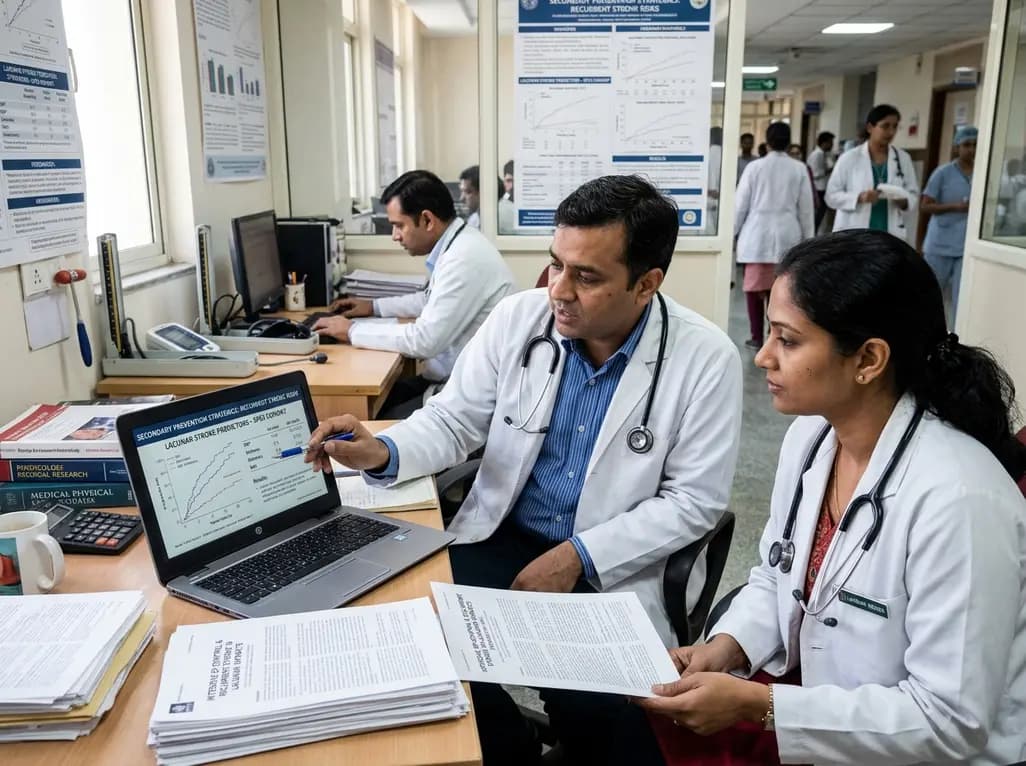
Explore vital recurrent stroke predictors in lacunar stroke patients managed with intensive blood pressure lowering. This analysis examines trial findings from SPS3 to uncover residual vascular risks, metabolic factors, and targeted secondary prevention strategies for high-risk neurological patients.
Today

A comprehensive scoping review synthesises evidence linking prenatal maternal mental health to long-term offspring neurodevelopment, evaluating neuroendocrine, inflammatory, and epigenetic pathways while highlighting clinical screening and future research priorities.
Today

The Directorate General of Health Services directs Indian states to halt the hazardous reuse and reprocessing of single-use medical devices. Discover regulatory implications under the Drugs and Cosmetics Act, critical infection risks, legal liabilities, and operational changes required across clinical specialties.
Today
Mitochondria-targeted nanoparticles self-assembled from EGCG and L-glutamic acid effectively restore mitochondrial homeostasis, suppress synovial inflammation, and attenuate chondrocyte senescence in osteoarthritis, offering a promising disease-modifying nanotherapy.
Today

India is advancing preventive healthcare by integrating genomics, artificial intelligence, and quantum technologies. With the SANGAM programme sequencing one million Indian genomes, clinicians can unlock personalized therapies, detect cardiometabolic risks early, and curb the burden of diabetes and heart disease.
Today
