.webp&w=384&q=75)

Loading, please wait...
Loading, please wait...

Thyroid carcinoma incidence continues to rise globally, making precise preoperative assessment a critical clinical priority. Specifically, identifying capsular invasion and neural invasion (NI) before surgery is essential because these factors determine patient recurrence and survival rates. Traditionally, radiologists have found it difficult to detect these subtle invasive features using conventional imaging alone. However, recent research highlights how CT radiomics thyroid carcinoma machine learning models provide a robust, noninvasive solution for preoperative risk stratification.
Radiomics transforms medical images into high-dimensional, minable data. Consequently, clinicians can extract quantitative features that the human eye might miss. In a retrospective cohort of 111 patients, researchers extracted 111 gray-level co-occurrence matrix features from arterial and venous phase CT scans. Notably, the team selected nine key radiomic features using least absolute shrinkage and selection operator regression. This process ensures that the physical meaning of texture features, such as tumor microstructural heterogeneity, remains preserved.
The study evaluated several diagnostic approaches, including clinical nomograms, random forest (RF) models, and neural networks (NN). Furthermore, the clinical indicator-based nomogram achieved an impressive Area Under the Curve (AUC) of 0.9418 for predicting capsular invasion. Meanwhile, the radiomic-based nomogram also performed strongly, showing an AUC of 0.9334. These results suggest that integrating digital biomarkers with clinical data significantly improves diagnostic accuracy. Therefore, surgeons can use these tools to tailor their approach, potentially reducing the need for aggressive re-operations.
Accurate prediction of neural invasion is vital for maintaining a patient's quality of life after surgery. The multimodal neural network model showed promising stability in identifying NI risk. Consequently, this technology allows for a more personalized treatment plan for patients in India and worldwide. Moreover, the stability of these models was verified using 5-fold cross-validation and bootstrap resampling. By identifying high-risk patients preoperatively, oncologists can ensure more aggressive monitoring or targeted therapies from the outset.
Radiomics uses advanced algorithms to analyze pixel-level data, revealing tumor patterns like heterogeneity that are invisible to the human eye. This provides a more objective and quantitative assessment of tumor aggressiveness than visual inspection alone.
Neural invasion is a pivotal prognostic factor that correlates with higher recurrence rates. Preoperative detection helps surgeons plan nerve-sparing techniques or decide the extent of resection needed to achieve clear margins.
While these models show high diagnostic accuracy, they currently serve as supportive tools. Clinicians should integrate radiomic data with clinical indicators, such as galectin-3 levels, to make the most informed treatment decisions.
Disclaimer: This content is for informational and educational purposes only. It does not constitute medical advice and should not replace professional consultation. Refer to the latest local and national guidelines for clinical practice.
References
1. Cong FF et al. CT Radiomics-Based Machine Learning Model for Predicting Capsular and Neural Invasion in Thyroid Carcinoma: Diagnostic Accuracy Study. JMIR Med Inform. 2026 Mar 12. doi: 10.2196/77349. PMID: 41818775.
2. Yu P et al. Radiomics Analysis of Computed Tomography for Prediction of Thyroid Capsule Invasion in Papillary Thyroid Carcinoma: A Multi-Classifier and Two-Center Study. Front Oncol. 2023;13:1134069.
3. Bhat S et al. Predictive Modelling Using Thyroid Cartilage Segmentation and Radiomic Features: A Feasibility Study. Int J Otolaryngol Head Neck Surg. 2025; DOI: 10.1007/s12070-025-05609-y.
"
Read summarized clinical updates, watch expert medical content, and earn CME certifications right from your smartphone.
Open your smartphone camera to scan and install.





A new study demonstrates that machine learning models using CT radiomics can accurately predict capsular and neural invasion in thyroid carcinoma patients....
7 months ago
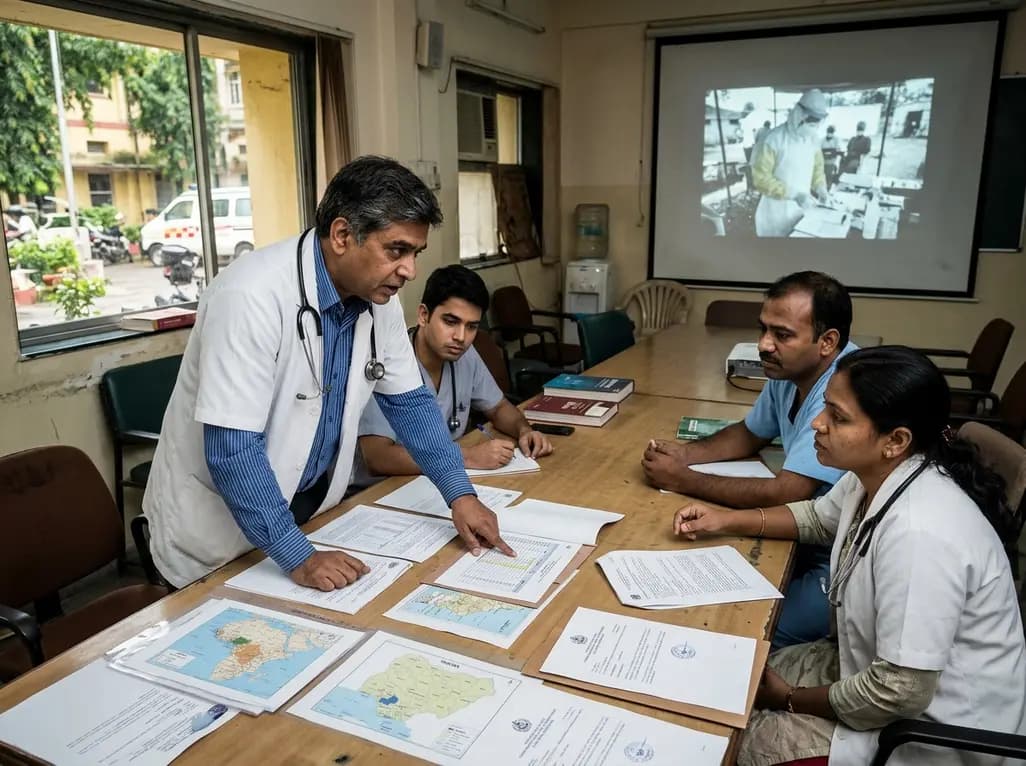
Following Nigeria's first recorded Ebola case linked to regional travel, the Africa CDC has convened an emergency ministerial summit. This alert underscores critical clinical priorities for healthcare professionals, including differentiating early viral infection from malaria, implementing barrier nursing, and triage.
Today

Leucine Rich Bio has introduced South Asia's first comprehensive vaginal microbiome test, BugSpeaks. By profiling microbial dysbiosis, pathogens, and antimicrobial resistance, this next-generation diagnostic platform provides clinicians with deeper insights into recurrent infections, fertility, and reproductive health.
Today

Review how tailored exercise programs benefit frail older patients with heart failure. Explore pathophysiological mechanisms, individualized training prescriptions, and strategies to overcome adherence barriers in clinical practice.
Today

This comparative study evaluates posterior labral tears with and without glenohumeral instability, highlighting distinct demographic patterns, MRI underestimation in stable shoulders, and successful arthroscopic repair outcomes.
Today

A clinical study demonstrates that early intervention with tocilizumab, either as monotherapy or bridged with corticosteroids, achieves significant proptosis reduction and resolves active inflammation in treatment-naive thyroid eye disease.
Today
