.webp&w=384&q=75)

Loading, please wait...
Loading, please wait...

Congenital malformation mortality remains a critical health indicator for pediatric outcomes globally. Recent data from the CDC-WONDER database shows a significant decline in these death rates among U.S. children under five between 1999 and 2023. However, while the overall trend is positive, significant inequities persist among different demographic groups. Consequently, clinicians must prioritize equitable access to prenatal and neonatal care to further reduce these numbers.
The comprehensive 24-year analysis included a total of 143,931 deaths. Researchers found that the overall age-adjusted mortality rate (AAMR) fell from 34.70 in 1999 to 25.95 in 2023. This represents an average annual percentage change (AAPC) of -1.21%. Furthermore, the data suggests that advancements in medical technology and surgical interventions have successfully improved survival rates for many children. Additionally, improved screening protocols likely contributed to earlier detection and management.
Despite the national decline, the study highlights persistent demographic and geographic inequities. Specifically, male children experienced higher mortality rates compared to females throughout the study period. Moreover, children living in non-metropolitan areas exhibited a significantly higher AAMR (34.80) than those in metropolitan areas (29.02). Non-Hispanic American Indian and Alaska Native populations also demonstrated the least decline in mortality. These findings emphasize that geography and ethnicity remain major determinants of health outcomes.
Addressing these disparities requires a multifaceted approach. Public health officials should focus on enhancing healthcare infrastructure in rural regions. Furthermore, policy interventions must aim to reduce barriers for vulnerable populations, particularly Indigenous communities. Improving specialized pediatric outreach can bridge the gap between urban and rural survival rates. Ultimately, targeted interventions are necessary to ensure that the downward trend in mortality reaches all segments of the population equally.
The primary trend is a significant decline in mortality rates among U.S. children under five, with a 25% reduction in the age-adjusted mortality rate over 24 years.
Male children, those residing in rural areas, and individuals from American Indian or Alaska Native backgrounds face the highest mortality risks and slower rates of improvement.
Outcomes can be improved by expanding access to prenatal diagnostic tools, improving neonatal transport systems, and increasing the availability of pediatric specialists in non-metropolitan areas.
Disclaimer: This content is for informational and educational purposes only. It does not constitute medical advice or a professional physician-patient relationship. Refer to the latest local and national guidelines for clinical practice.
References

Read summarized clinical updates, watch expert medical content, and earn CME certifications right from your smartphone.
Open your smartphone camera to scan and install.





This analysis of U.S. CDC data from 1999-2023 reveals a decline in congenital malformation mortality while highlighting critical gaps in rural healthcare ac...
8 months ago

A retrospective cohort study reveals that frailty quadruples the odds of pressure injuries in hospitalized older adults. Integrating the Clinical Frailty Scale with comprehensive geriatric care is crucial for identifying vulnerability early and implementing targeted multidisciplinary prevention.
Today

Occult maternal malignancy accounts for 3.82% of persistent unreportable NIPT results with genomic noise. Multiple chromosomal aberrations, notably on chromosome 18, warrant thorough oncological evaluation and whole-body MRI to ensure timely maternal diagnosis while preserving fetal care.
Today

This article reviews the forensic and clinical complexities of acute myocarditis arising on left ventricular hypertrophy in children, highlighting early diagnostic red flags and multidisciplinary postmortem autopsy protocols.
Today
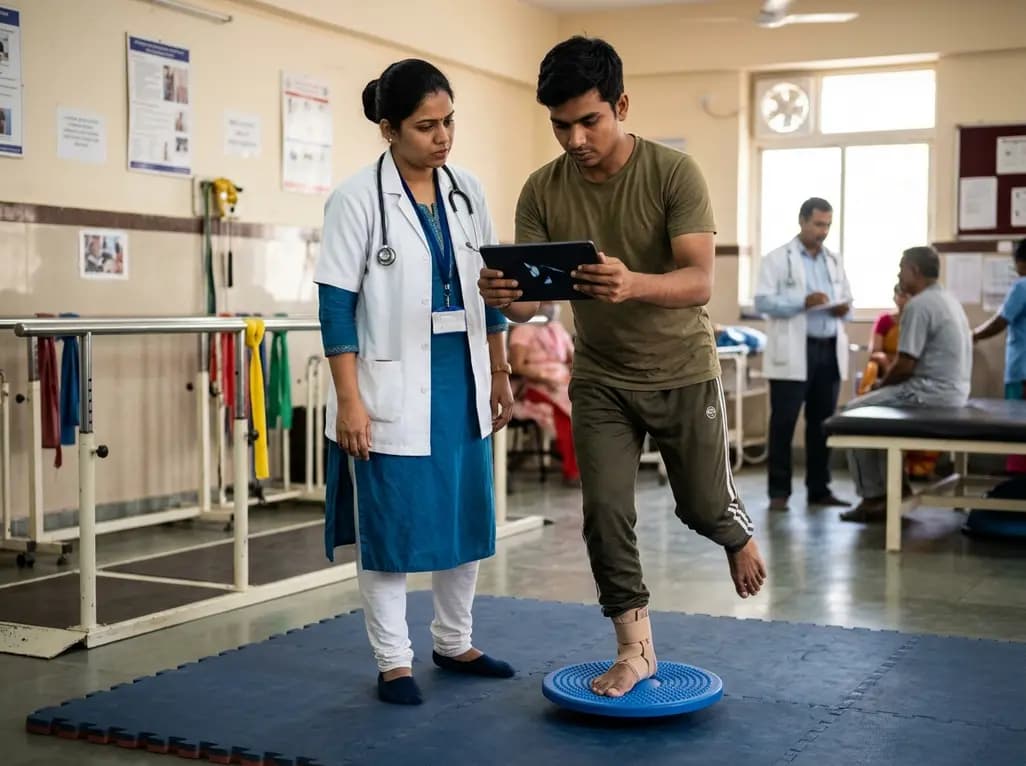
A randomized controlled trial demonstrates that an eight-week dual-task training intervention significantly improves static and dynamic postural control over standard balance exercises in individuals with chronic ankle instability, addressing critical neurocognitive deficits during athletic and daily activities.
Today

A retrospective cohort study of 7,716 ICU patients from the MIMIC-IV database demonstrates that Gradient Boosting Decision Trees significantly outperform traditional SOFA scores in predicting in-hospital mortality among patients with sepsis and diabetes, with SHAP analysis providing clinical interpretability.
Today
