.webp&w=384&q=75)

Loading, please wait...
Loading, please wait...

Hybrid ESD (H-ESD) typically results in lower en-bloc resection rates compared to Conventional ESD (C-ESD). In recent community hospital data, C-ESD achieved a 73% en-bloc rate, whereas H-ESD achieved 51%, though both techniques showed similar recurrence rates for non-malignant lesions.
The learning curve significantly impacts procedural efficiency. Studies indicate that after approximately 45 procedures, the mean time for colorectal ESD can decrease by nearly 50%, dropping from over 100 minutes to roughly 54 minutes as the operator becomes proficient.
Disclaimer: This content is for informational and educational purposes only. It does not constitute professional medical advice, diagnosis, or treatment. Always seek the advice of your physician or other qualified health provider with any questions you may have regarding a medical condition. Refer to the latest local and national guidelines for clinical practice.
References
Balanis T et al. Endoscopic Submucosal Dissection for Colorectal Lesions in a Community-based European Hospital: Experience and Learning Curve. J Gastrointestin Liver Dis. 2026 Mar 27. doi: 10.15403/jgld-6540. PMID: 41894717.
Ferlitsch M, et al. Colorectal polypectomy and endoscopic mucosal resection (EMR): European Society of Gastrointestinal Endoscopy (ESGE) Clinical Guideline – Update 2024. Endoscopy. 2024;56.
Spychalski M, et al. Colorectal endoscopic submucosal dissection (ESD) in the West - when can satisfactory results be obtained? A single-operator learning curve analysis. Scand J Gastroenterol. 2017 Dec;52(12):1442-1452.

Read summarized clinical updates, watch expert medical content, and earn CME certifications right from your smartphone.
Open your smartphone camera to scan and install.





A Swiss study evaluates the outcomes and learning curve of Conventional vs. Hybrid ESD for colorectal lesions in a regional hospital setting....
6 months ago

Review how tailored exercise programs benefit frail older patients with heart failure. Explore pathophysiological mechanisms, individualized training prescriptions, and strategies to overcome adherence barriers in clinical practice.
Today

Leucine Rich Bio has introduced South Asia's first comprehensive vaginal microbiome test, BugSpeaks. By profiling microbial dysbiosis, pathogens, and antimicrobial resistance, this next-generation diagnostic platform provides clinicians with deeper insights into recurrent infections, fertility, and reproductive health.
Today
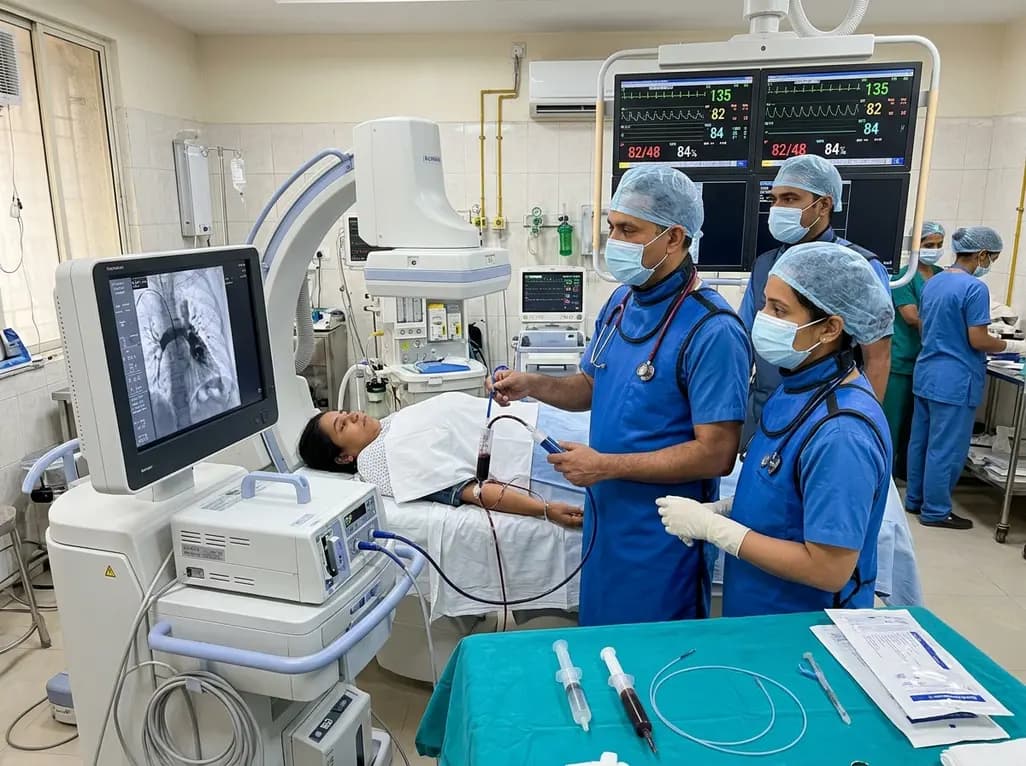
In high-risk pulmonary embolism complicated by severe anemia and active uterine bleeding, systemic thrombolysis is contraindicated. Large-bore aspiration thrombectomy provides rapid hemodynamic rescue without fibrinolysis, supported by inferior vena cava filter placement and multidisciplinary critical care.
Today

This comparative study evaluates posterior labral tears with and without glenohumeral instability, highlighting distinct demographic patterns, MRI underestimation in stable shoulders, and successful arthroscopic repair outcomes.
Today

A clinical study demonstrates that early intervention with tocilizumab, either as monotherapy or bridged with corticosteroids, achieves significant proptosis reduction and resolves active inflammation in treatment-naive thyroid eye disease.
Today
