.webp&w=384&q=75)

Loading, please wait...
Loading, please wait...

As minimally invasive surgery continues to evolve, maintaining CO2 laparoscopic pneumoperitoneum safety has become a cornerstone of surgical success. Carbon dioxide remains the standard gas for creating the necessary workspace in the abdominal cavity. However, its physiological impact requires precise management to avoid systemic complications. Recent bibliometric analyses highlight that research now focuses on optimizing pressure and improving monitoring technologies to safeguard patients during complex procedures.
Modern surgical suites are integrating intelligent monitoring tools to enhance patient outcomes. Therefore, innovators are developing multi-channel constant-pressure insufflators and integrated humidification systems. These tools aim to mitigate the risks of hypothermia and postoperative pain. Furthermore, clinical evidence suggests that gas pretreatment—specifically heating and humidifying the CO2—can significantly improve the recovery profile. Although some benefits remain under debate, the move toward automated regulation represents a major leap in surgical precision.
The establishment of a pneumoperitoneum affects multiple organ systems simultaneously. For instance, increased intra-abdominal pressure can lead to cardiovascular compression and altered respiratory mechanics. Consequently, anesthesia protocols now emphasize dynamic end-tidal carbon dioxide monitoring. Recent studies also indicate that high-pressure settings may elevate intracranial pressure, suggesting that ultra-low pressure strategies in robotic surgery might offer a safer alternative. By understanding these multi-system interactions, surgeons can better tailor their approach to individual patient needs.
Research indicates that using heated and humidified CO2 helps maintain core body temperature. Consequently, this can reduce postoperative pain and may lower the incidence of adhesion formation compared to cold, dry gas.
High-pressure settings can cause hemodynamic instability, hypercapnia, and increased intracranial pressure. Surgeons are increasingly exploring ultra-low pressure techniques to minimize these physiological stressors.
Disclaimer: This content is for informational and educational purposes only. It does not constitute medical advice or a substitute for professional healthcare consultation. Refer to the latest local and national guidelines for clinical practice.
References
He J et al. Carbon dioxide laparoscopic technology: Research hotspots and innovations in pneumoperitoneum detection. Med Gas Res. 2026 Mar 26. doi: 10.4103/mgr.MEDGASRES-D-25-00206. PMID: 41888042.
Saito T, et al. Physiological impacts of carbon dioxide pneumoperitoneum in minimally invasive surgery. Journal of Surgical Research. 2024;291:112-120.
Miller K, et al. Advances in robotic-assisted laparoscopic monitoring and pressure regulation. International Journal of Surgery. 2025;102:45-53.
"
Read summarized clinical updates, watch expert medical content, and earn CME certifications right from your smartphone.
Open your smartphone camera to scan and install.





A comprehensive review of the latest hotspots in CO2 laparoscopic technology, focusing on surgical safety, monitoring innovations, and patient outcomes....
6 months ago

A retrospective cohort study of 7,716 ICU patients from the MIMIC-IV database demonstrates that Gradient Boosting Decision Trees significantly outperform traditional SOFA scores in predicting in-hospital mortality among patients with sepsis and diabetes, with SHAP analysis providing clinical interpretability.
Today
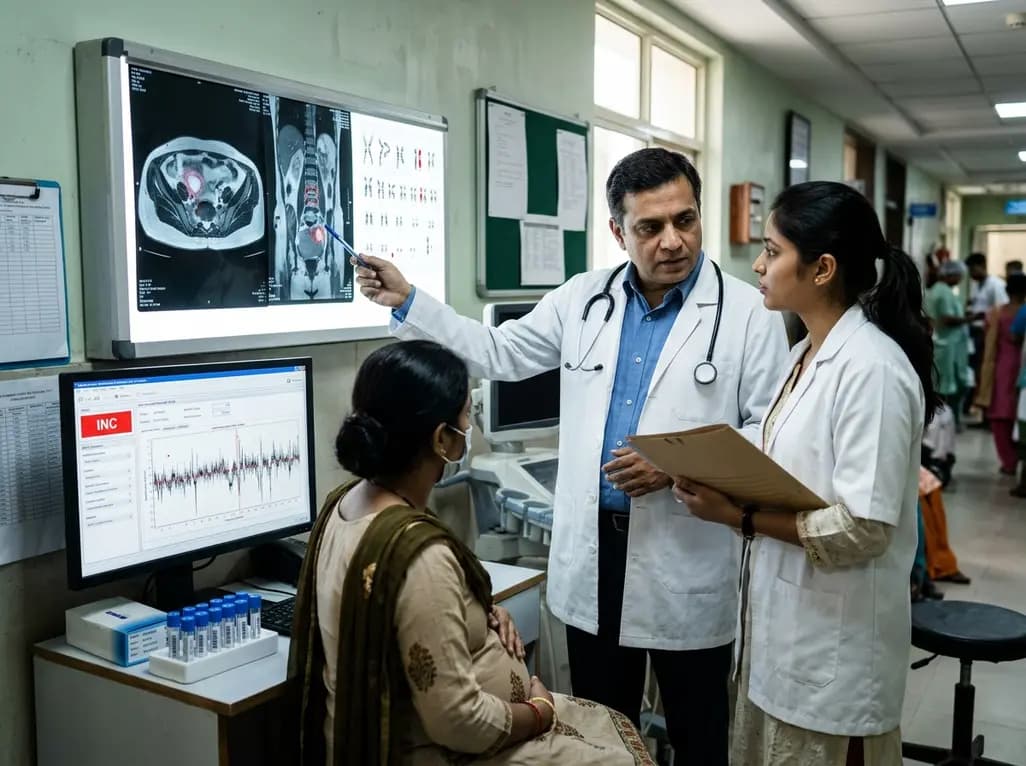
Occult maternal malignancy accounts for 3.82% of persistent unreportable NIPT results with genomic noise. Multiple chromosomal aberrations, notably on chromosome 18, warrant thorough oncological evaluation and whole-body MRI to ensure timely maternal diagnosis while preserving fetal care.
Today

This article reviews the forensic and clinical complexities of acute myocarditis arising on left ventricular hypertrophy in children, highlighting early diagnostic red flags and multidisciplinary postmortem autopsy protocols.
Today

This comparative study evaluates posterior labral tears with and without glenohumeral instability, highlighting distinct demographic patterns, MRI underestimation in stable shoulders, and successful arthroscopic repair outcomes.
Yesterday

A clinical study demonstrates that early intervention with tocilizumab, either as monotherapy or bridged with corticosteroids, achieves significant proptosis reduction and resolves active inflammation in treatment-naive thyroid eye disease.
Yesterday
