.webp&w=384&q=75)

Loading, please wait...
Loading, please wait...

Myotonic dystrophy type 1 (DM1) is a progressive, multi-systemic genetic disorder. It primarily affects skeletal and smooth muscles, the heart, eyes, and the brain. While no disease-modifying therapies currently exist, understanding the myotonic dystrophy type 1 burden is crucial for improving patient outcomes. A recent claims-based study in the United States sheds light on the significant clinical and economic challenges faced by these patients.
The study analyzed data from over 1,300 individuals diagnosed with DM1. Researchers observed that most patients experience a wide range of complications within seven years of diagnosis. These include neurological, gastrointestinal, cardiac, and pulmonary issues. Specifically, patients frequently require specialized care for muscle weakness and respiratory failure. Furthermore, the complexity of DM1 often leads to increased emergency room visits and hospital admissions.
The economic impact of DM1 is substantial, with a mean annual total cost of care exceeding $20,000 per patient. These costs largely stem from inpatient hospitalizations and outpatient specialty visits. Cardiac and pulmonary complications are the primary drivers of high-cost status. Consequently, early identification of these risks can help clinicians manage the disease more effectively. Proactive surveillance for arrhythmias and respiratory insufficiency remains a cornerstone of multidisciplinary care.
Patients with DM1 utilize a broad spectrum of healthcare resources. The study found that approximately 24% of patients visited the emergency room annually. Additionally, 15% required inpatient care. Specialty care is vital, with cardiology, neurology, and rehabilitation being the most frequently visited departments. The use of medical devices, such as noninvasive ventilators and assistive walking aids, further highlights the intensive management needed for this population.
Multivariable regression analysis identified several predictors for becoming a high-cost patient. Cardiac involvement, such as conduction abnormalities, significantly increases the likelihood of expensive interventions. Similarly, pulmonary complications often require costly respiratory support. Therefore, clinicians should prioritize early screening for these specific organ systems to mitigate the long-term clinical and economic burden.
DM1 is a multi-systemic disease that affects the skeletal muscles, heart, lungs, eyes, brain, and gastrointestinal system. Common symptoms include muscle wasting, cardiac arrhythmias, and respiratory failure.
Early management is essential because patients can progress to severe cardiac or pulmonary complications. Proactive care helps address these risks before they lead to emergency visits or high-cost hospitalizations.
The high cost of care is primarily driven by frequent inpatient hospital stays and the management of cardiac and respiratory complications. The need for specialized medical devices also contributes to the overall expense.
Disclaimer: This content is for informational and educational purposes only. It does not constitute medical advice or establish a doctor-patient relationship. Always seek the advice of a qualified healthcare provider for any medical condition. Refer to the latest local and national guidelines for clinical practice.
References
Hamel JI et al. Clinical and healthcare burden of myotonic dystrophy type 1 (DM1) in the United States: a claims-based study. J Med Econ. 2026 Dec undefined. doi: 10.1080/13696998.2026.2633923. PMID: 41764034.
Myotonic Dystrophy Foundation. Consensus-based Care Recommendations for Adults with Myotonic Dystrophy Type 1. Available at: https://www.myotonic.org/clinical-resources.
Ashizawa T, et al. Evidence-based care considerations for individuals with myotonic dystrophy type 1. Neurology. 2018;91(16):741-753.

Read summarized clinical updates, watch expert medical content, and earn CME certifications right from your smartphone.
Open your smartphone camera to scan and install.





A comprehensive study explores the US-based clinical and economic burden of DM1, highlighting the impact of multisystem involvement and high costs of care....
7 months ago

Researchers at IIT Bombay have engineered an automated, cost-effective point-of-care device that diagnoses anaemia and sickle cell disease from a single drop of blood. By measuring blood smear spreading length, this portable tool assesses blood viscosity to offer rapid screening in resource-limited healthcare centers.
Today

A multicenter study evaluates whether standardized simulation training reduces cup detachment during vacuum-assisted vaginal birth. Evidence-based simulation equips obstetricians to improve cup placement, reduce maternal-fetal trauma, and optimize clinical decision-making during operative deliveries.
Today
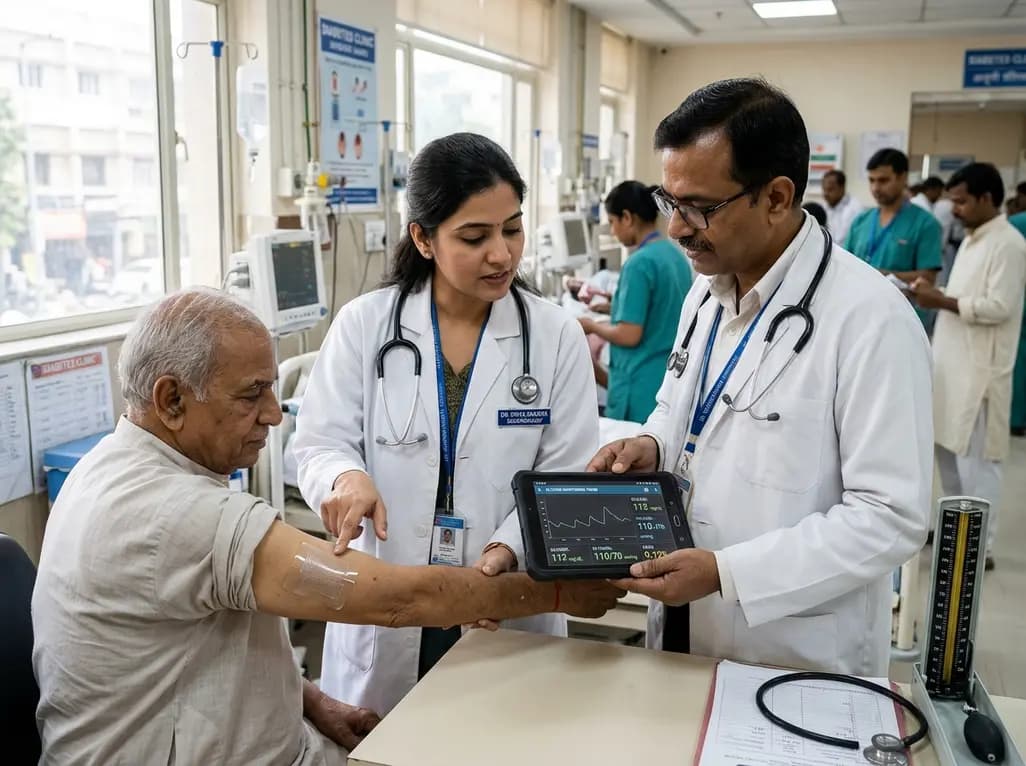
A breakthrough ultrathin multimodal sensor decouples physical hemodynamic monitoring from disposable electrochemical calibration, achieving long-term wearable glucose prediction with 81.36% accuracy and a 9.12% MARD. This offers a robust, drift-free solution for outpatient metabolic surveillance.
Today

A comparative review of tension band wiring and intramedullary screw fixation in thumb metacarpophalangeal arthrodesis, evaluating union rates, hardware complications, and clinical outcomes.
Today

Following regulatory scrutiny from FSSAI regarding promotional representations and lean muscle preservation claims, Dr. Reddy's Laboratories and Nestlé Health Science are currently reviewing the branding and marketing strategy for their joint nutritional supplement Celevida GLP+.
Today
