.webp&w=384&q=75)

Loading, please wait...
Loading, please wait...

Recent clinical evidence suggests a transformative role for CKM therapy in T1D and chronic kidney disease (CKD). Patients with Type 1 diabetes often face high risks of renal and cardiovascular complications. Consequently, researchers investigated the off-label use of GLP-1RA and SGLT2i therapies in this population. A large-scale analysis of US database records from 2016 to 2023 provides new insights. Interestingly, more than 10% of adults with T1D and CKD were already utilizing these therapies. The primary focus was the impact on the urinary albumin-to-creatinine ratio (UACR). Notably, patients on CKM therapy experienced a 30% reduction in UACR faster than controls (HR 0.76).
Safety remains a paramount concern for clinicians. Specifically, the risk of diabetic ketoacidosis (DKA) has historically limited SGLT2i use in T1D. However, this study found no increase in DKA or hypoglycemia rates among users. Therefore, these findings support the potential for integrating CKM therapies into T1D management. Furthermore, the reduction in albuminuria suggests a strong renal-protective effect. Clinicians must still follow local guidelines when prescribing these agents and monitor patients closely for metabolic changes.
In this study, CKM therapy (SGLT2i and GLP-1RA) did not increase the risk of diabetic ketoacidosis or hypoglycemia. However, patients should still be monitored closely due to historical risks associated with these drug classes in T1D.
Reducing the urinary albumin-to-creatinine ratio (UACR) is a clinical marker of improved kidney health. It often correlates with a slower progression toward end-stage renal disease (ESRD).
Disclaimer: This content is for informational and educational purposes only. It does not constitute medical advice or establish a doctor-patient relationship. Refer to the latest local and national guidelines for clinical practice.
References
Caramori ML et al. Cardio-Kidney-Metabolic Therapy Use Among Adults With Type 1 Diabetes and Chronic Kidney Disease. Diabetes Obes Metab. 2026 Mar 12. doi: 10.1111/dom.70640. PMID: 41816887.
American Diabetes Association. Standards of Care in Diabetes—2024. Diabetes Care. 2024;47(Suppl. 1):S1-S321.
KDIGO 2024 Clinical Practice Guideline for Diabetes Management in Chronic Kidney Disease. Kidney International. 2024;105(4S):S1-S103.

Read summarized clinical updates, watch expert medical content, and earn CME certifications right from your smartphone.
Open your smartphone camera to scan and install.





A large US database study shows CKM therapy in T1D and CKD is associated with UACR reduction and safe use regarding DKA and hypoglycemia....
7 months ago

The TREM-AB open-label pilot study evaluated a wearable passive nonlinear vibration absorber for essential tremor. The Nonlinear Energy Sink bracelet reduced clinical Fahn-Tolosa-Marin tremor scores by 32.1% and electrophysiological tremor power by 49.2% with no adverse effects reported.
Today

A study in JAMIA Open shows lightweight open-source reasoning LLMs achieve up to 95% sensitivity and accelerate evidence synthesis screening by nearly twentyfold, presenting a cost-effective, scalable AI solution for biomedical research and systematic reviews.
Today
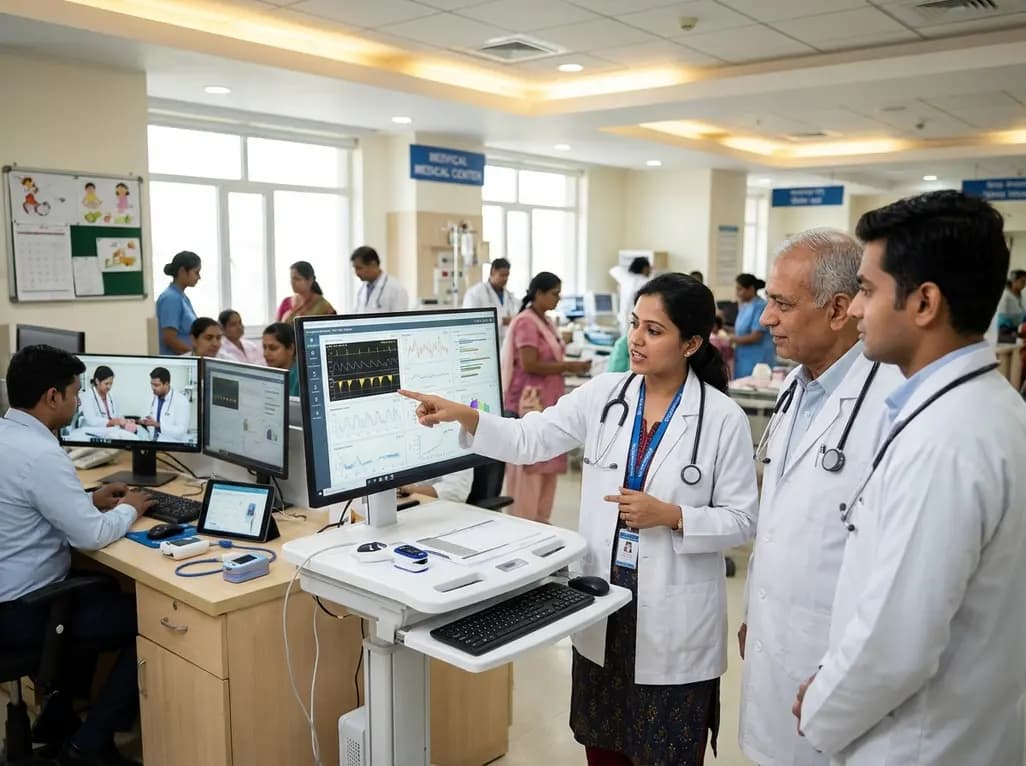
A landmark study details how an enterprise pediatric remote patient management model expanded from a single cardiology pilot to 16 diverse specialty programs by combining centralized digital operations with specialty clinical leadership.
Today

A comparative review of tension band wiring and intramedullary screw fixation in thumb metacarpophalangeal arthrodesis, evaluating union rates, hardware complications, and clinical outcomes.
Today

A breakthrough ultrathin multimodal sensor decouples physical hemodynamic monitoring from disposable electrochemical calibration, achieving long-term wearable glucose prediction with 81.36% accuracy and a 9.12% MARD. This offers a robust, drift-free solution for outpatient metabolic surveillance.
Today
