.webp&w=384&q=75)

Loading, please wait...
Loading, please wait...

Child motor competence development plays a fundamental role in establishing healthy habits early in life. A recent longitudinal study involving 578 children explored how actual movement skills and personal perceptions influence activity levels. Specifically, the researchers focused on the mediational role of physical literacy over two distinct time points. Consequently, they found that a child's confidence in their movement acts as a primary driver for sustained physical engagement.
Therefore, the results indicated that motor competence and physical activity linked primarily through the mediation of perceived physical literacy. While these variables showed some association at the start, positive correlations across all factors became significantly more robust over time. Furthermore, the study highlights that children who feel physically competent are more likely to meet global activity recommendations. Additionally, clinicians should focus on building both tangible physical skills and psychological confidence during routine pediatric visits. By encouraging this dual approach, healthcare providers can better support long-term health outcomes in the pediatric population.
Clinicians can encourage diverse physical activities that focus on fundamental movement skills. By fostering a supportive environment, they help children improve their perceived physical literacy and overall activity levels.
The longitudinal design allows researchers to see how relationships between skill and activity evolve as children grow. It shows that as children age, their self-perception becomes a stronger and more stable mediator for physical activity habits.
Disclaimer: This content is for informational and educational purposes only. It does not constitute professional medical advice, diagnosis, or treatment. Always seek the advice of your physician or other qualified health provider with any questions you may have regarding a medical condition. Refer to the latest local and national guidelines for clinical practice.
References
Ortega-Benavent N et al. The Mediational Role of Perceived Physical Literacy: A Longitudinal Study From a Motor Development Perspective. Percept Mot Skills. 2026 Feb 11. doi: 10.1177/00315125261425761. PMID: 41669915.
Bull FC, et al. World Health Organization 2020 guidelines on physical activity and sedentary behaviour. Br J Sports Med. 2020;54(24):1451-1462.
Bhawra J, et al. The 2022 India Report Card on physical activity for children and adolescents. J Phys Act Health. 2022;19(11):729-738.

Read summarized clinical updates, watch expert medical content, and earn CME certifications right from your smartphone.
Open your smartphone camera to scan and install.





A longitudinal study examines how perceived physical literacy mediates the relationship between motor competence and physical activity in children....
8 months ago

Following regulatory scrutiny from FSSAI regarding promotional representations and lean muscle preservation claims, Dr. Reddy's Laboratories and Nestlé Health Science are currently reviewing the branding and marketing strategy for their joint nutritional supplement Celevida GLP+.
Today
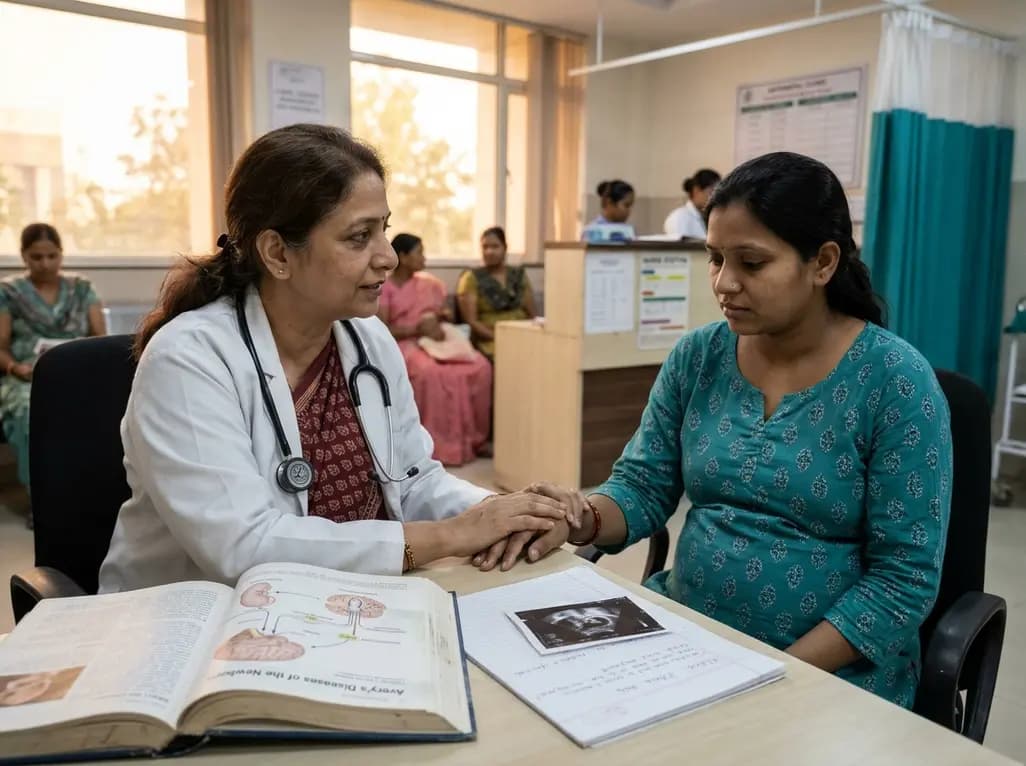
A comprehensive scoping review synthesises evidence linking prenatal maternal mental health to long-term offspring neurodevelopment, evaluating neuroendocrine, inflammatory, and epigenetic pathways while highlighting clinical screening and future research priorities.
Today

The Directorate General of Health Services directs Indian states to halt the hazardous reuse and reprocessing of single-use medical devices. Discover regulatory implications under the Drugs and Cosmetics Act, critical infection risks, legal liabilities, and operational changes required across clinical specialties.
Today

A 25-year multi-institutional cohort reveals high recurrence rates in pediatric giant cell tumor of bone, particularly in patients with open physes and bone marrow edema on preoperative MRI. Early surveillance and careful balance between growth plate preservation and tumor clearance are essential.
Today

India is advancing preventive healthcare by integrating genomics, artificial intelligence, and quantum technologies. With the SANGAM programme sequencing one million Indian genomes, clinicians can unlock personalized therapies, detect cardiometabolic risks early, and curb the burden of diabetes and heart disease.
Today
