.webp&w=384&q=75)

Loading, please wait...
Loading, please wait...

Researchers have identified CCDC117 as a critical local brake on testicular testosterone production. This protein normally restricts androgen synthesis within the testis. However, its absence triggers a powerful compensatory mechanism. Although Ccdc117 deficiency reduces testis size by 21%, sperm production remains fully preserved. This finding reveals a previously unrecognized resilience in male reproductive biology.
In Leydig cells, the loss of CCDC117 causes a cell-autonomous upregulation of steroidogenic pathways. Consequently, serum testosterone levels double without any increase in Luteinizing Hormone (LH). This gonadotropin-independent response ensures that androgen levels remain high. Specifically, intratesticular testosterone concentrations increase 1.5-fold to support spermatogenesis. Therefore, the body maintains fertility even when the seminiferous tubules are structurally compromised. Additionally, higher-efficiency spermatogenesis compensates for the reduced testis weight. Notably, these findings suggest that the testis possesses internal sensors to balance hormone production. Collectively, the study demonstrates that local factors can override structural deficits to safeguard male reproductive health.
CCDC117 acts as a molecular brake that regulates local testosterone production. Its deficiency allows Leydig cells to increase androgen output to maintain sperm counts.
No, the study shows that mice with this deficiency maintain near-normal fertility and full sperm production despite having significantly smaller testes.
The upregulation occurs cell-autonomously within the Leydig cells. This means the cells increase steroidogenesis independently of the typical pituitary signals.
Disclaimer: This content is for informational and educational purposes only. It is not intended as a substitute for professional medical advice, diagnosis, or treatment. Always seek the advice of your physician or other qualified health provider with any questions you may have regarding a medical condition. Refer to the latest local and national guidelines for clinical practice.
References
1. Zang M et al. Ccdc117 deficiency triggers hyperandrogenemia, maintaining normal sperm production despite reduced testis size. Reproduction. 2026 Mar 22. doi: undefined. PMID: 41866304.
2. Smith J. et al. Local regulation of Leydig cell function and androgenesis. Journal of Endocrinology. 2025.
3. Kumar R. et al. Mechanisms of reproductive resilience in mammalian models. Fertility Research Communications. 2026.

Read summarized clinical updates, watch expert medical content, and earn CME certifications right from your smartphone.
Open your smartphone camera to scan and install.





A study in Reproduction reveals that CCDC117 deficiency leads to compensatory hyperandrogenemia, preserving sperm production despite reduced testis size....
7 months ago
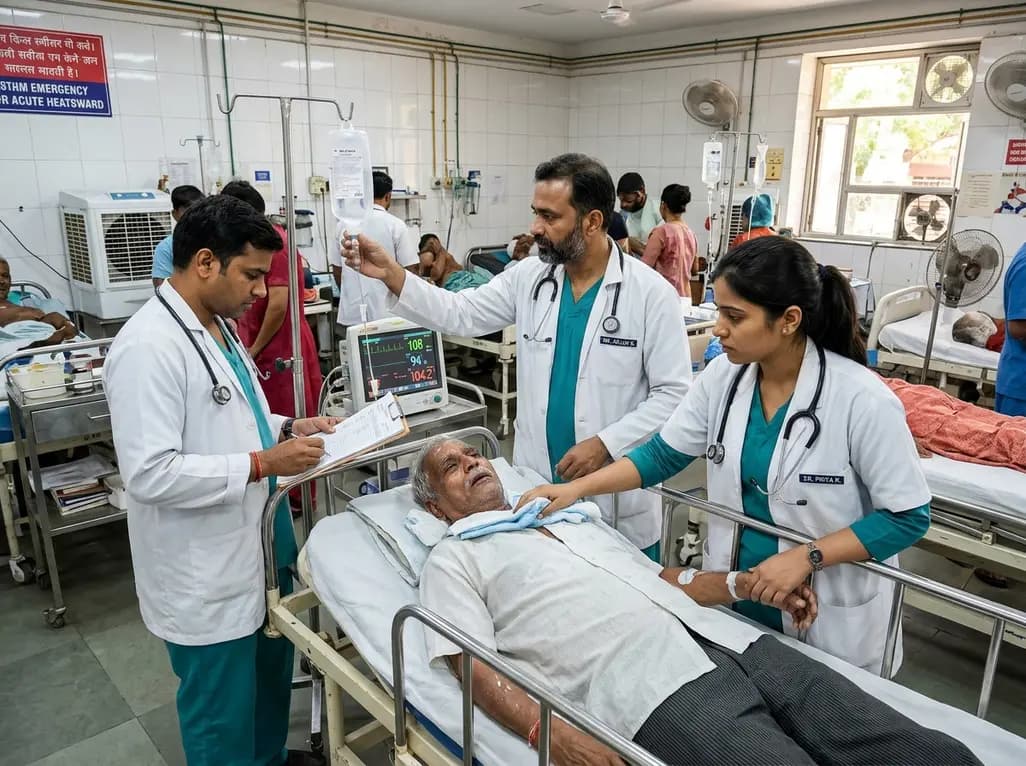
Recent epidemiological data reveals a dramatic surge in summer heat mortality driven by human-induced climate warming. This analysis explores the pathophysiological impacts on cardiac and renal systems, diagnostic dilemmas in death certification, and essential emergency cooling protocols for acute clinical care.
Today

Odisha has established India's first state-level clinical protocol specifically tailored for pregnant women with sickle cell disease. Developed with NHM and UNICEF, the framework provides structured antenatal screening, crisis mitigation, standardized referral pathways, and specialized interdisciplinary care.
Today

India is advancing preventive healthcare by integrating genomics, artificial intelligence, and quantum technologies. With the SANGAM programme sequencing one million Indian genomes, clinicians can unlock personalized therapies, detect cardiometabolic risks early, and curb the burden of diabetes and heart disease.
Today

A randomized controlled trial demonstrates that an eight-week dual-task training intervention significantly improves static and dynamic postural control over standard balance exercises in individuals with chronic ankle instability, addressing critical neurocognitive deficits during athletic and daily activities.
Today

A retrospective cohort study of 7,716 ICU patients from the MIMIC-IV database demonstrates that Gradient Boosting Decision Trees significantly outperform traditional SOFA scores in predicting in-hospital mortality among patients with sepsis and diabetes, with SHAP analysis providing clinical interpretability.
Today
