.webp&w=384&q=75)

Loading, please wait...
Loading, please wait...

A landmark study on Canine Mammary Tumor Transcriptomics recently revealed the intricate molecular landscape of 128 canine mammary tumors (CMTs). Scientists aimed to characterize the gene expression patterns to improve diagnostic precision in comparative oncology. Consequently, they employed sophisticated tools like Differential Gene Expression (DGE) and Gene Set Enrichment Analysis (GSEA). This research primarily focused on bridging the gap between histopathology and molecular behavior.
The analysis effectively identified transcriptomic differences between benign and malignant tumors. Furthermore, it differentiated tumors with high mitotic counts from those with lower proliferative activity. Malignant tumors showed significant enrichment in gene sets related to cell cycle regulation and inflammatory responses. Interestingly, purely epithelial tumors displayed distinct enrichment in metabolic processes compared to mixed tumors. This variation suggests that histological categories often mask significant underlying molecular diversity.
The researchers evaluated whether human breast cancer classification systems could apply to canine cases. To achieve this, they clustered CMTs using the human PAM50 gene panel. Results showed that only two clusters resembled human basal-like and luminal A subtypes. However, the remaining tumors did not match any established human molecular signatures. Therefore, applying human systems without adaptation may lead to inaccurate prognostic assessments in dogs.
The study highlights a crucial disconnect between histopathology and molecular profiling. In fact, tumors within the same pathological category often fell into different transcriptomic clusters. This intragroup heterogeneity underscores the complexity of canine oncology. Thus, clinicians need canine-specific molecular markers to refine diagnosis before surgical intervention. These advancements will eventually lead to more personalized treatment strategies for veterinary patients. Moreover, these findings provide valuable insights for researchers studying human breast cancer models.
While some canine tumors resemble human subtypes, many exhibit unique expression patterns that do not align with human systems, requiring species-specific adaptation.
Molecular heterogeneity indicates that tumors with similar appearances under a microscope may behave differently, suggesting that pathology alone may not predict clinical outcomes.
Purely epithelial malignant tumors show higher enrichment in gene sets related to proliferation and signaling compared to mixed tumors containing mesenchymal components.
Disclaimer: This content is for informational and educational purposes only. It is not intended as a substitute for professional medical advice, diagnosis, or treatment. Refer to the latest local and national guidelines for clinical practice.
References
Moberg IM et al. Transcriptomic Profiling of Canine Mammary Tumours Reveals Significant Heterogeneity Between and Within Histological Classes. Vet Comp Oncol. 2026 Apr 16. doi: 10.1111/vco.70067. PMID: 41992075.
Razavirad A et al. Canine Mammary Tumors as a Potential Model for Human Breast Cancer in Comparative Oncology. Life (Basel). 2024 May 10;14(5):618. doi: 10.3390/life14050618. PMID: 38792639.
Lee CH et al. Transcriptome Signatures of Canine Mammary Gland Tumors and Its Comparison to Human Breast Cancers. Int J Mol Sci. 2018 Sep 7;19(9):2655. doi: 10.3390/ijms19092655. PMID: 30200631.

Read summarized clinical updates, watch expert medical content, and earn CME certifications right from your smartphone.
Open your smartphone camera to scan and install.





A transcriptomic study of 128 canine mammary tumors reveals molecular heterogeneity and the limitations of human PAM50 classification in canine oncology....
6 months ago
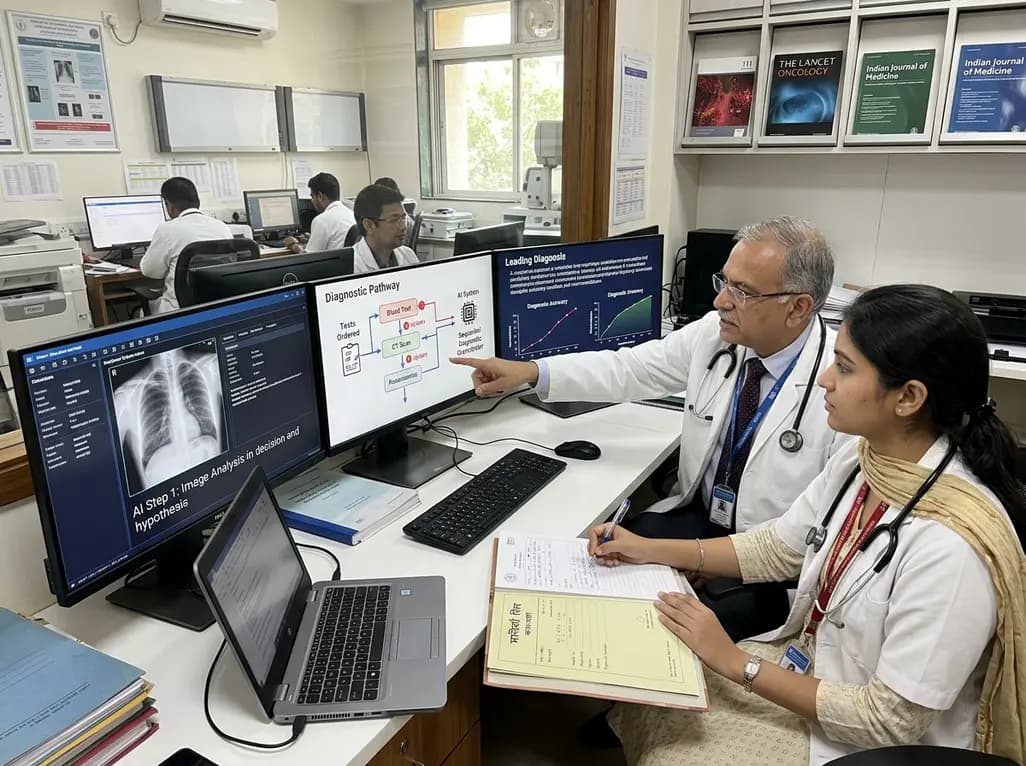
A breakthrough peer-reviewed study demonstrates that a sequential AI diagnosis system can mirror real-world clinical reasoning. By ordering stepwise tests and updating hypotheses dynamically, this multi-agent orchestrator achieved superior diagnostic accuracy while reducing investigative costs.
Today

A prenatal case highlights severe glutaric acidemia type II presenting as bilateral hyperechoic cystic kidneys at 18 weeks. Whole-exome sequencing revealed a novel homozygous ETFDH frameshift variant, demonstrating the power of rapid genetic testing in fetal renal anomalies.
Today

Review how tailored exercise programs benefit frail older patients with heart failure. Explore pathophysiological mechanisms, individualized training prescriptions, and strategies to overcome adherence barriers in clinical practice.
Yesterday

This comparative study evaluates posterior labral tears with and without glenohumeral instability, highlighting distinct demographic patterns, MRI underestimation in stable shoulders, and successful arthroscopic repair outcomes.
Yesterday

A clinical study demonstrates that early intervention with tocilizumab, either as monotherapy or bridged with corticosteroids, achieves significant proptosis reduction and resolves active inflammation in treatment-naive thyroid eye disease.
Yesterday
