.webp&w=384&q=75)

Loading, please wait...
Loading, please wait...

Monitoring cancer incidence trends is vital for health planning and improving patient outcomes worldwide. A recent retrospective study conducted in Moquegua, Peru, between 2000 and 2020, provides a comprehensive look at how epidemiological profiles evolve over two decades. The research analyzed 545 new cases, identifying a significant upward shift in reported cases starting in 2013. This trend highlights the critical intersection between disease burden and healthcare infrastructure development.
The study found an overall age-adjusted incidence rate of 30.2 per 100,000 insured individuals. Interestingly, women represented a higher proportion of cases at 55.2%. The most common malignancies identified were breast cancer (19.4%) and prostate cancer (18.0%). Cervical, colorectal, and thyroid cancers followed closely. These findings mirror patterns seen in many developing healthcare systems, where the transition toward non-communicable diseases becomes more pronounced as life expectancy increases.
Furthermore, the researchers noted that the increase in cases since 2013 was likely associated with enhanced diagnostic capacity. Improved access to pathology services and systematic screening programs often leads to an initial surge in recorded incidence. For instance, thyroid cancer showed a survival rate near 100%, suggesting earlier detection of less aggressive forms. Conversely, prostate cancer had the lowest overall survival rate in this specific cohort, underscoring the need for more targeted intervention strategies.
In India, similar cancer incidence trends are being observed. According to the Indian Council of Medical Research (ICMR), the country is projected to see over 1.5 million new cases in 2024. Just as in the Peruvian study, breast and cervical cancers dominate the female demographic in India. Meanwhile, oral and lung cancers remain major concerns for Indian men. Consequently, the lessons from Moquegua regarding the territorial approach to surveillance are highly applicable to the Indian public health framework.
To address rising rates, the study emphasizes strengthening cancer surveillance through a territorial lens. This involves improving access to early diagnosis services and ensuring timely treatment pathways. Because diagnostic improvements can inflate reported rates, clinicians must distinguish between a true increase in disease and better case-finding. However, regardless of the cause, the growing volume of patients requires robust healthcare infrastructure to manage the complex needs of cancer survivors.
The increase is often driven by a combination of aging populations, lifestyle changes, and, significantly, improvements in diagnostic technologies and screening programs that identify cases earlier.
Breast cancer and prostate cancer were the most common, accounting for approximately 19.4% and 18.0% of cases respectively, followed by cervical and colorectal cancers.
Similar to the study findings, India reports high rates of breast and cervical cancers in women. Both regions highlight the need for improved early-detection services to mitigate the rising disease burden.
Disclaimer: This content is for informational and educational purposes only... Refer to the latest local and national guidelines for clinical practice.
References
Ponce-Cusi R et al. Temporal trends in cancer incidence in a Peruvian population of the Social Health Insurance between 2000 and 2020. Medwave. 2026 May 04. doi: 10.5867/medwave.2026.04.3151. PMID: 42081828.
Indian Council of Medical Research (ICMR). Cancer Incidence and Mortality Across 43 Cancer Registries in India. JAMA Network Open. 2024.
World Health Organization (WHO). Global Cancer Burden (GLOBOCAN 2022) Estimates. International Agency for Research on Cancer (IARC). 2022.
"
Read summarized clinical updates, watch expert medical content, and earn CME certifications right from your smartphone.
Open your smartphone camera to scan and install.





A 20-year study in Peru reveals rising cancer incidence since 2013, emphasizing the role of improved diagnostics in reporting breast and prostate cancers....
5 months ago
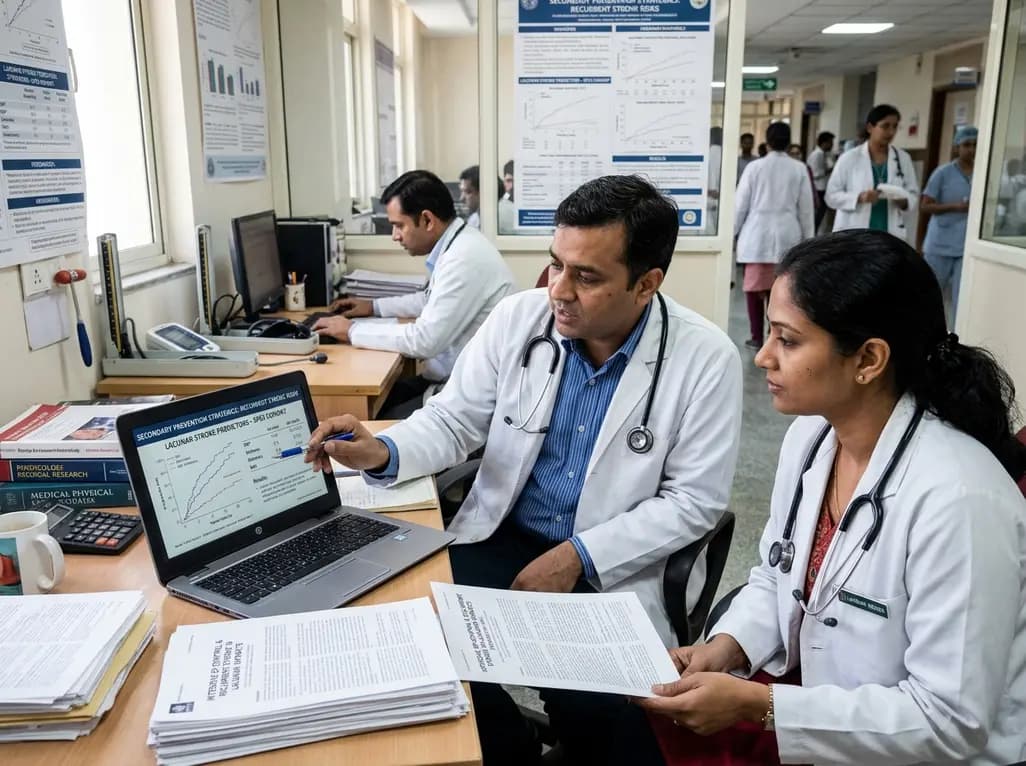
Explore vital recurrent stroke predictors in lacunar stroke patients managed with intensive blood pressure lowering. This analysis examines trial findings from SPS3 to uncover residual vascular risks, metabolic factors, and targeted secondary prevention strategies for high-risk neurological patients.
Today

A comprehensive scoping review synthesises evidence linking prenatal maternal mental health to long-term offspring neurodevelopment, evaluating neuroendocrine, inflammatory, and epigenetic pathways while highlighting clinical screening and future research priorities.
Today

The Directorate General of Health Services directs Indian states to halt the hazardous reuse and reprocessing of single-use medical devices. Discover regulatory implications under the Drugs and Cosmetics Act, critical infection risks, legal liabilities, and operational changes required across clinical specialties.
Today
Mitochondria-targeted nanoparticles self-assembled from EGCG and L-glutamic acid effectively restore mitochondrial homeostasis, suppress synovial inflammation, and attenuate chondrocyte senescence in osteoarthritis, offering a promising disease-modifying nanotherapy.
Today

India is advancing preventive healthcare by integrating genomics, artificial intelligence, and quantum technologies. With the SANGAM programme sequencing one million Indian genomes, clinicians can unlock personalized therapies, detect cardiometabolic risks early, and curb the burden of diabetes and heart disease.
Today
