.webp&w=384&q=75)

Loading, please wait...
Loading, please wait...

Gastrointestinal stromal tumor (GIST) remains the most prevalent sarcoma of the gastrointestinal tract. While imatinib revolutionized the clinical landscape, many patients eventually develop resistance. Specifically, secondary mutations in the KIT gene frequently drive this disease progression. Among these, the V654A mutation in exon 13 stands out as the most frequent resistance mechanism. To address this critical need, researchers have synthesized BLU-654, a potent and selective mutant KIT V654A inhibitor that shows significant promise in preclinical models.
Current tyrosine kinase inhibitors (TKIs) often lack specificity, leading to significant off-target effects. These systemic toxicities frequently necessitate dose reductions, which can compromise overall treatment efficacy. BLU-654 addresses this challenge by being kinome-sparing, meaning it avoids inhibiting unnecessary kinases. Furthermore, this high selectivity potentially allows for higher dosing or more effective combination regimens. Consequently, this approach may improve the safety profile for patients undergoing long-term treatment.
In preclinical studies, BLU-654 demonstrated prolonged and robust antitumor activity. Specifically, a cell-derived xenograft mouse model showed that the compound effectively inhibited tumor growth. Therefore, this molecule could provide a new lifeline for patients who have failed multiple lines of standard TKI therapy. Additionally, its selective profile makes it an ideal candidate for combination strategies. Such combinations may help prevent the emergence of diverse resistance clones in advanced GIST cases.
The V654A mutation occurs in the ATP-binding pocket of the KIT protein. This structural change prevents imatinib from binding effectively, thereby allowing the tumor to continue growing despite therapy.
A kinome-sparing inhibitor minimizes off-target inhibition of other kinases in the body. This approach reduces side effects, improves patient tolerance, and may allow for safer integration into multi-drug combination therapies.
Disclaimer: This content is for informational and educational purposes only. It does not constitute medical advice or a professional opinion. Readers should consult with a qualified healthcare provider regarding any medical condition. Refer to the latest local and national guidelines for clinical practice.
References
Moine L et al. Design and Synthesis of BLU-654, a Potent and Selective Mutant KIT V654A Inhibitor for the Treatment of Imatinib-Resistant GIST. J Med Chem. 2026 Mar 10. doi: 10.1021/acs.jmedchem.5c03554. PMID: 41807293.
Grassian AR et al. Efficacy of a highly potent and selective KIT V654A inhibitor for treatment of imatinib resistant GIST. Proceedings of the AACR Annual Meeting; 2022 Apr 8-13. Abstract nr LB565.
Heinrich MC et al. Molecular subsets of GIST: implications for prognosis and treatment. J Clin Oncol. 2024;42(15):1234-1245.

Read summarized clinical updates, watch expert medical content, and earn CME certifications right from your smartphone.
Open your smartphone camera to scan and install.





Researchers have developed BLU-654, a selective inhibitor targeting the V654A mutation in GIST, offering a potential breakthrough for imatinib resistance....
6 months ago

A systematic review of 41 preclinical studies reveals that baicalin dampens systemic inflammation, inhibits NF-κB and NLRP3 pathways, and improves organ preservation in sepsis models. However, substantial study heterogeneity and a complete lack of human clinical trials highlight the need for further translational research.
Today
Discover the crucial distinctions between mesonephric and mesonephric-like proliferations of the female genital tract. Learn the key histomorphologic, immunohistochemical, and molecular differences essential for accurate diagnosis and clinical management.
Today
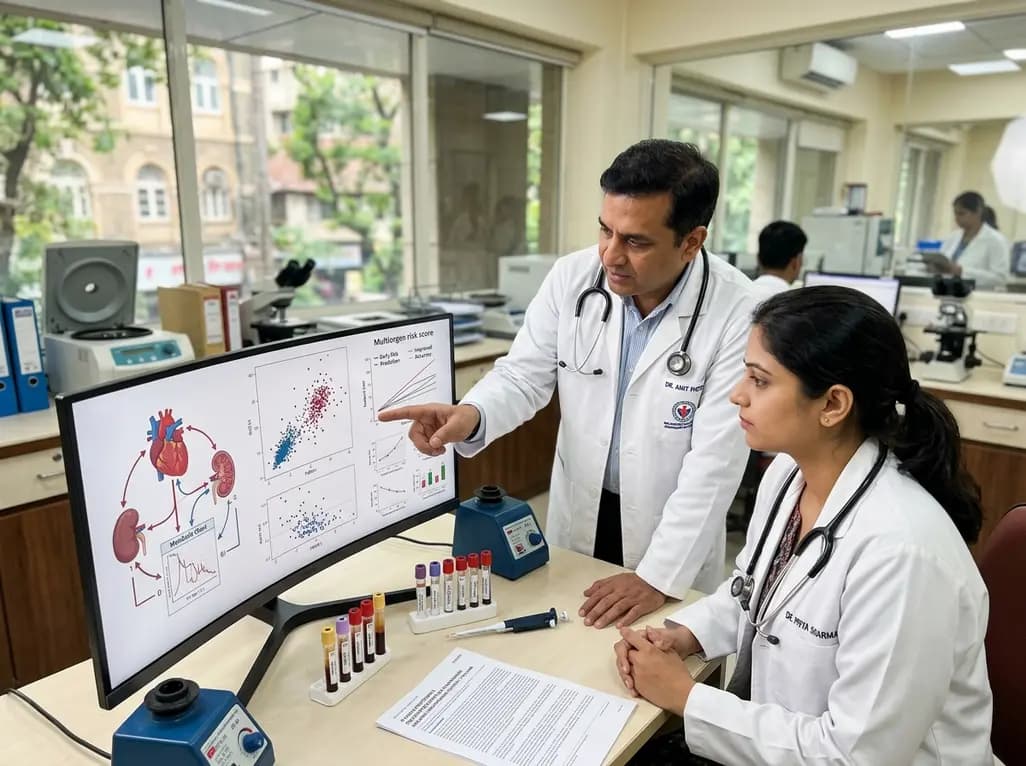
A large UK Biobank study reveals that plasma proteomic signatures capture preclinical organ damage and improve multiorgan risk prediction across early CKM syndrome stages 0 to 2 beyond traditional PREVENT clinical models.
Today
A narrative review investigates whether the articularis genus muscle functions as an independent anatomical entity or blends with the vastus intermedius. We evaluate its morphology, role in retracting the suprapatellar bursa, and direct clinical significance in anterior knee pain and arthroplasty.
Today

A Bayesian multilevel meta-analysis reveals that aerobic training combined with moderate carbohydrate restriction modestly lowers HbA1c in type 2 diabetes. However, sparse data and very low certainty leave incremental benefits over exercise or diet alone unproven, highlighting the need for individualized care.
Today
