.webp&w=384&q=75)

Loading, please wait...
Loading, please wait...

Recent medical research provides critical insights into the structural brain changes caused by blast-related neurotrauma. Specifically, a new study explores the relationship between cumulative explosive exposure and the morphology of the Cavum Septum Pellucidum (CSP). Researchers analyzed high-resolution MRI data from 323 Special Operations Forces (SOF) members to track these anatomical variations. Consequently, the results highlight a clear link between heavy explosive exposure and specific neuroimaging findings.
The research team utilized the Blast Exposure Threshold Survey (BETS) to categorize different levels of weapon exposure. They meticulously quantified lifetime exposure across five blast categories. Therefore, they could isolate the specific effects of large explosives, referred to as BEC5 exposure. Analysis revealed that log-transformed BEC5 exposure was the only significant predictor of CSP enlargement. Because of this strong correlation, clinicians may now view CSP as a promising surrogate for repetitive brain strain in tactical professionals.
Personnel exposed to heavy explosives (BEC5 > 0) demonstrated a significantly higher CSP presence of 42.1%. In contrast, those without such exposure showed only a 22.0% presence rate. Furthermore, the study found that CSP length was significantly longer in the exposed group, showing a median increase. Moreover, each unit increase in log-BEC5 exposure predicted additional enlargement of the CSP cavity and a higher CSP ratio. These findings suggest that blast-related neurotrauma results in measurable mechanical changes within the brain's midline structures.
Identifying objective markers for repetitive blast exposure remains a top priority for military medicine worldwide. Because CSP enlargement is easily detectable on standard 3T MRI, it provides a practical tool for monitoring long-term brain health. Consequently, this study aids in developing more effective health surveillance protocols for soldiers. Additionally, the results underscore the urgent need for enhanced blast mitigation strategies during training and active operations.
The CSP is a fluid-filled space located between the two layers of the septum pellucidum in the brain. While it is often considered a normal anatomical variant, its enlargement is frequently associated with repetitive head trauma and mechanical strain.
High-pressure waves from large explosives can cause mechanical strain on delicate brain tissue. Therefore, this repetitive stress may lead to the persistence or widening of intracranial spaces like the CSP, which serves as a visible marker of underlying injury.
Disclaimer: This content is for informational and educational purposes only. It does not constitute professional medical advice, diagnosis, or treatment. Always seek the advice of your physician or other qualified health provider with any questions you may have regarding a medical condition. Refer to the latest local and national guidelines for clinical practice.
References
De Giorgi S et al. Cavum Septum Pellucidum Enlargement in Special Operations Forces Members Is Associated with Lifetime Exposure to Large Explosives. J Neurotrauma. 2026 Feb 28. doi: 10.1177/08977151261424705. PMID: 41761850.
Glikstein R et al. Five-Year Serial Brain MRI Analysis of Military Members Exposed to Chronic Sub-Concussive Overpressures. J Magn Reson Imaging. 2025;61(1):415-423.
Stone J et al. Enlarged cavum septum pellucidum as a neuroimaging signature of head impact exposure. Brain Communications. 2025;7(1):fcaf085.
"
Read summarized clinical updates, watch expert medical content, and earn CME certifications right from your smartphone.
Open your smartphone camera to scan and install.





A new study links cumulative exposure to large explosives with Cavum Septum Pellucidum enlargement, a potential marker for blast-related neurotrauma....
7 months ago
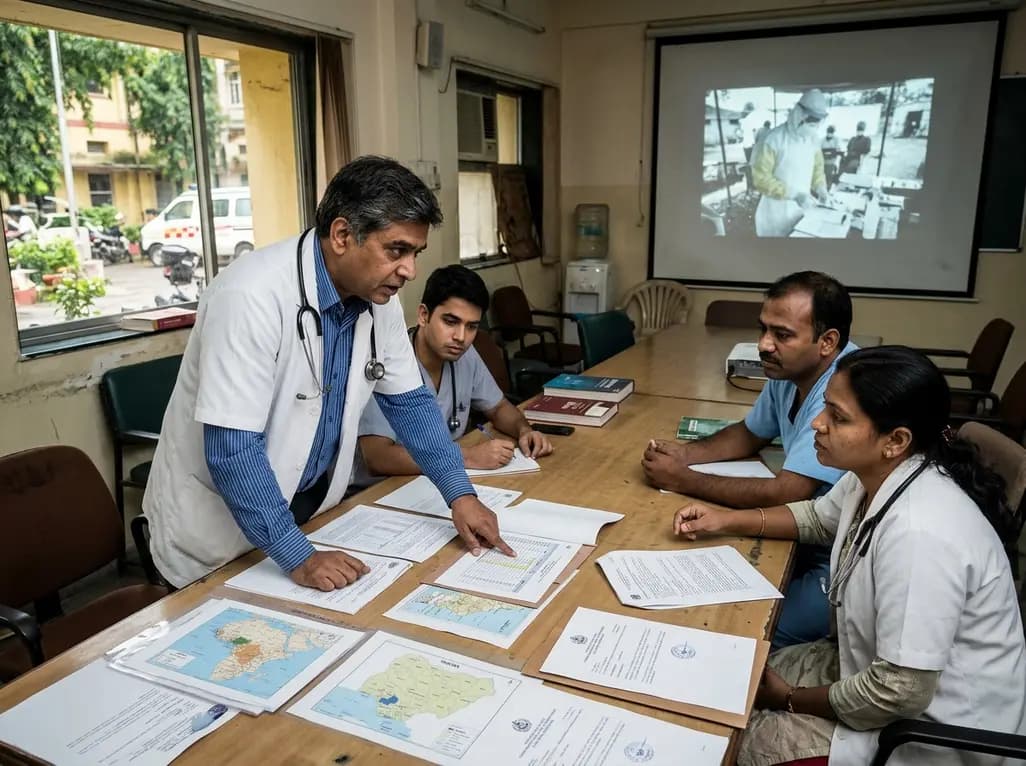
Following Nigeria's first recorded Ebola case linked to regional travel, the Africa CDC has convened an emergency ministerial summit. This alert underscores critical clinical priorities for healthcare professionals, including differentiating early viral infection from malaria, implementing barrier nursing, and triage.
Today

Leucine Rich Bio has introduced South Asia's first comprehensive vaginal microbiome test, BugSpeaks. By profiling microbial dysbiosis, pathogens, and antimicrobial resistance, this next-generation diagnostic platform provides clinicians with deeper insights into recurrent infections, fertility, and reproductive health.
Today

Review how tailored exercise programs benefit frail older patients with heart failure. Explore pathophysiological mechanisms, individualized training prescriptions, and strategies to overcome adherence barriers in clinical practice.
Today

This comparative study evaluates posterior labral tears with and without glenohumeral instability, highlighting distinct demographic patterns, MRI underestimation in stable shoulders, and successful arthroscopic repair outcomes.
Today

A clinical study demonstrates that early intervention with tocilizumab, either as monotherapy or bridged with corticosteroids, achieves significant proptosis reduction and resolves active inflammation in treatment-naive thyroid eye disease.
Today
