.webp&w=384&q=75)

Loading, please wait...
Loading, please wait...

The landscape of medical diagnostics is shifting rapidly toward wearable and non-invasive technologies. Among these, humidity sensing has emerged as a critical parameter for monitoring human health. Accurate moisture detection is essential for tracking respiratory patterns, assessing skin hydration, and managing hygiene in vulnerable populations. However, traditional sensors often lack the necessary balance between mechanical flexibility and high sensitivity. This gap has led to the development of bioinspired flexible humidity sensors, which leverage advanced nanomaterials to mimic biological structures. By integrating these innovations into clinical practice, healthcare providers can achieve a higher degree of precision in physiological monitoring. These sensors provide a robust solution for real-time data collection, ensuring that clinicians can respond promptly to changes in a patient\'s condition. Furthermore, the transition toward smart healthcare systems necessitates materials that can withstand environmental stress while maintaining performance. Consequently, the medical community is increasingly looking toward bio-mimicry to solve complex engineering challenges in sensor design. This approach not only improves sensitivity but also enhances the overall reliability of wearable medical devices.
Nature has long served as a blueprint for sophisticated engineering. In a recent breakthrough, researchers developed a humidity sensor inspired by the intricate structure of the cerebral cortex. This design utilizes alkalized MXene (aMXene) to replicate the cortical folds of the human brain. These folds provide an expansive surface area, creating abundant sites for water molecules to adsorb. To protect this sensitive architecture, the researchers incorporated sodium lignosulfonate (SL) as a protective meningeal layer. This layer serves two purposes: it enhances the sensor\'s hydrophilicity and provides vital oxidation resistance. In addition, oxygen vacancy-engineered TiO (O-TiO) nanoparticles are integrated into the network to function as synaptic sites. These nanoparticles facilitate efficient water dissociation and ion transport, mirroring the neural networks of the brain. The synergy between these components allows the sensor to operate with unprecedented efficiency across a wide range of relative humidity. Notably, this structural innovation ensures that the device remains functional even after repeated mechanical stress. By mimicking the neural protection mechanisms of the cortex, this strategy provides a general framework for designing next-generation intelligent sensing systems that are both durable and highly responsive.
Performance metrics are the cornerstone of any clinical tool, and these bioinspired flexible humidity sensors demonstrate exceptional capabilities. The device exhibits a massive response factor of 26369 over a broad humidity range of 11% to 98% relative humidity. This ultrahigh sensitivity is complemented by a remarkably fast response time of just one second. Such speed is critical in clinical settings where rapid physiological changes, such as respiratory distress, must be detected instantly. Furthermore, the sensor maintains low hysteresis at approximately 2.24%, ensuring that readings remain accurate during both increasing and decreasing moisture levels. Mechanical robustness is another key feature, as the sensor remains stable even after undergoing 100 bending cycles. This flexibility is essential for wearable applications where the device must conform to the contours of the human body. Moreover, the integration of sodium lignosulfonate ensures that the MXene components do not degrade through oxidation, a common failure point for similar nanomaterials. Therefore, the combination of high sensitivity and long-term environmental stability makes this sensor an ideal candidate for continuous monitoring in diverse healthcare environments, from hospitals to home care.
In the field of pulmonology and critical care, monitoring a patient\'s breathing pattern is a fundamental aspect of treatment. Traditional methods can sometimes be intrusive or require bulky equipment. Bioinspired flexible humidity sensors offer a non-invasive alternative for real-time respiratory tracking. Because exhaled breath contains a high concentration of moisture, these sensors can detect subtle changes in breathing frequency and depth. This capability is particularly useful for identifying conditions such as sleep apnea, tachypnea, or sudden respiratory arrest. Physicians can use the high-resolution data provided by the sensor to adjust ventilator settings or intervention strategies more accurately. Additionally, the fast recovery time of the sensor allows it to track rapid breathing cycles during physical exertion or acute distress. Furthermore, the sensor\'s ability to function without direct contact with the skin or mucosa reduces the risk of irritation and infection. Consequently, integrating these sensors into masks or wearable patches could significantly improve the comfort and safety of patients in intensive care units. This technological advancement represents a major step forward in the quest for more patient-centric monitoring solutions.
The practical applications of advanced humidity sensing extend beyond respiratory health into pediatric and geriatric nursing. One of the most promising uses is in the detection of diaper wetness. For neonates and elderly patients with limited mobility, prolonged exposure to moisture can lead to skin breakdown, diaper dermatitis, and secondary infections. Bioinspired flexible humidity sensors can be integrated into smart diapers to provide immediate alerts to caregivers. This real-time notification system ensures timely diaper changes, thereby maintaining skin integrity and enhancing patient comfort. Moreover, the high sensitivity of these sensors allows them to detect even minor moisture increases, providing a proactive approach to hygiene management. In addition to diaper monitoring, these sensors can track general physiological signals in pediatric wards, where non-invasive tools are preferred to minimize infant distress. For geriatric patients, the sensors can also assist in monitoring hydration levels through skin-surface moisture analysis. By automating these routine checks, nursing staff can prioritize other critical tasks, ultimately improving the overall quality of care. This technology thus addresses long-standing challenges in basic patient care through the lens of modern material science.
In the wake of global health challenges, reducing physical contact between patients, providers, and medical equipment has become a priority. The bioinspired MXene-based sensor enables reliable non-contact interaction, which has profound implications for infection control. By detecting the humidity changes caused by the proximity of a human finger or breath, the sensor can function as a touchless switch or control interface. This allows healthcare workers to operate medical devices or adjust settings without direct physical touch, significantly lowering the risk of cross-contamination. Furthermore, this technology can be utilized in public healthcare infrastructure, such as hospital kiosks or elevator panels, to create more hygienic environments. The sensor\'s ability to differentiate between various humidity signatures ensures that it remains accurate even in complex surroundings. As the healthcare industry moves toward smarter and safer environments, the integration of touchless sensing will likely become a standard requirement. Consequently, the development of these bioinspired flexible humidity sensors not only advances physiological monitoring but also contributes to a broader strategy for preventing hospital-acquired infections. This multifunctional capability highlights the versatility of biomimetic design in addressing diverse medical needs.
The bioinspired design mimics the cerebral cortex\'s folded structure, which significantly increases the surface area available for moisture adsorption. This architectural choice directly results in ultrahigh sensitivity and a wide detection range. By incorporating protective layers similar to the meninges, the sensors also achieve superior durability and oxidation resistance. This combination of structural efficiency and functional protection ensures that the sensors perform reliably in demanding clinical environments where precision and longevity are paramount.
These sensors provide real-time, high-resolution data on exhaled breath humidity, which correlates with breathing patterns and respiratory health. Their ultra-fast response time of one second allows for the immediate detection of irregularities like apnea or rapid breathing. Because they are flexible and highly sensitive, they can be integrated into wearable devices or masks to provide continuous, non-invasive monitoring. This helps clinicians make faster, more informed decisions without the need for cumbersome or invasive diagnostic equipment.
Many high-performance materials like MXenes are prone to oxidation when exposed to the air and moisture common in healthcare settings. Oxidation degrades the electrical properties of the sensor, leading to inaccurate readings and device failure over time. By using bioinspired protective layers like sodium lignosulfonate, these sensors maintain their functionality and sensitivity for longer periods. This environmental stability is essential for long-term patient monitoring and ensures the device remains a cost-effective and reliable tool for medical practitioners.
Disclaimer: This content is for informational and educational purposes only. It is not a substitute for professional medical advice, diagnosis, or treatment. Always seek the advice of your physician or other qualified health provider with any questions you may have regarding a medical condition. Refer to the latest local and national guidelines for clinical practice.
References
Zhu S et al. A bioinspired MXene-based flexible humidity sensor with ultrahigh sensitivity for noncontact interaction and physiological monitoring. Talanta. 2026 Jul 02. doi: undefined. PMID: 42391696.
Zhang M et al. MXene-based Sensors for Detecting Human Physiological Information. Sensors and Materials. 2020;32(12):4047–4065.
Yang Y et al. MXene-based flexible sensors for wearable applications. Soft Science. 2025;5:33. doi: 10.20517/ss.2025.12.
"
Read summarized clinical updates, watch expert medical content, and earn CME certifications right from your smartphone.
Open your smartphone camera to scan and install.





A new bioinspired flexible humidity sensor based on alkalized MXene and oxygen vacancy-engineered TiO offers ultrahigh sensitivity and fast response times. This innovation shows immense potential for real-time respiratory monitoring and diaper wetness detection in pediatric and geriatric healthcare settings.
2 weeks back

A recent cross-sectional study of 15.2 million adults reveals a goiter prevalence of 1.3-2.5%. This detailed analysis explores why women and older adults are at higher risk, the dominance of non-toxic multinodular subtypes, and the clinical implications for primary care and endocrinology.
Today

A deep dive into the National Family Health Survey (NFHS-6) data showing a sharp rise in surgical deliveries in Karnataka, the public-private healthcare divide, clinical risks of elective surgeries, and the urgent need for standardized medical guidelines to safeguard maternal and newborn health.
Today
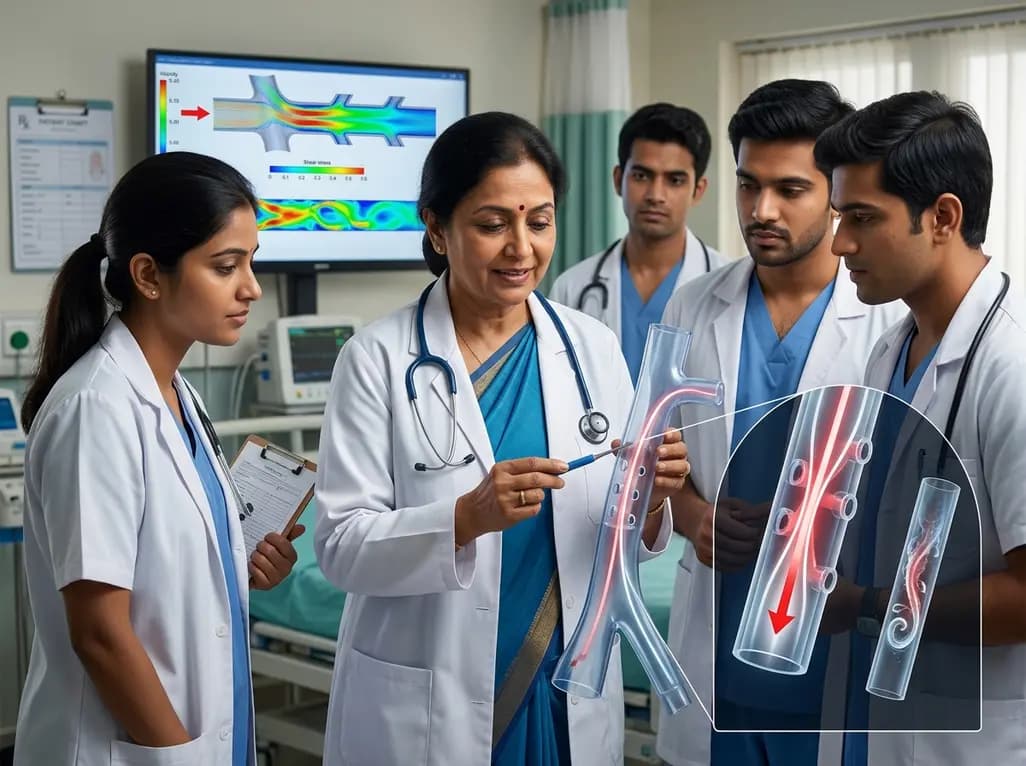
A breakthrough study has utilized computational fluid dynamics to develop an optimized multi-stage drainage cannula for VA ECMO. By refining side-hole placement and angles, the new design significantly reduces stagnant blood volumes and increases flow efficiency, potentially lowering the risk of thrombosis.
Today

A 2026 meta-analysis explores photobiomodulation (PBM) as an adjunct to resistance training for older adults. While PBM did not significantly boost maximal strength (1RM) in healthy seniors, it shows promise for recovery and fatigue management, especially in frail or vulnerable populations.
Today

An international panel of experts has officially recognized fatty pancreas disorder as a distinct disease in the Melbourne Consensus. Learn about its diagnostic criteria using MRI, its pathophysiological association with type 2 diabetes and cancer, and evidence-based lifestyle and pharmacological interventions.
Today
