.webp&w=384&q=75)

Loading, please wait...
Loading, please wait...

Engaging heterosexual men in high-risk areas for HIV prevention remains a significant public health hurdle. To address this, the HPTN 111 trial, also known as the TRIM (Testing a Barbershop-based HIV Prevention Initiative Among Men) initiative, explores barbershop-based HIV prevention strategies. This innovative approach moves services from traditional clinical settings into trusted community hubs where men gather naturally.
The cluster randomized trial occurred in the Kalangala district of Uganda, an area known for high HIV prevalence. Researchers assigned approximately 250 men to either an intervention or a control group. While the control group received standard of care, the intervention group participated in a comprehensive prevention package. This package included HIV-status neutral education, the distribution of self-test kits, and peer group sessions led by the barbers themselves.
The primary goal of the study involves assessing whether these community-based interventions are feasible and acceptable to the local population. Additionally, the study monitors changes in self-initiated HIV testing and sexual behaviors associated with HIV acquisition. By comparing results to standard care, investigators hope to determine if this model can effectively lower the incidence of sexually transmitted infections. Furthermore, the trial examines interest in long-acting preexposure prophylaxis (PrEP) among participants to guide future implementation.
Although the trial focuses on Uganda, the results carry significant weight for other high-prevalence regions. Therefore, medical professionals in India should note these community-engagement models, especially when designing programs for hard-to-reach populations. Such strategies could potentially bridge the gap in reaching men who are less likely to seek clinical services due to stigma or lack of access. In conclusion, the findings will likely influence future HIV treatment and prevention trial designs worldwide.
Barbershops serve as regular gathering spots where men feel comfortable and safe. Moreover, barbers often hold influential roles as trusted community members, making them ideal for leading health-related discussions and reducing clinical barriers.
This approach focuses on the health needs of the individual rather than just their HIV status. It promotes testing, prevention for those who are negative, and immediate treatment for those who are positive, which helps normalize the conversation and reduce stigma.
Disclaimer: This content is for informational and educational purposes only and does not constitute medical advice. Refer to the latest local and national guidelines for clinical practice.
References
Scoville C et al. Feasibility and Acceptability of Barbershop-Based HIV Prevention Among Heterosexual Men in Kalangala Islands, Uganda: Protocol for a Cluster Randomized Trial (HPTN 111). JMIR Res Protoc. 2026 Apr 17. doi: 10.2196/87612. PMID: 41996694.
HPTN. HPTN 111: Testing a Barbershop-based HIV Prevention Initiative Among Men (TRIM). HIV Prevention Trials Network. Accessed April 2024.
Wilson TE et al. Barbershop Talk with Brothers: Using community-based participatory research to develop and pilot test a program to reduce HIV risk among Black heterosexual men. AIDS Education and Prevention. 2014;26(5):383-397.

Read summarized clinical updates, watch expert medical content, and earn CME certifications right from your smartphone.
Open your smartphone camera to scan and install.





The HPTN 111 trial evaluates a barbershop-based HIV prevention initiative in Uganda to improve testing and engagement among high-risk heterosexual men....
6 months ago
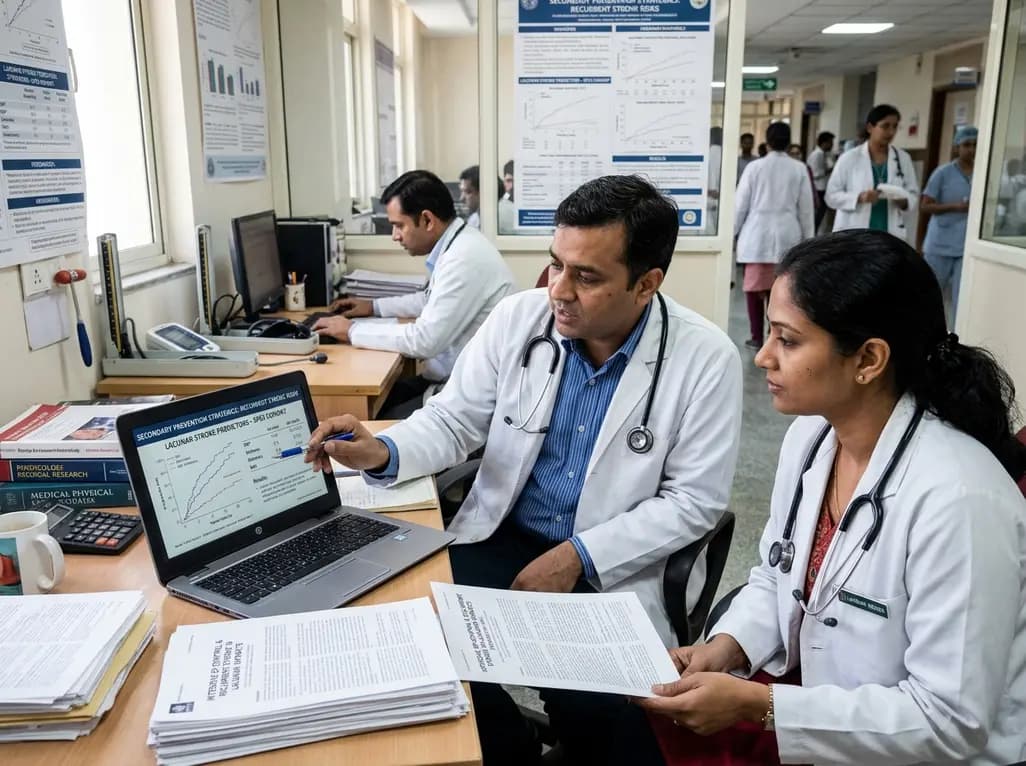
Explore vital recurrent stroke predictors in lacunar stroke patients managed with intensive blood pressure lowering. This analysis examines trial findings from SPS3 to uncover residual vascular risks, metabolic factors, and targeted secondary prevention strategies for high-risk neurological patients.
Today

Odisha has established India's first state-level clinical protocol specifically tailored for pregnant women with sickle cell disease. Developed with NHM and UNICEF, the framework provides structured antenatal screening, crisis mitigation, standardized referral pathways, and specialized interdisciplinary care.
Today

The Directorate General of Health Services directs Indian states to halt the hazardous reuse and reprocessing of single-use medical devices. Discover regulatory implications under the Drugs and Cosmetics Act, critical infection risks, legal liabilities, and operational changes required across clinical specialties.
Today

Mitochondria-targeted nanoparticles self-assembled from EGCG and L-glutamic acid effectively restore mitochondrial homeostasis, suppress synovial inflammation, and attenuate chondrocyte senescence in osteoarthritis, offering a promising disease-modifying nanotherapy.
Today

India is advancing preventive healthcare by integrating genomics, artificial intelligence, and quantum technologies. With the SANGAM programme sequencing one million Indian genomes, clinicians can unlock personalized therapies, detect cardiometabolic risks early, and curb the burden of diabetes and heart disease.
Today
