.webp&w=384&q=75)

Loading, please wait...
Loading, please wait...

Understanding the dynamics of asymptomatic tuberculosis transmission is essential for clinicians managing public health in India. New genomic epidemiology research suggests that individuals without symptoms drive a substantial portion of TB spread. Consequently, relying solely on passive case detection may allow the epidemic to persist despite current control efforts. This study analyzed over 6,300 patients across various regions to estimate the true impact of subclinical disease.
Researchers found that between 25.0% and 51.3% of transmissions originated from asymptomatic patients. However, symptom reporting is often subjective and can lead to underestimation of the true infection burden. Therefore, clinicians must look beyond traditional cough-based screening protocols to find hidden cases. Active case finding serves as a powerful tool to disrupt these hidden transmission chains effectively.
Furthermore, India's National Tuberculosis Elimination Program (NTEP) is now prioritizing symptom-agnostic screening in high-risk populations. Thus, utilizing tools like chest X-rays and molecular diagnostics can significantly improve community detection rates. While the study likely underestimates asymptomatic spread, it provides a vital genomic framework for future public health refinement. Health systems should shift focus toward detecting subclinical cases to advance toward "End TB" goals.
Moreover, these findings emphasize that infectiousness often starts long before clinical symptoms appear in the host. Instead of waiting for patients to seek care, proactive community engagement is necessary to identify silent spreaders. Ultimately, the priority remains disrupting asymptomatic tuberculosis transmission to protect vulnerable populations and achieve national elimination targets.
Clinicians can improve detection by implementing active case finding strategies and using molecular diagnostic tools like TrueNat or GeneXpert regardless of whether the patient reports a persistent cough.
Asymptomatic TB is challenging because these individuals do not feel sick and rarely seek care, yet they can contribute to more than half of the ongoing transmission chains in a community.
Disclaimer: This content is for informational and educational purposes only. It does not constitute medical advice or establish a doctor-patient relationship. Always seek the advice of a qualified healthcare provider regarding any medical condition. Refer to the latest local and national guidelines for clinical practice.
References
Li M et al. Estimating the contribution to transmission of asymptomatic tuberculosis from population-based genomic epidemiology studies. Emerg Microbes Infect. 2026 Dec undefined. doi: 10.1080/22221751.2026.2640282. PMID: 41807279.
World Health Organization. Global Tuberculosis Report 2025. Geneva: World Health Organization; 2025.
Ministry of Health and Family Welfare. India TB Report 2024: Ending TB Together. Central TB Division, New Delhi; 2024.

Read summarized clinical updates, watch expert medical content, and earn CME certifications right from your smartphone.
Open your smartphone camera to scan and install.





Genomic epidemiology shows that asymptomatic TB patients contribute up to 51% of transmissions, highlighting the need for active case finding....
7 months ago

A landmark 12-year longitudinal study highlights significant reductions in opioid prescribing for nonspecific low back pain following clinical guidelines and prescription monitoring systems, emphasizing non-opioid multimodal pain care.
Today

A study in Ultrasound in Obstetrics & Gynecology shows that quantitative vascularization of the anterior fornix/cervix with transvaginal ultrasound reliably identifies placenta accreta spectrum and predicts severe intraoperative hemorrhage, offering vital objective risk stratification.
Today
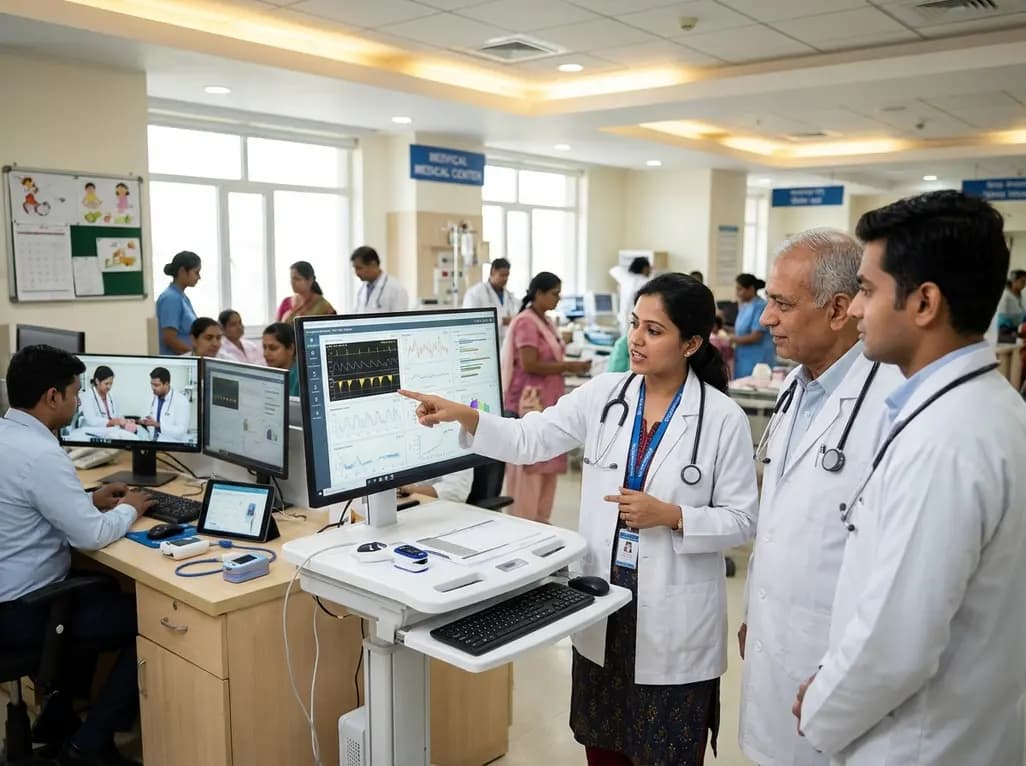
A landmark study details how an enterprise pediatric remote patient management model expanded from a single cardiology pilot to 16 diverse specialty programs by combining centralized digital operations with specialty clinical leadership.
Yesterday
A breakthrough study shows that 3D-planned corrective osteotomy successfully resolves distal radioulnar joint instability in pediatric diaphyseal forearm malunions. The precise osseous realignment eliminates chronic wrist pain and restores joint function without requiring secondary soft-tissue reconstruction.
Today

Protein O-GlcNAcylation couples cellular nutrient status to vital neuronal functions. This review explores how disrupted O-GlcNAc cycling drives both neurodevelopmental delays and neurodegenerative cascades, positioning metabolic post-translational modifications as therapeutic targets in clinical neurology.
Today
