.webp&w=384&q=75)

Loading, please wait...
Loading, please wait...

Researchers have made a significant breakthrough in the development of artificial chemical synapses. These devices can effectively emulate biological functions through chemical communication. Traditional electronic synapses often rely on electrical signals alone. However, biological nervous systems require chemical modulation to regulate inhibitory and excitatory responses. This study addresses that gap by using a floating-gate organic electrochemical transistor (OECT) to achieve such regulation.
The device operates in an aqueous environment and uses an ionic gel as the primary electrolyte. Furthermore, the architecture includes a floating-gate structure that mimics biological synaptic behaviors. When researchers add dopamine to the secondary electrolyte, a unique chemical reaction occurs. Specifically, the oxidation of dopamine leads to the dedoping of the floating gate. Consequently, this process results in the attenuation of synaptic modulation, which is a key feature of natural neural regulation.
The ability to modulate signals with neurotransmitters like dopamine marks a major advancement. This technology contributes significantly to the design of biointerfaced neuromorphic components. Additionally, these systems offer a practical approach to achieving chemically modulated behaviors in artificial intelligence hardware. Notably, the use of aqueous environments ensures better compatibility with biological tissues. Therefore, this research paves the way for more sophisticated brain-machine interfaces and medical electronics.
These are electronic devices designed to mimic the chemical communication of biological synapses. They use neurotransmitters or biomolecules to modulate signals instead of just electrical inputs.
Dopamine undergoes oxidation in the electrolyte, which then dedopes the floating gate of the transistor. This reaction reduces the strength of the synaptic response, emulating biological attenuation.
This study helps create devices that can better interface with the human nervous system. It could lead to advanced prosthetics and neuromorphic systems that respond directly to the body's chemical signals.
Disclaimer: This content is for informational and educational purposes only. It is not intended to be a substitute for professional medical advice, diagnosis, or treatment. Always seek the advice of your physician or other qualified health provider with any questions you may have regarding a medical condition. Refer to the latest local and national guidelines for clinical practice.
References
Zhang H et al. Dopamine-Mediated Attenuation of OECT-Based Aqueous Artificial Chemical Synapses. ACS Appl Mater Interfaces. 2026 May 05. doi: 10.1021/acsami.6c02711. PMID: 42084865.
Keene ST et al. A biohybrid synapse with neurotransmitter-mediated plasticity. Nat Mater. 2020;19(9):969-973.
Van De Burgt Y et al. A non-volatile organic electrochemical device as a low-power neuromorphic element. Nat Mater. 2017;16(4):414-418.

Read summarized clinical updates, watch expert medical content, and earn CME certifications right from your smartphone.
Open your smartphone camera to scan and install.





Researchers report a dopamine-mediated artificial synapse using floating-gate OECTs, offering a path to advanced chemically regulated neuromorphic systems....
5 months ago
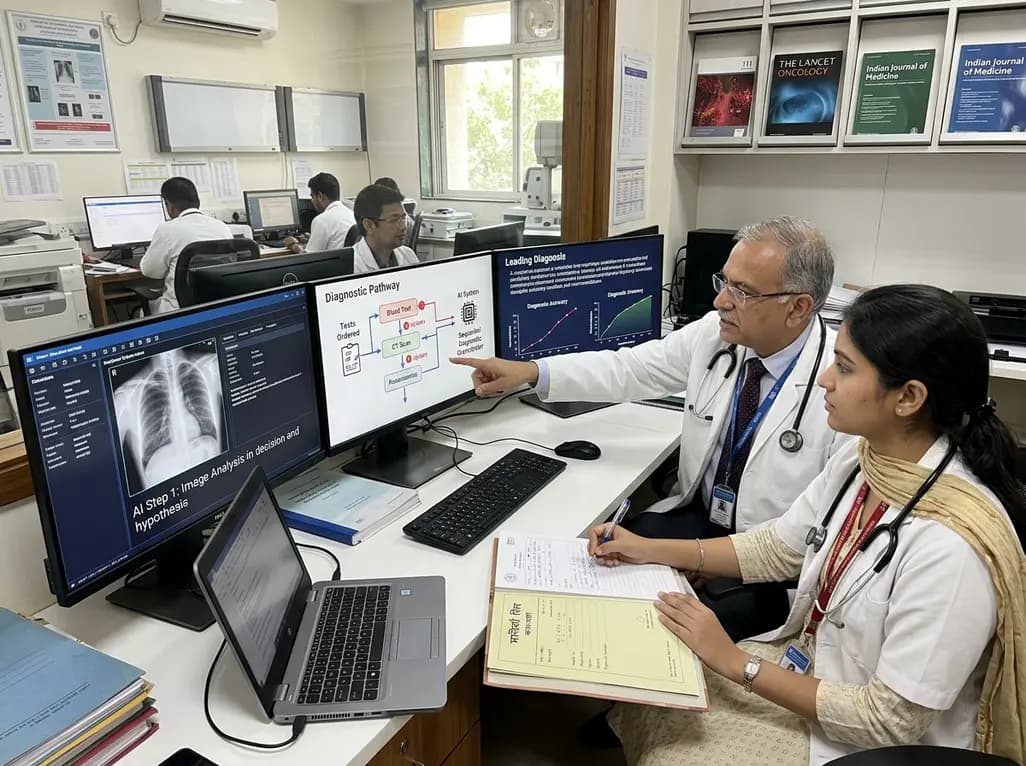
A breakthrough peer-reviewed study demonstrates that a sequential AI diagnosis system can mirror real-world clinical reasoning. By ordering stepwise tests and updating hypotheses dynamically, this multi-agent orchestrator achieved superior diagnostic accuracy while reducing investigative costs.
Today

A prenatal case highlights severe glutaric acidemia type II presenting as bilateral hyperechoic cystic kidneys at 18 weeks. Whole-exome sequencing revealed a novel homozygous ETFDH frameshift variant, demonstrating the power of rapid genetic testing in fetal renal anomalies.
Today

Review how tailored exercise programs benefit frail older patients with heart failure. Explore pathophysiological mechanisms, individualized training prescriptions, and strategies to overcome adherence barriers in clinical practice.
Yesterday

This comparative study evaluates posterior labral tears with and without glenohumeral instability, highlighting distinct demographic patterns, MRI underestimation in stable shoulders, and successful arthroscopic repair outcomes.
Yesterday

A clinical study demonstrates that early intervention with tocilizumab, either as monotherapy or bridged with corticosteroids, achieves significant proptosis reduction and resolves active inflammation in treatment-naive thyroid eye disease.
Yesterday
