.webp&w=384&q=75)

Loading, please wait...
Loading, please wait...

Arterial blood gas collection is a fundamental diagnostic procedure for monitoring respiratory and metabolic status in critically ill patients. Consequently, clinical precision during this task is essential for ensuring patient safety and diagnostic accuracy. A recent scoping review has synthesized evidence-based recommendations to guide intensive care practitioners in optimizing this procedure. By following these standardized protocols, nursing and medical staff can significantly improve the quality of care provided in the ICU.
The radial artery remains the preferred site for puncture due to its accessibility and the presence of collateral circulation. Clinical evidence suggests that an insertion angle of 30° to 45° yields the highest success rates while minimizing patient discomfort. Additionally, the choice of equipment plays a critical role in sample integrity. Experts recommend using 1 mL or 3 mL syringes paired with 20G or 23G gauge needles. For sample preservation, clinicians should transport and store the specimens at room temperature rather than on ice, unless the analysis is delayed beyond thirty minutes.
Arterial puncture is often cited as one of the most painful minor procedures in the hospital setting. Therefore, integrating pain management into the standard protocol is vital for humanized care. The review identifies both cryoanalgesia and subcutaneous analgesia as effective methods for reducing procedural pain. These interventions not only improve the patient experience but may also reduce the risk of physiological distress during the draw. Adopting these non-pharmacological and pharmacological adjuncts reflects a commitment to evidence-based nursing and medical practice.
The radial artery is the preferred site because it is superficial and carries a lower risk of ischemic complications compared to the brachial or femoral arteries.
Current recommendations advocate for the use of 20G or 23G needles to ensure adequate blood flow and minimize the risk of hemolysis during the procedure.
If analysis occurs quickly, transport at room temperature is sufficient. However, if a delay is expected, clinicians should follow specific institutional guidelines regarding temperature-controlled transport to prevent metabolic changes in the sample.
Disclaimer: This content is for informational and educational purposes only. It does not constitute professional medical advice, diagnosis, or treatment. Always seek the advice of your physician or other qualified healthcare provider with any questions you may have regarding a medical condition. Refer to the latest local and national guidelines for clinical practice.
References
Souza LL et al. Recommendations for Arterial Blood Gas Collection in Intensive Care: Scoping Review. J Clin Nurs. 2026 Mar 30. doi: 10.1111/jocn.70312. PMID: 41913076.
World Health Organization. WHO guidelines on drawing blood: best practices in phlebotomy. Geneva: World Health Organization; 2010.
Clinical and Laboratory Standards Institute (CLSI). GP43: Blood Gas and pH Analysis and Related Measurements. 4th ed. 2024.
"
Read summarized clinical updates, watch expert medical content, and earn CME certifications right from your smartphone.
Open your smartphone camera to scan and install.





A summary of the latest scoping review recommendations for arterial blood gas collection in ICUs, covering site selection, needle size, and analgesia....
6 months ago
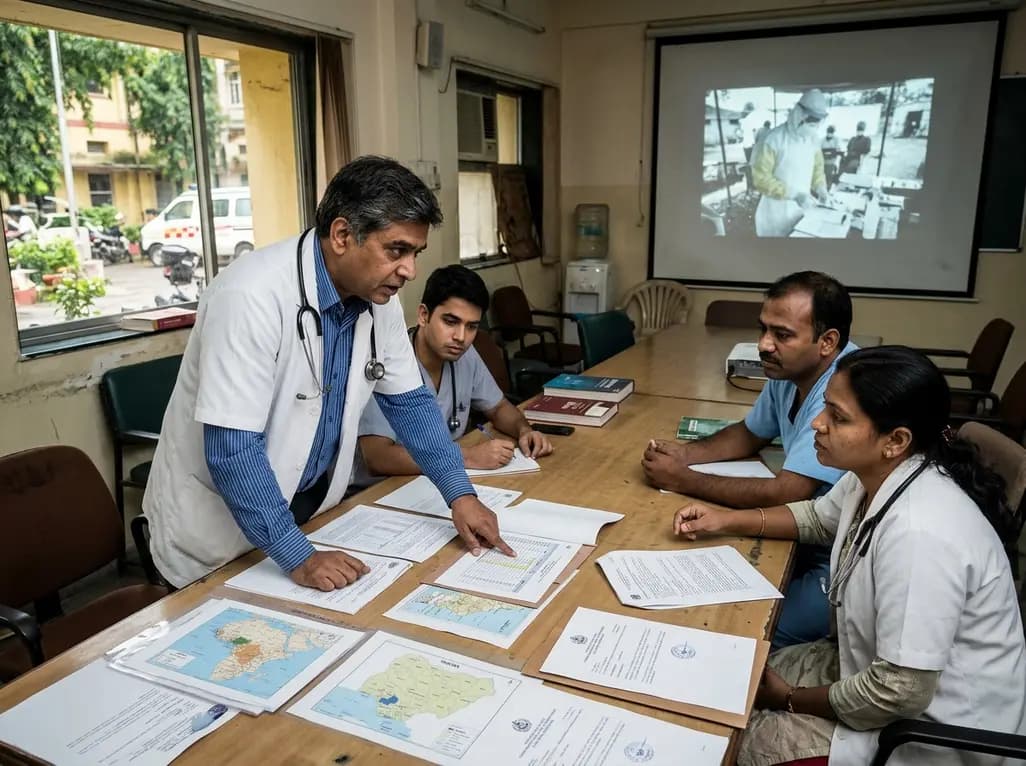
Following Nigeria's first recorded Ebola case linked to regional travel, the Africa CDC has convened an emergency ministerial summit. This alert underscores critical clinical priorities for healthcare professionals, including differentiating early viral infection from malaria, implementing barrier nursing, and triage.
Today

Leucine Rich Bio has introduced South Asia's first comprehensive vaginal microbiome test, BugSpeaks. By profiling microbial dysbiosis, pathogens, and antimicrobial resistance, this next-generation diagnostic platform provides clinicians with deeper insights into recurrent infections, fertility, and reproductive health.
Today

Review how tailored exercise programs benefit frail older patients with heart failure. Explore pathophysiological mechanisms, individualized training prescriptions, and strategies to overcome adherence barriers in clinical practice.
Today

This comparative study evaluates posterior labral tears with and without glenohumeral instability, highlighting distinct demographic patterns, MRI underestimation in stable shoulders, and successful arthroscopic repair outcomes.
Today

A clinical study demonstrates that early intervention with tocilizumab, either as monotherapy or bridged with corticosteroids, achieves significant proptosis reduction and resolves active inflammation in treatment-naive thyroid eye disease.
Today
