.webp&w=384&q=75)

Loading, please wait...
Loading, please wait...

Antibody-dye conjugates are indispensable tools in modern biomedical research and diagnostics. For Indian oncologists and hematologists, understanding the antibody-dye conjugate DOL (degree of labeling) is essential for high-precision assays. This ratio defines the number of fluorophores per antibody. It directly impacts emission intensity, binding affinity, and overall conjugate solubility. Therefore, knowing the exact DOL is vital for ensuring experimental reproducibility across clinical laboratories.
In clinical settings, inaccurate DOL measurements can lead to poor results. Specifically, the success of CAR-T cell therapy depends on the precise quantification of chimeric antigen receptor (CAR) expression. Since current bulk analysis methods often overlap in absorption cross-sections, they fail to provide a clear distribution of labeling. Consequently, researchers often struggle to calculate the exact amount of anti-CAR antibody-dye conjugates needed for treatment optimization. This lack of precision can hinder the progress of personalized medicine in oncology.
A single-molecule-sensitive digital flow cytometer (dFC) provides a transformative solution to these challenges. This technology achieves 100% single-fluorophore detection efficiency. It allows for the direct measurement of fluorescence emission distributions for individual conjugates. Furthermore, it utilizes deconvolution techniques to obtain effective DOL values for protein-based or semiconducting polymer dyes. Unlike traditional spectroscopy, dFC reveals the heterogeneity of labeling within a sample.
Using dFC, clinicians can now quantify biomarkers with unprecedented accuracy. This is particularly relevant in India’s growing precision medicine landscape where advanced therapies are becoming more accessible. By ensuring that every antibody-dye conjugate performs consistently, doctors can better monitor patient responses. Moreover, they can refine therapeutic protocols based on exact protein counts. Therefore, adopting digital flow cytometry represents a significant step forward for quantitative immunology and targeted cancer care.
The DOL, or fluorophore-to-protein (F/P) ratio, represents the number of dye molecules attached to a single antibody. It determines the fluorescence brightness and affects the conjugate’s physical properties.
Many modern dyes, such as protein-based or polymer dyes, have absorption spectra that overlap with the antibody’s signature. This makes it difficult to distinguish and measure the dye concentration accurately using bulk methods.
dFC allows for the exact calculation of CAR expression levels on T cells. By providing accurate DOL values, it ensures that clinicians can fine-tune the therapy for maximum efficacy and safety.
Disclaimer: This content is for informational and educational purposes only. It does not constitute medical advice or a professional recommendation. Refer to the latest local and national guidelines for clinical practice.
References
1. Cheng Y et al. Measuring the Degree of Labeling of Antibody-Dye Conjugates with a Single-Molecule-Sensitive Digital Flow Cytometer. Anal Chem. 2026 Mar 03. doi: 10.1021/acs.analchem.5c07458. PMID: 41774927.
2. Zhao Y et al. Characterization of a Single-Molecule Sensitive Digital Flow Cytometer for Amplification-Free Digital Assays. ACS Nano. 2025 Jun 17. doi: 10.1021/acsnano.5c07028.
3. National Cancer Institute. Precision Medicine in Oncology: Integrating Targeted Therapies and Advanced Diagnostics. 2024.

Read summarized clinical updates, watch expert medical content, and earn CME certifications right from your smartphone.
Open your smartphone camera to scan and install.





New digital flow cytometry methods offer 100% detection efficiency for measuring antibody-dye conjugate DOL, a key factor in successful CAR-T cell therapy....
6 months ago
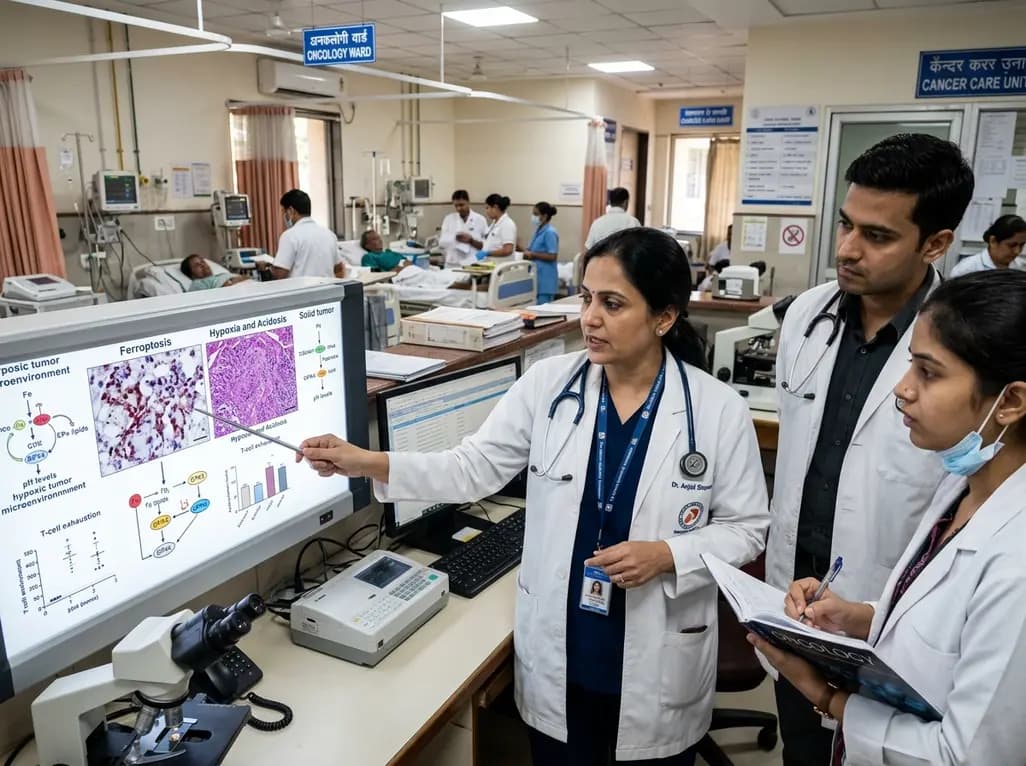
Targeting ferroptosis provides a compelling strategy to dismantle hypoxia- and acidosis-driven immunosuppression in solid tumors, enhancing response to modern immunotherapy.
Today

Findings from Project Viva indicate that sustained postpartum weight retention, rather than excessive gestational weight gain alone, directly worsens women's mid-life cardiovascular health, degrading blood pressure and glycemic parameters decades after delivery.
Today
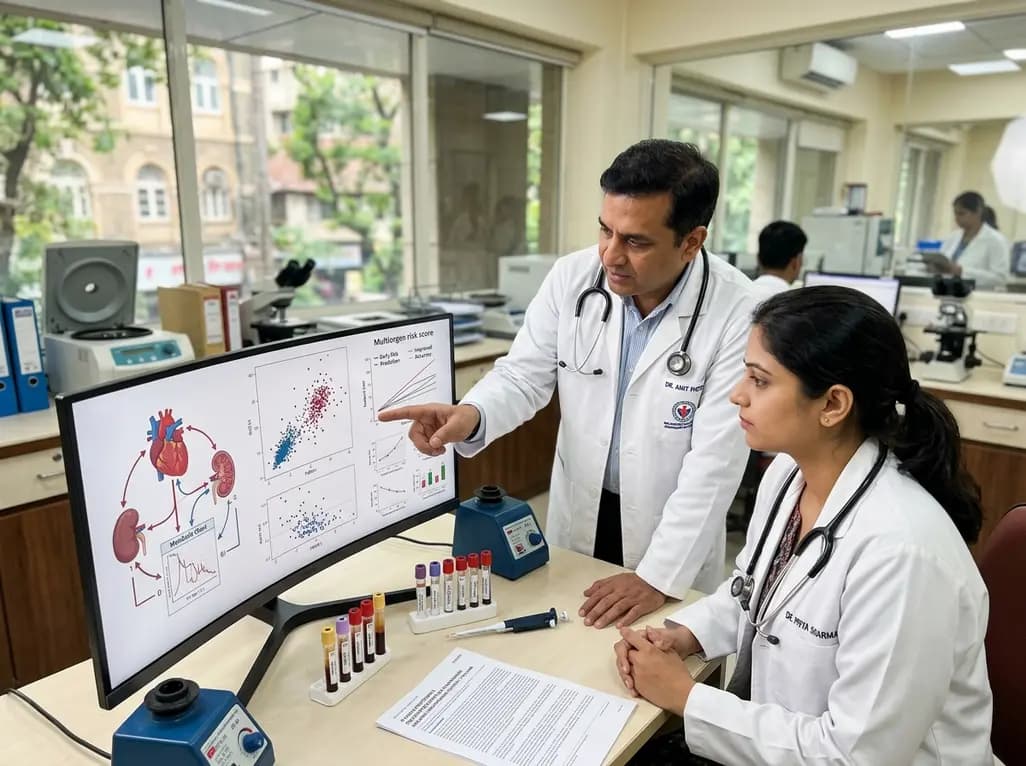
A large UK Biobank study reveals that plasma proteomic signatures capture preclinical organ damage and improve multiorgan risk prediction across early CKM syndrome stages 0 to 2 beyond traditional PREVENT clinical models.
Today

A retrospective CBCT study reveals that superior TMJ space asymmetry correlates moderately with occipital condyle-atlas-axis asymmetry in unilateral TMJ osteoarthritis, highlighting an imaging correlate between jaw biomechanics and upper cervical alignment rather than a standalone diagnostic marker.
Today

A Bayesian multilevel meta-analysis reveals that aerobic training combined with moderate carbohydrate restriction modestly lowers HbA1c in type 2 diabetes. However, sparse data and very low certainty leave incremental benefits over exercise or diet alone unproven, highlighting the need for individualized care.
Today
