.webp&w=384&q=75)

Loading, please wait...
Loading, please wait...

3D medical imaging is vital for precision medicine today. However, the increasing volume of data makes manual analysis very difficult for clinicians. Deep learning shows great promise in medical image analysis AI, but it often struggles with small anatomical structures. Moreover, annotating these complex images requires significant expert time and effort. To solve these persistent challenges, researchers developed the Anatomy-Guided Self-Supervised Distillation (AG-SSD) framework.
AG-SSD integrates anatomical knowledge directly into the self-supervised learning process. Consequently, it captures complex dependencies that generic AI models often miss. The framework utilizes three primary modules to achieve this. First, Cross-View Anatomical Consistency (CVAC) creates consistent pairs of images through overlap-aware cropping. Second, Edge-Aware Adaptive Masking (EAAM) highlights important boundaries like organ edges. Finally, Cross-View Attention Alignment (CVAA) stabilizes the distillation process across different views. These features allow the model to learn effectively from unlabeled scans. Furthermore, extensive experiments show that AG-SSD outperforms existing methods in both classification and segmentation. Specifically, it excels even when labeled data is extremely scarce.
This technology could significantly reduce the heavy workload for radiologists in high-volume settings. Because the model understands anatomical heterogeneity, it provides more robust results across various imaging domains. Therefore, clinicians can rely on AI for more accurate and efficient diagnostic support. Ultimately, AG-SSD represents a scalable solution for modern clinical applications in India and globally.
Unlike standard methods adapted from natural images, AG-SSD explicitly incorporates anatomical priors to capture the complex dependencies inherent in 3D medical data.
The framework has been tested on both CT and MRI datasets, demonstrating high accuracy in classification and segmentation tasks.
Disclaimer: This content is for informational and educational purposes only. It does not constitute medical advice or a substitute for professional healthcare consultation. Refer to the latest local and national guidelines for clinical practice.
References

Read summarized clinical updates, watch expert medical content, and earn CME certifications right from your smartphone.
Open your smartphone camera to scan and install.





AG-SSD is a new self-supervised learning framework that improves 3D medical image analysis by incorporating anatomical priors for better CT and MRI accuracy...
6 months ago

A multicenter study from Southeastern Türkiye identified rare alpha-1 antitrypsin deficiency variants, including the homozygous Malton genotype, among COPD patients. Half were never-smokers, highlighting the critical need for comprehensive genetic screening beyond common S and Z alleles.
Today
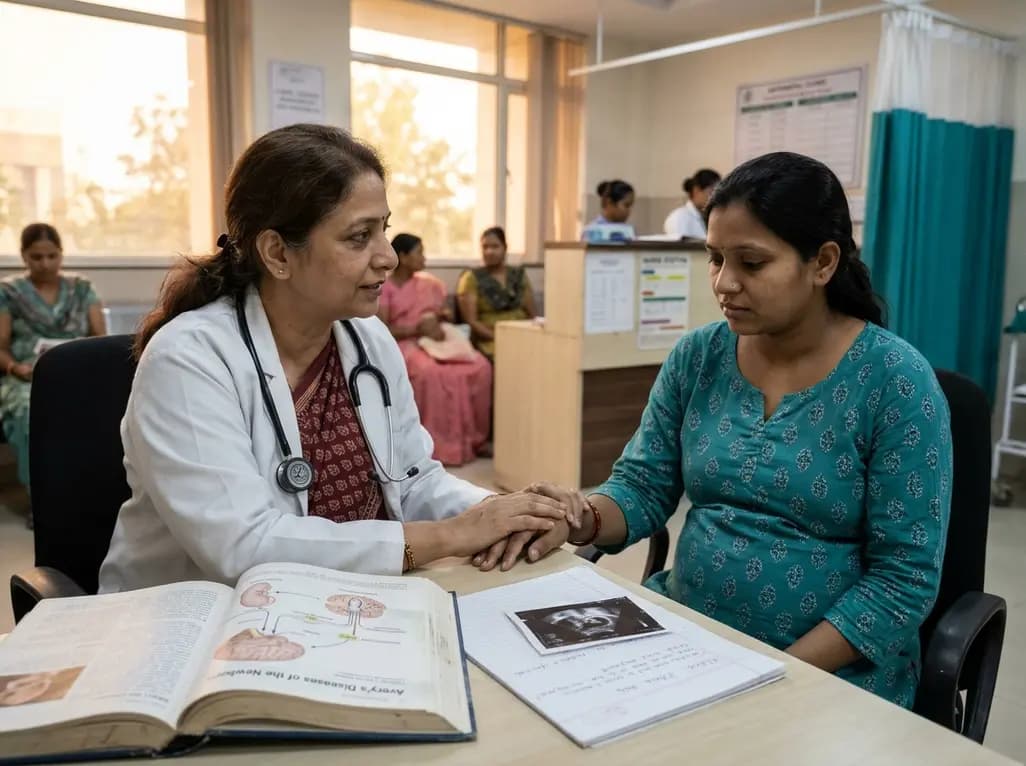
A comprehensive scoping review synthesises evidence linking prenatal maternal mental health to long-term offspring neurodevelopment, evaluating neuroendocrine, inflammatory, and epigenetic pathways while highlighting clinical screening and future research priorities.
Today

The Directorate General of Health Services directs Indian states to halt the hazardous reuse and reprocessing of single-use medical devices. Discover regulatory implications under the Drugs and Cosmetics Act, critical infection risks, legal liabilities, and operational changes required across clinical specialties.
Today
A 25-year multi-institutional cohort reveals high recurrence rates in pediatric giant cell tumor of bone, particularly in patients with open physes and bone marrow edema on preoperative MRI. Early surveillance and careful balance between growth plate preservation and tumor clearance are essential.
Today

India is advancing preventive healthcare by integrating genomics, artificial intelligence, and quantum technologies. With the SANGAM programme sequencing one million Indian genomes, clinicians can unlock personalized therapies, detect cardiometabolic risks early, and curb the burden of diabetes and heart disease.
Today
