.webp&w=384&q=75)

Loading, please wait...
Loading, please wait...

Traditional harm reduction models primarily address acute risks like overdoses and blood-borne viruses. However, these frameworks often fail when clinicians apply them to users of anabolic-androgenic steroids (AAS). Effective anabolic steroid harm reduction requires a fundamental shift toward managing slow-developing, cumulative physiological risks. Unlike psychoactive drug users who face rapid-onset toxicity, AAS consumers typically experience patterned, long-term health complications. Consequently, medical practitioners must adapt their diagnostic and supportive strategies to meet the specific pharmacological and behavioral needs of this growing population.
Most healthcare services currently prioritize injecting risks, utilizing paradigms originally developed for opioids and stimulants. While sterile needle access remains vital, this narrow focus often obscures the distinct risks associated with different AAS delivery routes. Specifically, oral formulations frequently carry significantly higher hepatotoxic risks than injectable products. Many oral steroids undergo 17-alpha-alkylation to survive first-pass metabolism, which places intense metabolic stress on the liver. Furthermore, the illicit market often distributes falsified or adulterated products, compounding the danger of unpredictable organ damage. Therefore, focusing solely on injection hygiene ignores a major source of toxicity for many users.
To provide high-quality care, health services should integrate consumer-focused tools and peer-led support networks. Structured dosing frameworks and professional substance-checking infrastructures offer practical ways to mitigate risks within the community. Clinicians should prioritize longitudinal health monitoring, including regular liver function tests, lipid profiles, and cardiovascular screenings. By moving beyond event-based models, practitioners can better address the cumulative organ-based harms that define chronic AAS use. Ultimately, harm reduction must evolve to be contextually relevant to remain truly evidence-based and patient-centric. Integrating workforce development with peer expertise ensures that health services reach those who are often hesitant to seek traditional medical help.
Traditional models focus on preventing immediate events like fatal overdoses. In contrast, AAS harm reduction addresses chronic, cumulative risks such as cardiomyopathy, atherosclerosis, and liver toxicity that develop over years of patterned use.
No, oral steroids are typically more hepatotoxic because they must survive liver metabolism through chemical modification. While injectables carry risks of infection and local tissue damage, they bypass the direct first-pass metabolic stress on the liver associated with oral agents.
Disclaimer: This content is for informational and educational purposes only. It does not constitute professional medical advice, diagnosis, or treatment. Always seek the advice of your physician or other qualified health provider with any questions you may have regarding a medical condition. Refer to the latest local and national guidelines for clinical practice.
References
Piatkowski T et al. What anabolic-androgenic steroids reveal about the limits of current harm reduction models. Addiction. 2026 Mar 11. doi: 10.1111/add.70395. PMID: 41813613.
Patil JJ, et al. Anabolic androgenic steroid-induced liver injury: An update. World J Hepatol. 2022 Jul 27; 14(7): 1284–1297.
Roman D. Steroid Harm Reduction: Safer Practices for Health and Wellness. Central Outreach Wellness Center. 2025 Sep 12.

Read summarized clinical updates, watch expert medical content, and earn CME certifications right from your smartphone.
Open your smartphone camera to scan and install.





Current harm reduction models fail to address the unique, chronic physiological risks of anabolic steroid use. This guide explores evidence-based adaptation...
6 months ago
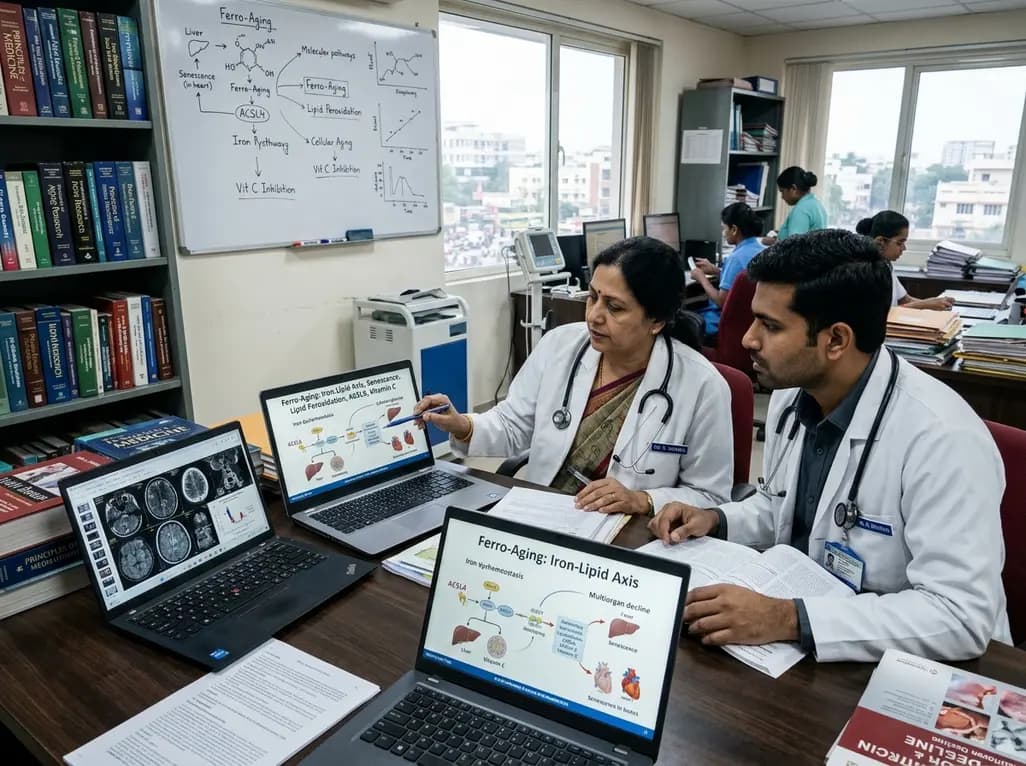
Recent research defines ferro-aging as a conserved iron-lipid axis driving organ decline across primates. Age-related iron dyshomeostasis stimulates ACSL4-mediated lipid peroxidation, promoting cellular senescence. Notably, vitamin C directly inhibits ACSL4, suppressing phospholipid oxidation and multi-organ decay.
Today

A retrospective cohort study evaluated 1,000 low-risk singleton births to assess maternal and neonatal outcomes during office-hours versus off-hours. Off-hours deliveries were significantly associated with higher odds of intrapartum cesarean sections and episiotomies, highlighting critical obstetric staffing considerations.
Today

New clinical evidence demonstrates a shift away from strict exercise restrictions in genetic heart disease. While patients with channelopathies engage in more vigorous activity than those with cardiomyopathies, shared decision-making and individualized risk assessments ensure safe, beneficial exercise participation.
Today

Sarcopenia significantly impairs functional independence and amplifies fracture risks in patients with osteoarthritis and osteoporosis. Learn about modern diagnostic strategies, GLP-1 therapy considerations, and evidence-based non-pharmacological management across multidisciplinary clinical settings.
Today

Discover how to identify superimposed entrapment neuropathy in diabetic patients. This review details clinical evaluation, surgical decompression evidence, and a structured algorithm for primary care referrals to prevent ulcers and preserve limb function.
Today
