.webp&w=384&q=75)

Loading, please wait...
Loading, please wait...

Recent clinical research highlights algal bioactive peptides as high-quality functional ingredients for metabolic health. Furthermore, these compounds offer a sustainable alternative to animal-based proteins while providing targeted therapeutic effects. Specifically, they demonstrate significant potential in managing hypertension and diabetes through multiple physiological pathways.
Scientists have identified that these peptides act as natural inhibitors of the angiotensin-converting enzyme (ACE) and renin. Consequently, they help regulate blood pressure levels effectively. Moreover, they exhibit powerful antioxidant and anti-inflammatory properties that mitigate systemic oxidative stress. These multifunctional activities make them valuable for cardiovascular protection. Therefore, researchers are increasingly focusing on their inclusion in functional foods.
In addition to cardiovascular support, these peptides modulate glucose metabolism by inhibiting \u03b1-amylase and \u03b1-glucosidase. Although human trials are currently limited, early evidence suggests modest improvements in glycemic control and lipid profiles. However, variability in peptide characterization remains a significant challenge for clinical translation. Furthermore, energy-intensive processing affects the economic feasibility of large-scale production. Despite these hurdles, the carbon sequestration potential of algae supports global sustainability goals. Therefore, standardizing production methods is essential to ensure consistent bioactivity and safety.
These peptides function as natural ACE inhibitors, which prevents the production of vasoconstrictors and helps relax blood vessels to lower pressure.
The most frequently studied sources include Spirulina, Chlorella, and various macroalgae species known for their high protein content.
Disclaimer: This content is for informational and educational purposes only. It does not constitute medical advice or replace professional consultation. Refer to the latest local and national guidelines for clinical practice.
References
1. Khaliq M et al. Navigating the potential of algal peptides: health effects, market applications, and scientific challenges. Ann Med. 2026 Dec undefined. doi: 10.1080/07853890.2026.2637282. PMID: 41793777.
2. Li Y et al. Recent Advances in Microalgae Peptides: Cardiovascular Health Benefits and Analysis. J Agric Food Chem. 2019;67(43):11825-11838.
3. Wang Z et al. Algae and Algal Protein in Human Nutrition: A Narrative Review of Health Outcomes from Clinical Studies. Nutrients. 2026;18(2):277.

Read summarized clinical updates, watch expert medical content, and earn CME certifications right from your smartphone.
Open your smartphone camera to scan and install.





Learn how algal bioactive peptides support cardiovascular health and glucose metabolism, and the challenges facing their clinical application....
7 months ago
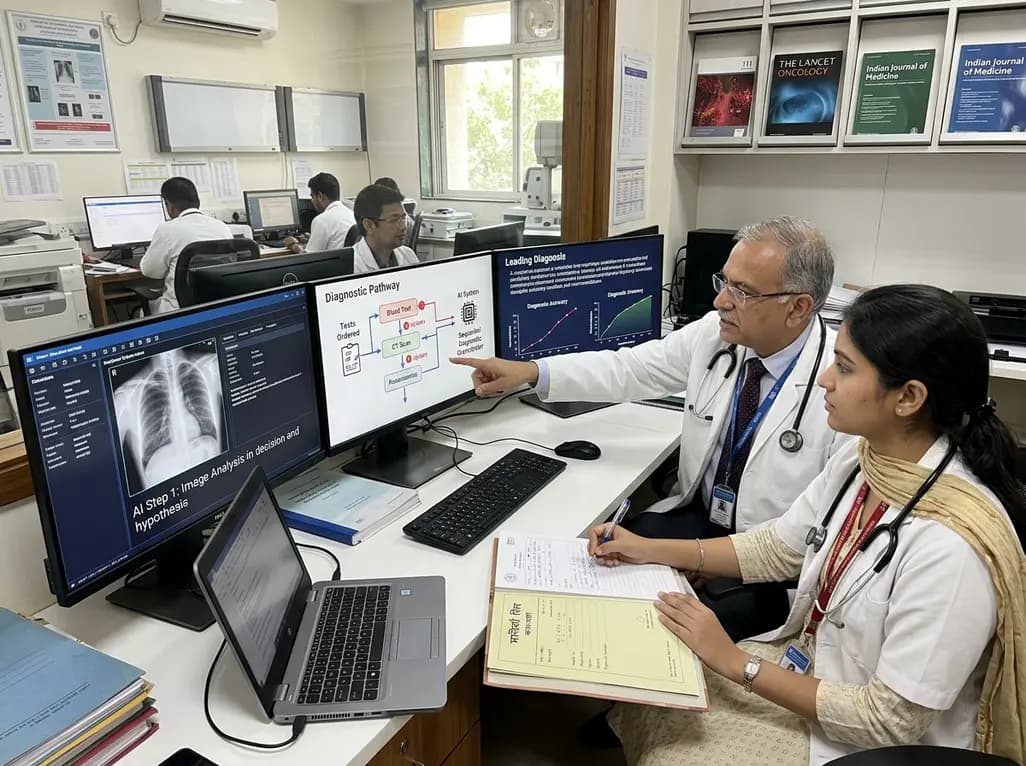
A breakthrough peer-reviewed study demonstrates that a sequential AI diagnosis system can mirror real-world clinical reasoning. By ordering stepwise tests and updating hypotheses dynamically, this multi-agent orchestrator achieved superior diagnostic accuracy while reducing investigative costs.
Today

A prenatal case highlights severe glutaric acidemia type II presenting as bilateral hyperechoic cystic kidneys at 18 weeks. Whole-exome sequencing revealed a novel homozygous ETFDH frameshift variant, demonstrating the power of rapid genetic testing in fetal renal anomalies.
Today

Review how tailored exercise programs benefit frail older patients with heart failure. Explore pathophysiological mechanisms, individualized training prescriptions, and strategies to overcome adherence barriers in clinical practice.
Yesterday

This comparative study evaluates posterior labral tears with and without glenohumeral instability, highlighting distinct demographic patterns, MRI underestimation in stable shoulders, and successful arthroscopic repair outcomes.
Yesterday

A clinical study demonstrates that early intervention with tocilizumab, either as monotherapy or bridged with corticosteroids, achieves significant proptosis reduction and resolves active inflammation in treatment-naive thyroid eye disease.
Yesterday
