.webp&w=384&q=75)

Loading, please wait...
Loading, please wait...

The rapid integration of AI in medical education presents both unprecedented opportunities and significant challenges for academic integrity. As generative tools like ChatGPT become ubiquitous, educators in Digital Health and Health Information Management (DIGHIM) must understand which assessment formats are most vulnerable to AI-generated content. Specifically, a recent quasi-experimental pilot study evaluated ChatGPT’s performance across various task types to provide data-driven recommendations for curriculum design.
The study revealed that ChatGPT excels in objective, rule-based environments. For instance, it achieved a high mean score of 88% in health classification quizzes involving multiple-choice items. Furthermore, the AI produced coherent and well-structured responses for reflective assessments. However, these reflective outputs often lacked the deep personalization and nuanced industry context required for professional practice. While the AI can simulate logical structures, it frequently misses the specific domain insights that human students provide. Consequently, markers found the AI work lacked the expected professional depth.
Technical and scenario-based tasks exposed the most significant limitations of current generative models. In SQL health database programming, ChatGPT averaged only 42% due to persistent schema errors and incomplete queries. Moreover, its performance in clinical coding using ICD-10-AM conventions was even more striking, where it scored a mere 7%. These results indicate that AI lacks the precision necessary for complex medical classifications and data interpretation. Therefore, educators should prioritize these high-complexity areas to ensure authentic student evaluation. In addition, using AI as a critique tool rather than a primary author may improve learning outcomes.
In the Indian context, the National Medical Commission (NMC) has recently emphasized that AI should support rather than replace clinical judgment. Consequently, medical colleges are moving toward \"AI-ready\" classrooms while maintaining strict ethical standards and academic integrity. This study confirms that while AI can assist in content refinement, it cannot substitute for the critical reasoning required in clinical practice.
Objective tasks like multiple-choice quizzes and well-structured reflective essays are highly susceptible. AI performs best when following clear rules or generating standard logical structures.
No, current research shows that AI performs poorly in clinical coding tasks, such as ICD-10-AM, due to a lack of precision in applying complex coding conventions and navigating health data schemas.
Disclaimer: This content is for informational and educational purposes only. It does not constitute medical advice or a substitute for professional healthcare education. Refer to the latest local and national guidelines for clinical practice.
References

Read summarized clinical updates, watch expert medical content, and earn CME certifications right from your smartphone.
Open your smartphone camera to scan and install.





A pilot study evaluates ChatGPT's performance in health informatics assessments, revealing strengths in quizzes but critical failures in technical coding ta...
6 months ago
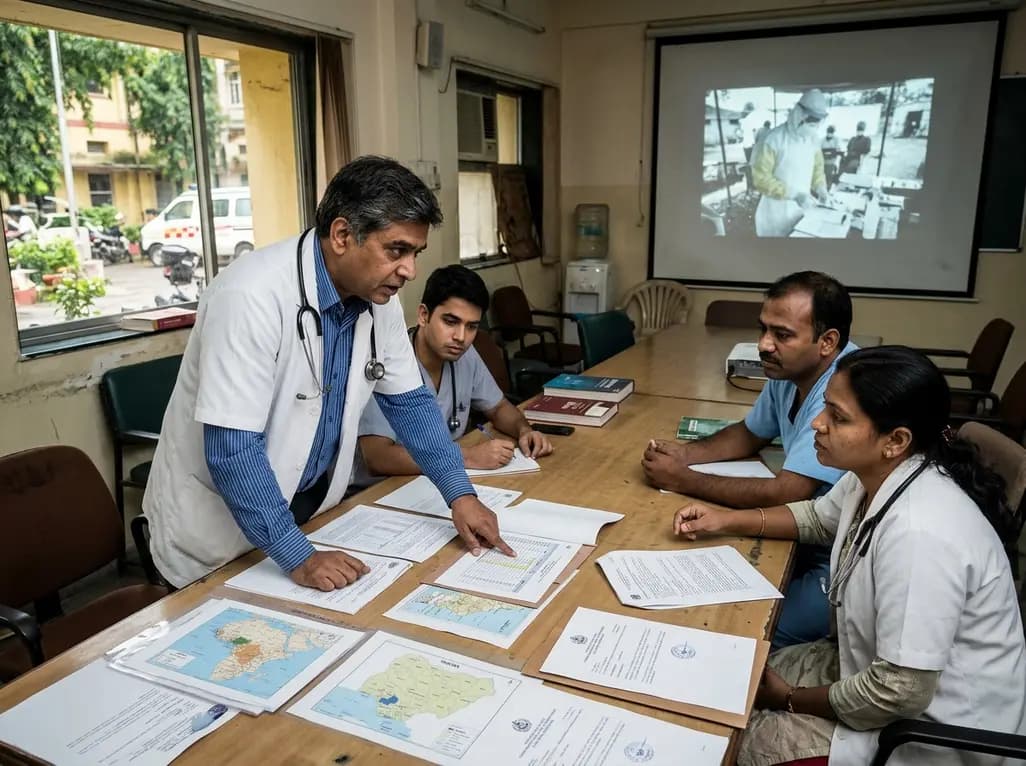
Following Nigeria's first recorded Ebola case linked to regional travel, the Africa CDC has convened an emergency ministerial summit. This alert underscores critical clinical priorities for healthcare professionals, including differentiating early viral infection from malaria, implementing barrier nursing, and triage.
Today

Leucine Rich Bio has introduced South Asia's first comprehensive vaginal microbiome test, BugSpeaks. By profiling microbial dysbiosis, pathogens, and antimicrobial resistance, this next-generation diagnostic platform provides clinicians with deeper insights into recurrent infections, fertility, and reproductive health.
Today

Review how tailored exercise programs benefit frail older patients with heart failure. Explore pathophysiological mechanisms, individualized training prescriptions, and strategies to overcome adherence barriers in clinical practice.
Today

This comparative study evaluates posterior labral tears with and without glenohumeral instability, highlighting distinct demographic patterns, MRI underestimation in stable shoulders, and successful arthroscopic repair outcomes.
Today

A clinical study demonstrates that early intervention with tocilizumab, either as monotherapy or bridged with corticosteroids, achieves significant proptosis reduction and resolves active inflammation in treatment-naive thyroid eye disease.
Today
