.webp&w=384&q=75)

Loading, please wait...
Loading, please wait...

Images play a vital role in shaping our understanding of mental health and reducing social stigma. Recently, researchers conducted a mixed-methods study to evaluate how AI-generated depression images compare with traditional media portrayals. The findings indicate that generative AI often reproduces harmful stereotypes. Consequently, these automated visuals could negatively impact people living with depression. Furthermore, participants in the study viewed media images as more realistic and inclusive than those produced by machines.
The study utilized discussion groups and a survey of nearly 800 individuals, including young people and those with depression. Interestingly, participants rated media-sourced images as more appropriate and better at reflecting the nuances of gender. In contrast, they considered AI-generated pictures to be significantly more stigmatizing. Therefore, the reliance on AI for health communication poses a challenge for public health experts. Because AI models learn from historical internet data, they tend to amplify existing cultural biases rather than providing evidence-based depictions.
Moreover, the research highlighted a distinct difference in how people perceive AI content when its origin is known. When participants recognized images as AI-generated, they rejected them more frequently. This suggests that public trust in automated health imagery remains low. Specifically, the study calls for closer collaboration between AI developers and mental health experts. Such partnerships could help create visuals that support recovery instead of reinforcing shame. Thus, healthcare providers should evaluate the visual materials they share to ensure they foster an inclusive environment for patients.
No, the study suggests that AI-generated images often rely on visual clichés and stereotypes rather than clinical reality. Participants found them less realistic than images used in traditional mass media.
AI models are trained on massive datasets from the internet, which already contain many cultural biases. Consequently, the AI amplifies these biases, creating exaggerated or overly negative representations of conditions like depression.
Clinicians should exercise caution. Since the study found that these images are perceived as more stigmatizing, using them might inadvertently harm the patient-provider relationship or the patient's self-image.
Disclaimer: This content is for informational and educational purposes only. It does not constitute professional medical advice, diagnosis, or treatment. Always seek the advice of your physician or another qualified healthcare provider with any questions you may have regarding a medical condition. Refer to the latest local and national guidelines for clinical practice.
References
Saladie N et al. Comparing Images of Depression in Mass Media and AI-Generated Pictures: Mixed Methods Study. JMIR Hum Factors. 2026 Apr 14. doi: 10.2196/81230. PMID: 41980240.
Torous J et al. AI depictions of psychiatric diagnoses: a preliminary study of generative image outputs in Midjourney V.6 and DALL-E 3. BMJ Ment Health. 2024;27(1):e301298.
Perlis RH et al. Generative AI Use and Depressive Symptoms Among US Adults. JAMA Netw Open. 2026;9(1):e2548123.

Read summarized clinical updates, watch expert medical content, and earn CME certifications right from your smartphone.
Open your smartphone camera to scan and install.





A study finds AI-generated images of depression are more stereotypical and stigmatizing than mass media, highlighting risks for mental health communication....
6 months ago

Recent epidemiological data reveals a dramatic surge in summer heat mortality driven by human-induced climate warming. This analysis explores the pathophysiological impacts on cardiac and renal systems, diagnostic dilemmas in death certification, and essential emergency cooling protocols for acute clinical care.
Today
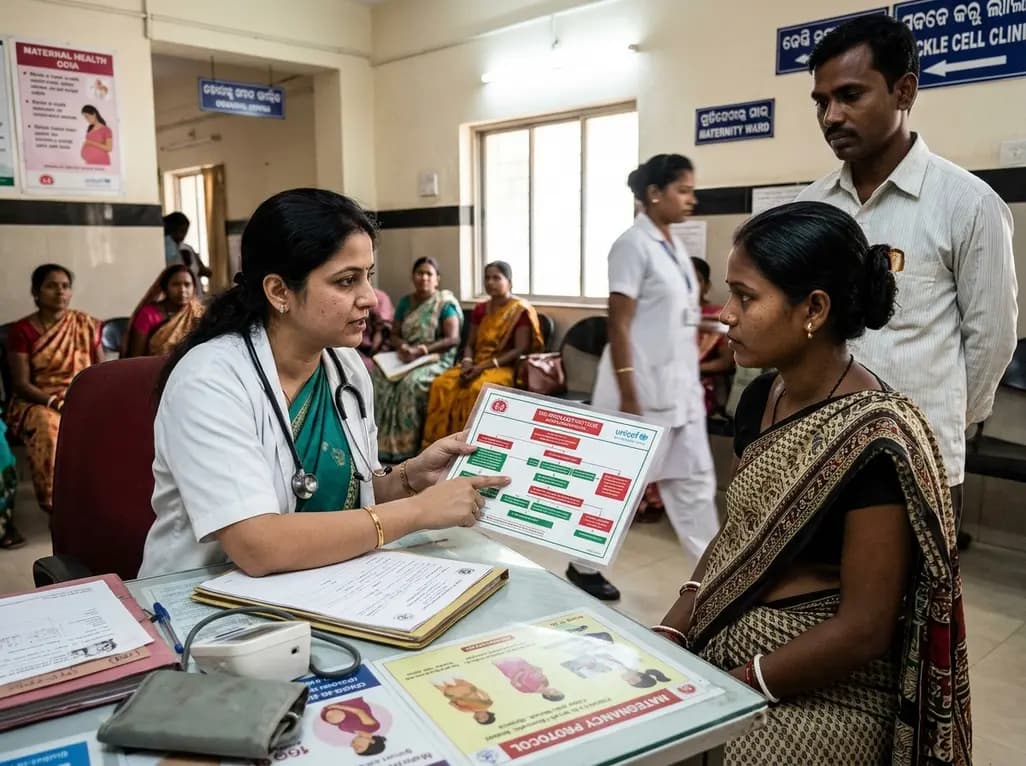
Odisha has established India's first state-level clinical protocol specifically tailored for pregnant women with sickle cell disease. Developed with NHM and UNICEF, the framework provides structured antenatal screening, crisis mitigation, standardized referral pathways, and specialized interdisciplinary care.
Today

India is advancing preventive healthcare by integrating genomics, artificial intelligence, and quantum technologies. With the SANGAM programme sequencing one million Indian genomes, clinicians can unlock personalized therapies, detect cardiometabolic risks early, and curb the burden of diabetes and heart disease.
Today
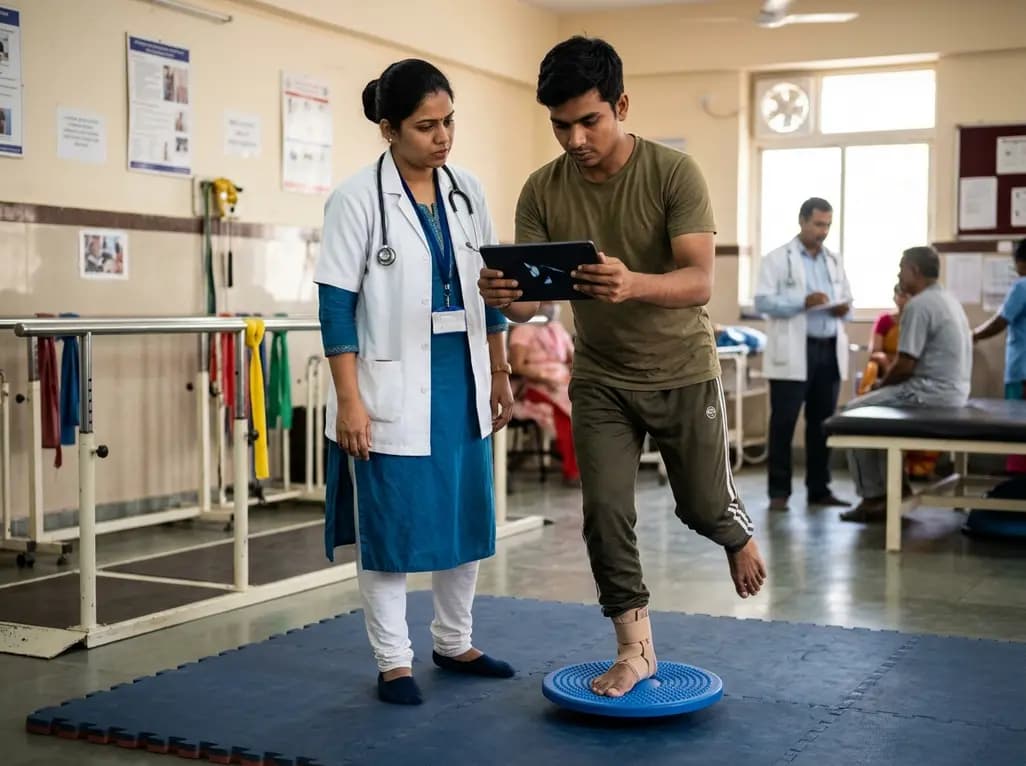
A randomized controlled trial demonstrates that an eight-week dual-task training intervention significantly improves static and dynamic postural control over standard balance exercises in individuals with chronic ankle instability, addressing critical neurocognitive deficits during athletic and daily activities.
Today

A retrospective cohort study of 7,716 ICU patients from the MIMIC-IV database demonstrates that Gradient Boosting Decision Trees significantly outperform traditional SOFA scores in predicting in-hospital mortality among patients with sepsis and diabetes, with SHAP analysis providing clinical interpretability.
Today
