.webp&w=384&q=75)

Loading, please wait...
Loading, please wait...

Facial plastic surgeons traditionally evaluate nasal function and aesthetics through visual inspection. However, subjective assessments often lead to variability in surgical planning. Consequently, a groundbreaking study recently introduced AI facial asymmetry metrics to bridge this gap. Specifically, this research utilizes automated landmark detection to quantify physical traits that align with patient-reported outcomes. Moreover, this approach provides a reliable framework for objective clinical assessment.
Researchers applied advanced facial landmark detection models to frontal images of 1,523 patients. Consequently, they extracted 506 fiducial points to compute over 64 million facial elements. By calculating asymmetry indexes based on mirrored counterparts, the team established a precise mathematical map of the face. Furthermore, they used Spearman correlation coefficients to link these metrics with clinical scores. Therefore, this data-driven approach allows for a level of detail previously unattainable in manual measurements. Notably, the high volume of data points ensures a comprehensive overview of facial geometry.
The study specifically focused on the Standardized Cosmesis and Health Nasal Outcomes Survey (SCHNOS). Findings revealed that certain AI facial asymmetry metrics demonstrated statistically significant correlations with preoperative scores. Specifically, the metrics correlated with SCHNOS-O (obstruction) showed coefficients between 0.185 and 0.224. Additionally, correlations with SCHNOS-A (aesthetics) ranged from 0.089 to 0.134. While these correlations are modest, they provide objective evidence of how facial structure influences a patient's perception. Thus, surgeons can use this data to identify patients with higher functional or aesthetic burdens.
Integrating AI into the preoperative phase offers numerous benefits for specialists. Firstly, it provides an objective baseline that helps manage patient expectations. Moreover, identifying subtle asymmetries helps in tailoring surgical techniques to the individual's unique anatomy. Consequently, this technology reduces the risk of overlooking minor deviations that could impact satisfaction. Furthermore, visual data helps in communicating potential results to the patient. Therefore, AI-driven analysis is becoming an essential tool for evidence-based practice in facial reconstruction. Ultimately, these tools empower surgeons to deliver more consistent and predictable results.
The Standardized Cosmesis and Health Nasal Outcomes Survey (SCHNOS) is a validated tool. It measures both the functional (obstruction) and aesthetic concerns of patients undergoing rhinoplasty.
They provide objective, reproducible measurements of facial proportions. This allows surgeons to identify subtle imbalances and plan more precise interventions to achieve better symmetry.
No, AI serves as a supporting tool. It complements the surgeon's expertise by providing quantitative data that enhances clinical decision-making and patient communication.
Disclaimer: This content is for informational and educational purposes only... Refer to the latest local and national guidelines for clinical practice.
References

Read summarized clinical updates, watch expert medical content, and earn CME certifications right from your smartphone.
Open your smartphone camera to scan and install.





A study explores AI-driven facial asymmetry metrics and their correlation with nasal function and aesthetics (SCHNOS scores) for pre-operative planning....
7 months ago

Explore vital recurrent stroke predictors in lacunar stroke patients managed with intensive blood pressure lowering. This analysis examines trial findings from SPS3 to uncover residual vascular risks, metabolic factors, and targeted secondary prevention strategies for high-risk neurological patients.
Today
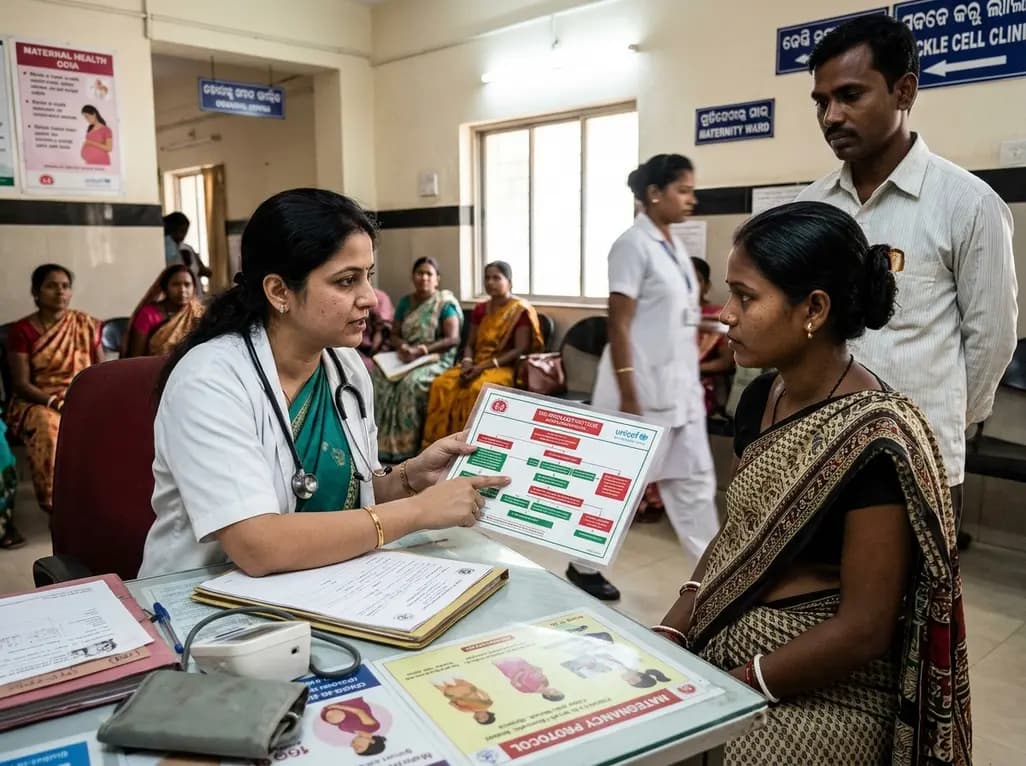
Odisha has established India's first state-level clinical protocol specifically tailored for pregnant women with sickle cell disease. Developed with NHM and UNICEF, the framework provides structured antenatal screening, crisis mitigation, standardized referral pathways, and specialized interdisciplinary care.
Today

India is advancing preventive healthcare by integrating genomics, artificial intelligence, and quantum technologies. With the SANGAM programme sequencing one million Indian genomes, clinicians can unlock personalized therapies, detect cardiometabolic risks early, and curb the burden of diabetes and heart disease.
Today

A randomized controlled trial demonstrates that an eight-week dual-task training intervention significantly improves static and dynamic postural control over standard balance exercises in individuals with chronic ankle instability, addressing critical neurocognitive deficits during athletic and daily activities.
Today

A retrospective cohort study of 7,716 ICU patients from the MIMIC-IV database demonstrates that Gradient Boosting Decision Trees significantly outperform traditional SOFA scores in predicting in-hospital mortality among patients with sepsis and diabetes, with SHAP analysis providing clinical interpretability.
Today
