.webp&w=384&q=75)

Loading, please wait...
Loading, please wait...

Modern neurosurgical training faces a growing crisis due to declining surgical caseloads and restricted hands-on opportunities for residents. While high-end haptic simulators offer a solution, their prohibitive costs and lack of standardization often limit their adoption in many medical centers. Consequently, a groundbreaking study has introduced a highly realistic, low-cost **microsurgical neurosurgery simulation** blueprint designed to bridge this educational gap. This innovative model allows for repetitive practice of complex cranial procedures using easily accessible materials and freely available software.
Researchers developed this new simulator using high-resolution anatomical reconstructions and additive manufacturing techniques. By carefully selecting materials that replicate the visual and tactile properties of living brain tissue, they created a high-fidelity environment for trainees. Furthermore, the entire manufacturing process relies on freeware, making it fully replicable for institutions with limited budgets. This development is particularly significant for surgical education in resource-constrained settings where access to expensive proprietary technology is rare.
Testing involved participants with varying levels of surgical experience, from novices to experts. Results indicated that the simulator possesses strong construct validity, as objective assessment tools measured significant technical improvements across all groups. Notably, novice users showed the most substantial gains after relatively short training intervals. Additionally, the model allows surgeons to compare different surgical approaches to the same pathology, providing a unique platform for preoperative strategy refinement.
The study highlights several critical benefits of integrating this physical simulation into standardized curricula. First, it offers a safe environment for repetitive practice without risking patient safety. Second, the use of patient-specific data allows for personalized simulation, preparing surgeons for the unique anatomical challenges of an individual case. Therefore, this simulator serves as a practical and scalable solution to current training limitations.
Integrating such tools into neurosurgical education can help standardize skills across different training programs. As surgical residency becomes more time-constrained, efficient and accessible training methods like this one are essential. Moreover, the low cost of production ensures that even smaller hospitals can provide their residents with high-quality microsurgical practice.
While haptic simulators provide electronic feedback, this low-cost model focuses on tactile and visual realism using specialized materials. It provides a highly effective, high-fidelity experience at a fraction of the cost, making it more accessible for widespread use.
The simulator supports a wide range of complex procedures, including sylvian fissure and white matter dissections, aneurysm clipping, and the resection of various tumors, such as those in the anterior skull base or temporal lobe.
No, the process is designed to be accessible. It uses 3D printing (additive manufacturing) and freely available software, meaning institutions can replicate it without specialized infrastructure beyond standard 3D printing capabilities.
Disclaimer: This content is for informational and educational purposes only and does not constitute medical advice or endorsement of any specific product. Always refer to the latest local and national guidelines for clinical practice.
References
Amini A et al. Training the next generation: a blueprint for simulation-based microsurgical education in neurosurgery. J Neurosurg. 2026 Apr 03. doi: 10.3171/2025.11.JNS251888. PMID: 41931848.
Suri A et al. Simulation-based skills training in neurosurgery: Infrastructure and curriculum development in India. Natboard. 2023 Jan 07.
Neyazi B et al. Reshaping neurosurgical training: a novel simulation-based concept for structured skill acquisition and curriculum integration. Neurosurg Rev. 2025 Jun 20;48(1):517. doi: 10.1007/s10143-025-03666-z.

Read summarized clinical updates, watch expert medical content, and earn CME certifications right from your smartphone.
Open your smartphone camera to scan and install.





A study introduces a realistic, low-cost microsurgical simulator using freeware and 3D printing to improve neurosurgical technical skills and training....
6 months ago

Explore vital recurrent stroke predictors in lacunar stroke patients managed with intensive blood pressure lowering. This analysis examines trial findings from SPS3 to uncover residual vascular risks, metabolic factors, and targeted secondary prevention strategies for high-risk neurological patients.
Today

Odisha has established India's first state-level clinical protocol specifically tailored for pregnant women with sickle cell disease. Developed with NHM and UNICEF, the framework provides structured antenatal screening, crisis mitigation, standardized referral pathways, and specialized interdisciplinary care.
Today

The Directorate General of Health Services directs Indian states to halt the hazardous reuse and reprocessing of single-use medical devices. Discover regulatory implications under the Drugs and Cosmetics Act, critical infection risks, legal liabilities, and operational changes required across clinical specialties.
Today
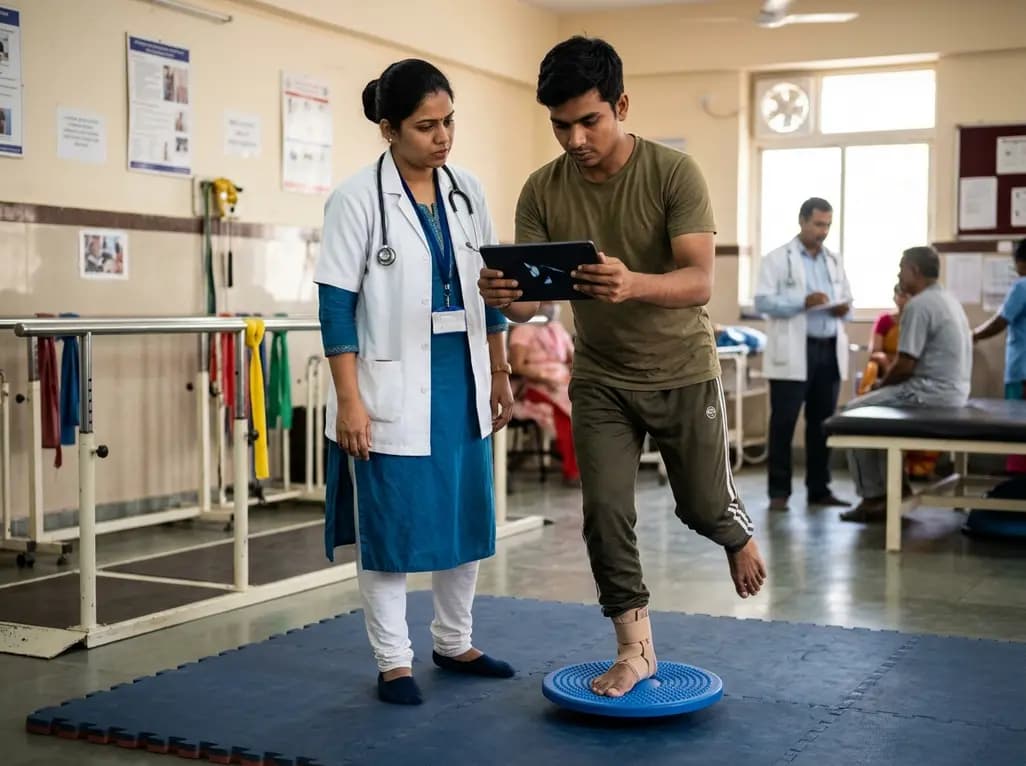
A randomized controlled trial demonstrates that an eight-week dual-task training intervention significantly improves static and dynamic postural control over standard balance exercises in individuals with chronic ankle instability, addressing critical neurocognitive deficits during athletic and daily activities.
Today

India is advancing preventive healthcare by integrating genomics, artificial intelligence, and quantum technologies. With the SANGAM programme sequencing one million Indian genomes, clinicians can unlock personalized therapies, detect cardiometabolic risks early, and curb the burden of diabetes and heart disease.
Today
