.webp&w=384&q=75)

Loading, please wait...
Loading, please wait...

Dysregulated cell cycle progression drives uncontrolled proliferation, which remains a fundamental hallmark of cancer cells. Consequently, CDK inhibitors in cancer therapy have emerged as a vital strategy for clinicians globally. These agents target specific cyclin-dependent kinases (CDKs) that govern cell-cycle progression and division. Currently, inhibitors targeting CDK4/6 demonstrate significant clinical activity, particularly in hormone receptor-positive metastatic breast cancer. However, recent scientific breakthroughs are now expanding the scope of these therapies to include more precise targets.
Recent structural elucidation of the CDK2 catalytic domain has enabled the development of highly selective CDK2 inhibitors. These newer agents exhibit encouraging antitumor activity in early clinical settings. Moreover, emerging evidence indicates that dual inhibition of CDK4/6 and CDK2 can synergistically overcome resistance to initial CDK4/6 blockade. By shutting down escape routes that cancer cells use to survive, this combination therapy represents a major leap in managing treatment-resistant tumors. Additionally, many investigational agents like BLU-222 are currently showing promise in clinical trials for solid tumors.
Notably, recent studies reveal that CDK inhibitors can induce cellular senescence. This process does not just stop cell growth; it also enhances the efficacy of cancer immunotherapy. By altering the tumor microenvironment, these inhibitors make cancer cells more visible to the immune system. Therefore, integrating CDK-targeted therapy with checkpoint inhibitors offers a promising clinical pathway for diverse malignancies. Furthermore, this dual approach may rejuvenate the host\'s anti-tumor immune response, leading to more durable patient outcomes.
CDK inhibitors induce cellular senescence, which triggers the release of pro-inflammatory signals. This process improves tumor antigen presentation and makes the cancer cells more susceptible to immune-mediated destruction by T cells.
Cancer cells often develop resistance to CDK4/6 inhibitors by shifting their growth dependence to CDK2. Simultaneously targeting both kinases prevents this escape mechanism, leading to more effective and durable tumor suppression.
While metastatic breast cancer remains the primary focus, recent advances in CDK2 and dual inhibition show significant potential in triple-negative breast cancer, ovarian cancer, and other solid tumors that exhibit cyclin E overexpression.
Disclaimer: This content is for informational and educational purposes only and does not constitute medical advice. Refer to the latest local and national guidelines for clinical practice.
References

Read summarized clinical updates, watch expert medical content, and earn CME certifications right from your smartphone.
Open your smartphone camera to scan and install.





This article explores recent advances in CDK inhibitors, focusing on CDK2 selectivity, synergy in breast cancer treatment, and immunotherapy enhancement....
6 months ago

A Bayesian multilevel meta-analysis reveals that aerobic training combined with moderate carbohydrate restriction modestly lowers HbA1c in type 2 diabetes. However, sparse data and very low certainty leave incremental benefits over exercise or diet alone unproven, highlighting the need for individualized care.
Today

Findings from Project Viva indicate that sustained postpartum weight retention, rather than excessive gestational weight gain alone, directly worsens women's mid-life cardiovascular health, degrading blood pressure and glycemic parameters decades after delivery.
Today
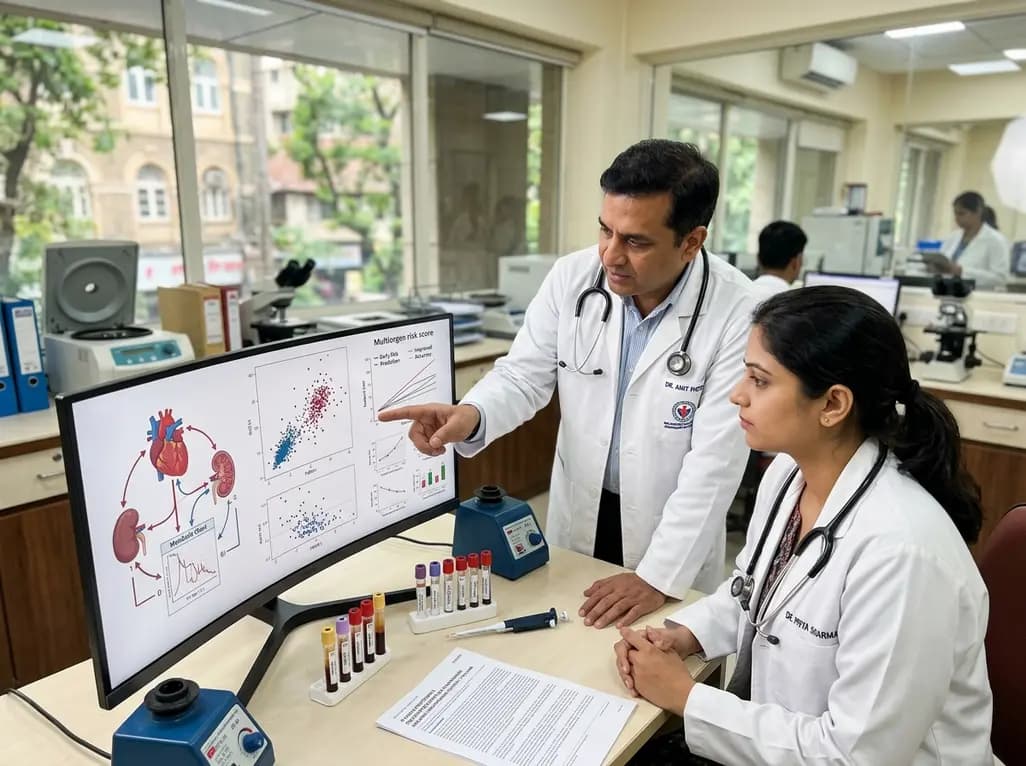
A large UK Biobank study reveals that plasma proteomic signatures capture preclinical organ damage and improve multiorgan risk prediction across early CKM syndrome stages 0 to 2 beyond traditional PREVENT clinical models.
Today

A retrospective CBCT study reveals that superior TMJ space asymmetry correlates moderately with occipital condyle-atlas-axis asymmetry in unilateral TMJ osteoarthritis, highlighting an imaging correlate between jaw biomechanics and upper cervical alignment rather than a standalone diagnostic marker.
Today

A cross-sectional investigation highlights the complex pathophysiological links between serum Klotho deficiency, secondary hyperaldosteronism, and vascular damage in CKD. Discover key insights into non-invasive vascular stiffness markers and targeted therapeutic pathways for cardiorenal protection.
Today
