.webp&w=384&q=75)

Loading, please wait...
Loading, please wait...

A Vein of Galen malformation is a rare congenital vascular shunt usually diagnosed in neonates. However, exceptional cases involve adults presenting with late-onset neurological symptoms. Recently, clinicians documented a unique case of a 47-year-old female in Puerto Rico. She presented with progressive cognitive decline and new-onset seizures. Furthermore, she had a background of chronically compensated heart failure. On admission, her Glasgow Coma Scale score was 6, indicating severe neurological distress. This clinical scenario illustrates how these malformations can remain hidden until middle age.
Computed tomography (CT) imaging initially revealed intraventricular hemorrhage and extensive parenchymal calcifications. Additionally, the patient exhibited signs of hydrocephalus. Consequently, surgeons placed an external ventricular drain urgently to manage intracranial pressure. Subsequent digital subtraction angiography (DSA) and CT angiography confirmed a choroidal Vein of Galen malformation. Notably, this subtype is typically more severe than the mural type because it involves multiple arterial feeders. Imaging remains the gold standard for differentiating these vascular abnormalities from other neurodegenerative conditions.
Workup for cerebrovascular abnormalities is crucial for patients with unexplained neurodegeneration at atypical ages. Early diagnosis of a Vein of Galen malformation can significantly impact clinical management and survival. While endovascular embolization is the standard treatment for many, some families may opt for conservative measures depending on the prognosis. In this specific case, the family chose to withdraw care given the severity of the brain injury. Nevertheless, this case highlights that clinicians should consider vascular shunts in the differential diagnosis of adult cognitive decline.
Choroidal Vein of Galen malformations involve multiple arterial feeders from choroidal and pericallosal arteries. They are generally more complex and severe compared to the mural type, which features fewer fistulae and often presents later in childhood.
Neonates often present with high-output heart failure due to high-volume shunting. In contrast, adults may have lower-flow fistulae or compensated systems. Consequently, they often experience symptoms like headaches, seizures, or progressive cognitive decline over several years.
Disclaimer: This content is for informational and educational purposes only and does not constitute medical advice or a professional relationship. Always seek the advice of a qualified healthcare provider for any questions regarding a medical condition. Refer to the latest local and national guidelines for clinical practice.
References

Read summarized clinical updates, watch expert medical content, and earn CME certifications right from your smartphone.
Open your smartphone camera to scan and install.





A rare case of a 47-year-old female diagnosed with a choroidal Vein of Galen malformation following cognitive decline, seizures, and intraventricular hemorr...
5 months ago
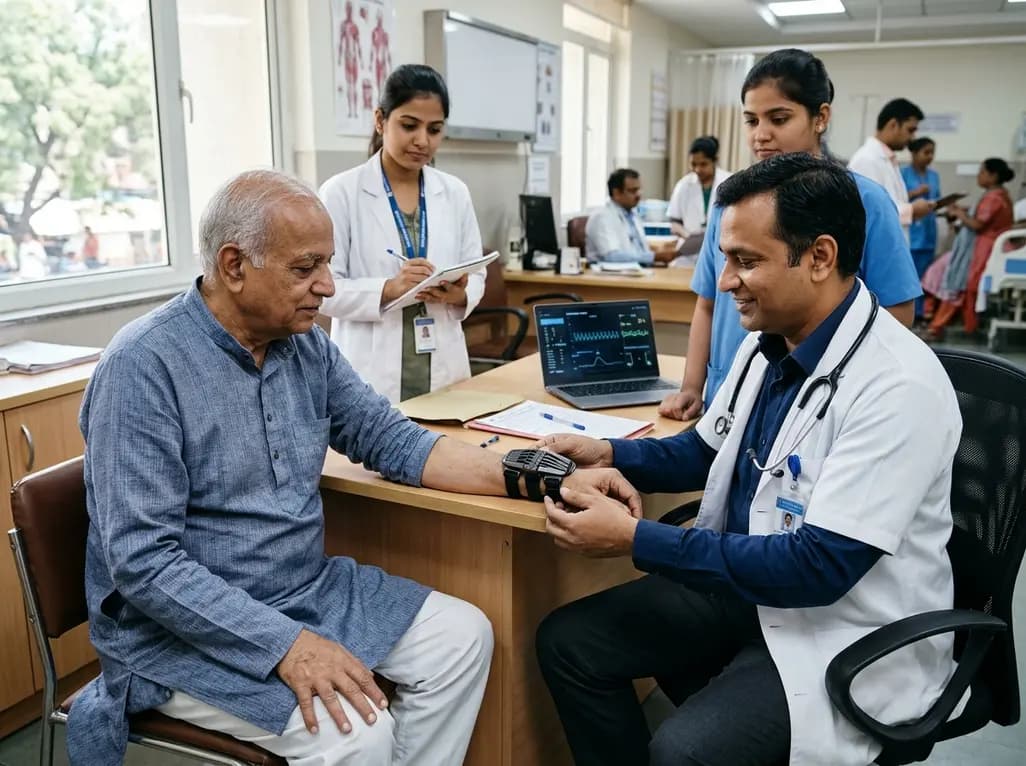
The TREM-AB open-label pilot study evaluated a wearable passive nonlinear vibration absorber for essential tremor. The Nonlinear Energy Sink bracelet reduced clinical Fahn-Tolosa-Marin tremor scores by 32.1% and electrophysiological tremor power by 49.2% with no adverse effects reported.
Today

A study in JAMIA Open shows lightweight open-source reasoning LLMs achieve up to 95% sensitivity and accelerate evidence synthesis screening by nearly twentyfold, presenting a cost-effective, scalable AI solution for biomedical research and systematic reviews.
Today
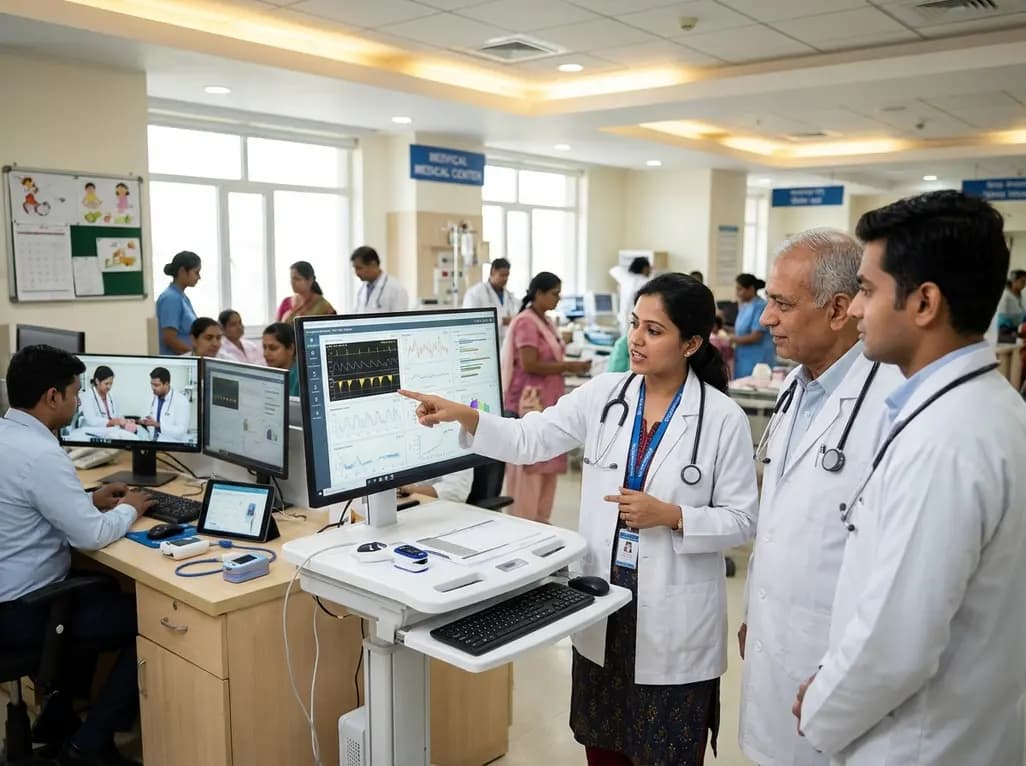
A landmark study details how an enterprise pediatric remote patient management model expanded from a single cardiology pilot to 16 diverse specialty programs by combining centralized digital operations with specialty clinical leadership.
Today
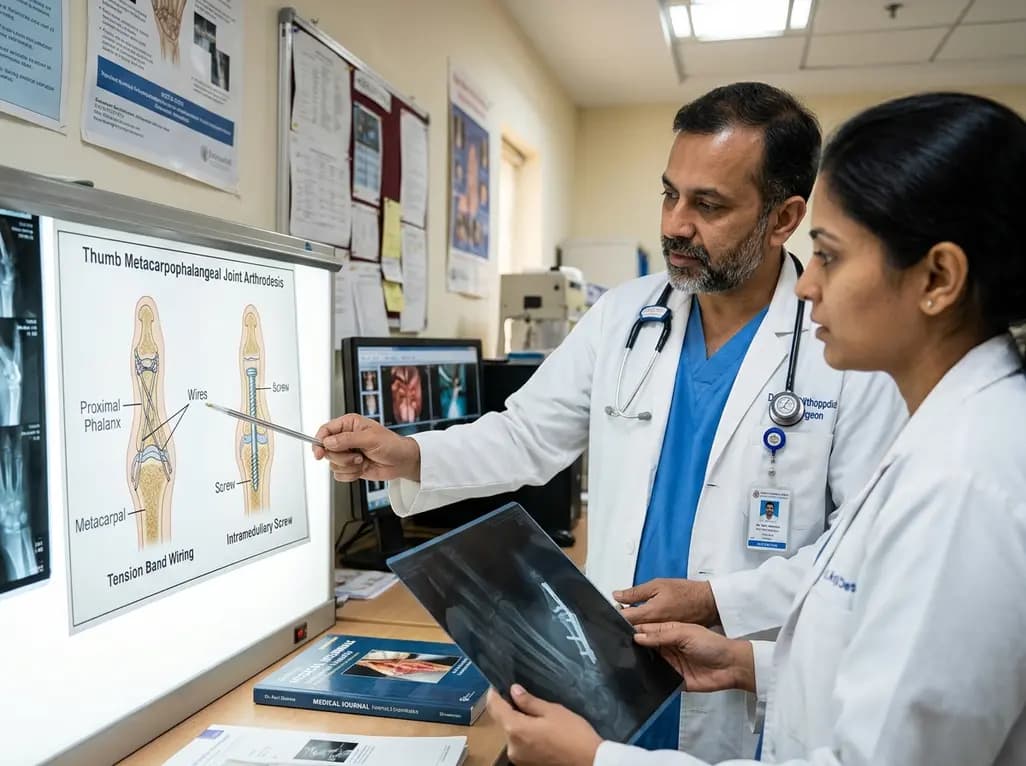
A comparative review of tension band wiring and intramedullary screw fixation in thumb metacarpophalangeal arthrodesis, evaluating union rates, hardware complications, and clinical outcomes.
Today
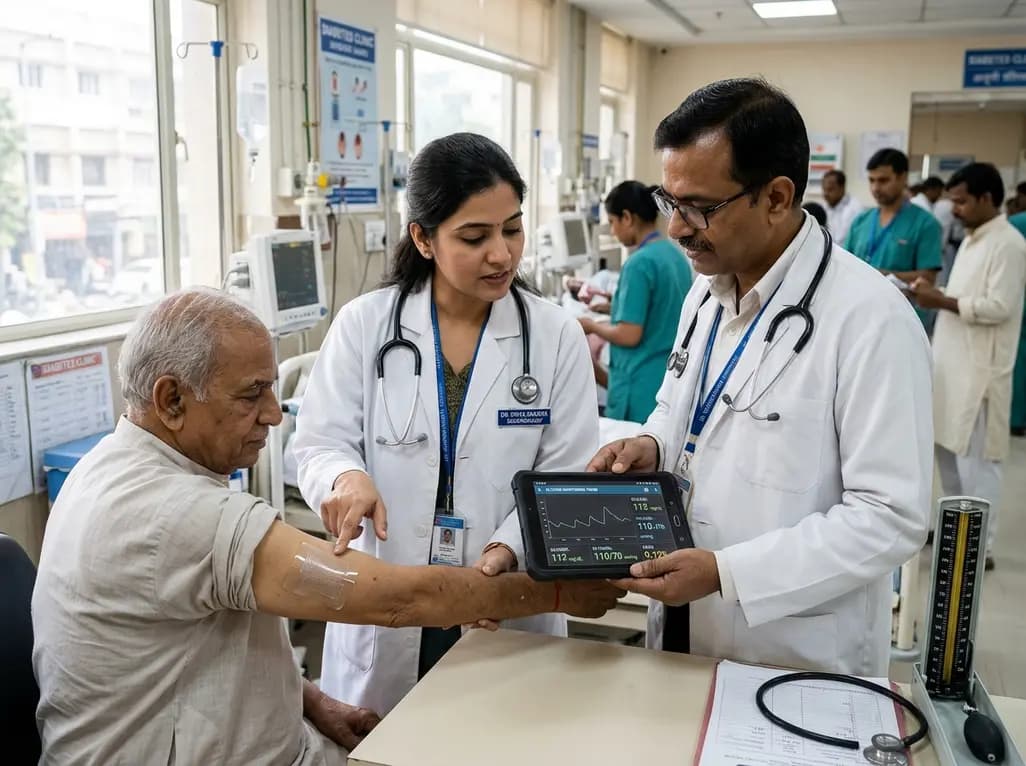
A breakthrough ultrathin multimodal sensor decouples physical hemodynamic monitoring from disposable electrochemical calibration, achieving long-term wearable glucose prediction with 81.36% accuracy and a 9.12% MARD. This offers a robust, drift-free solution for outpatient metabolic surveillance.
Today
