.webp&w=384&q=75)

Loading, please wait...
Loading, please wait...

Accurate staging of pancreatic neuroendocrine tumors (PNET) is critical for clinical success. Recent PNET imaging guidelines from the American College of Radiology (ACR) provide a roadmap for evaluating disease extent. These evidence-based recommendations help clinicians choose between various modalities like CT, MRI, and PET scans. Consequently, optimizing imaging protocols ensures better management for patients with both localized and metastatic disease.
Contrast-enhanced CT typically offers the best initial evaluation for most patients. It helps clinicians assess tumor size, locoregional extent, and vascular involvement. Furthermore, multiphasic protocols provide detailed information about tumor hypervascularity. Radiologists also prefer MRI for specific scenarios, particularly when evaluating the liver. Specifically, MRI with hepatobiliary contrast agents and diffusion-weighted imaging improves the detection of small liver metastases. Additionally, this modality characterizes liver-dominant disease more accurately than standard CT scans.
For advanced staging, DOTATATE PET/CT serves as a powerful tool. Guidelines suggest its use for staging and treatment planning in patients with known or suspected metastatic spread. However, clinicians reserve FDG-PET/CT for high-grade tumors that lack somatostatin receptor expression. Moreover, the ACR updates these criteria annually through systematic literature analysis. Expert panels adapt methodology principles like GRADE to evaluate clinical evidence carefully. In instances where literature is limited, expert consensus serves as the primary evidentiary source. Ultimately, following these standardized protocols leads to optimized patient outcomes.
Clinicians typically use contrast-enhanced CT and MRI as first-line tools for local staging and assessing vascular involvement. MRI with hepatobiliary contrast agents is particularly effective for evaluating liver metastases.
Current PNET imaging guidelines recommend DOTATATE PET/CT for staging and treatment planning in patients with suspected or confirmed metastatic disease, as it targets somatostatin receptors.
Disclaimer: This content is for informational and educational purposes only. It does not constitute professional medical advice, diagnosis, or treatment. Always seek the advice of your physician or other qualified healthcare provider with any questions you may have regarding a medical condition. Never disregard professional medical advice or delay in seeking it because of something you have read here. Refer to the latest local and national guidelines for clinical practice.
References
1. undefined undefined et al. ACR Appropriateness Criteria® Staging and Follow-Up of Pancreatic Neuroendocrine Tumors. J Am Coll Radiol. 2026 Mar 13. doi: undefined. PMID: 41823937.
2. Kamel I, et al. ACR Appropriateness Criteria® Staging and Follow-up of Pancreatic Neuroendocrine Tumors. Journal of the American College of Radiology. 2025;22(11S):S494-S508.
3. National Comprehensive Cancer Network. NCCN Clinical Practice Guidelines in Oncology: Neuroendocrine and Islet Cell Tumors. Version 1.2024.

Read summarized clinical updates, watch expert medical content, and earn CME certifications right from your smartphone.
Open your smartphone camera to scan and install.





ACR provides evidence-based recommendations for PNET staging and follow-up, emphasizing CT, MRI, and DOTATATE PET/CT for optimal patient management....
7 months ago

Recent epidemiological data reveals a dramatic surge in summer heat mortality driven by human-induced climate warming. This analysis explores the pathophysiological impacts on cardiac and renal systems, diagnostic dilemmas in death certification, and essential emergency cooling protocols for acute clinical care.
Today
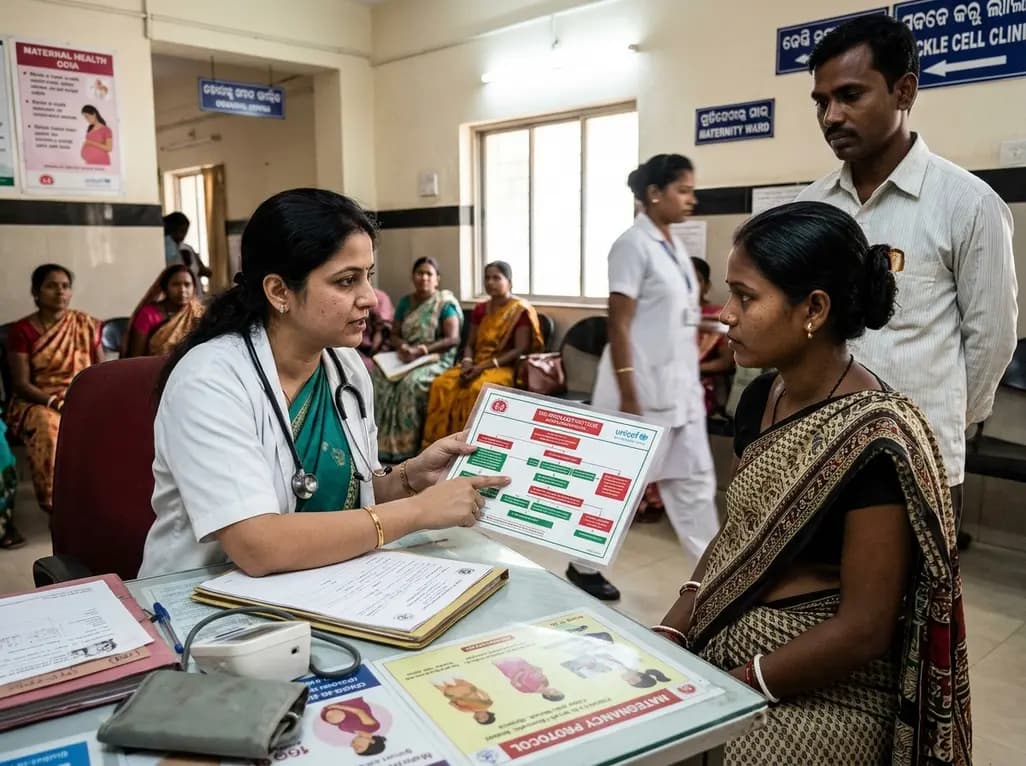
Odisha has established India's first state-level clinical protocol specifically tailored for pregnant women with sickle cell disease. Developed with NHM and UNICEF, the framework provides structured antenatal screening, crisis mitigation, standardized referral pathways, and specialized interdisciplinary care.
Today

India is advancing preventive healthcare by integrating genomics, artificial intelligence, and quantum technologies. With the SANGAM programme sequencing one million Indian genomes, clinicians can unlock personalized therapies, detect cardiometabolic risks early, and curb the burden of diabetes and heart disease.
Today
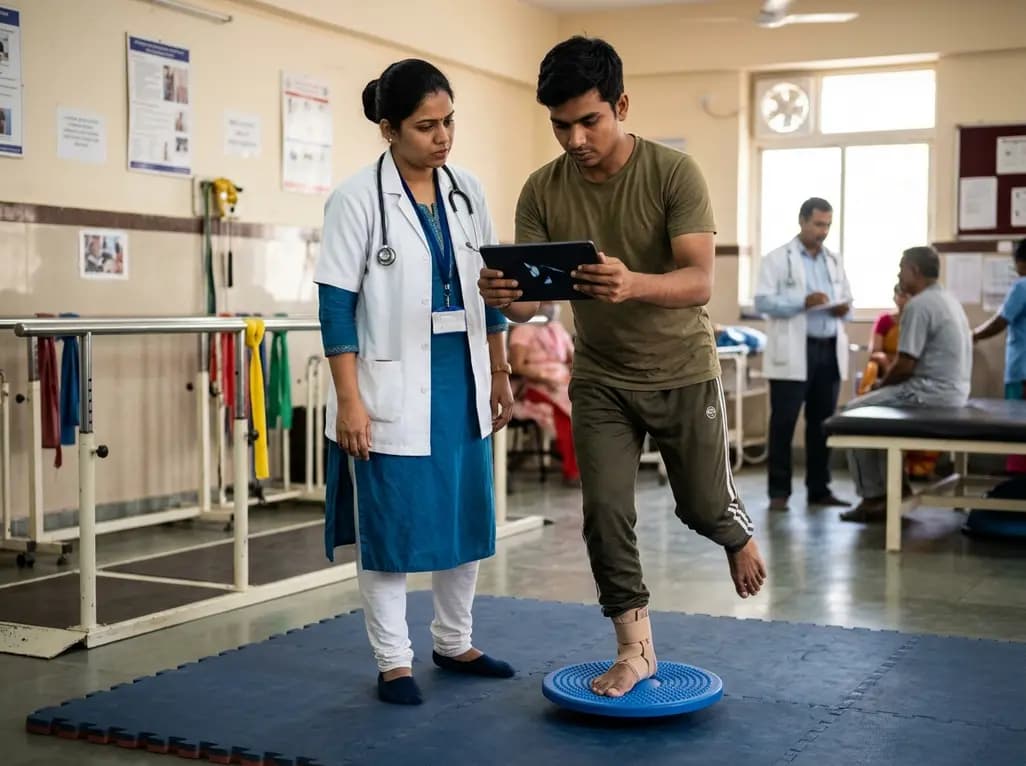
A randomized controlled trial demonstrates that an eight-week dual-task training intervention significantly improves static and dynamic postural control over standard balance exercises in individuals with chronic ankle instability, addressing critical neurocognitive deficits during athletic and daily activities.
Today

A retrospective cohort study of 7,716 ICU patients from the MIMIC-IV database demonstrates that Gradient Boosting Decision Trees significantly outperform traditional SOFA scores in predicting in-hospital mortality among patients with sepsis and diabetes, with SHAP analysis providing clinical interpretability.
Today
