.webp&w=384&q=75)

Loading, please wait...
Loading, please wait...

The American College of Physicians (ACP) recently published rapid practice points concerning RSV vaccines for adults who are 60 years or older. These guidelines provide clear directions for clinicians managing older patients who are not pregnant or immunocompromised. Specifically, the committee focused on the efficacy and safety of protein subunit vaccines available in clinical practice.
The ACP recommends that all adults aged 75 years and older receive a single dose of the RSV vaccine. Furthermore, clinicians should offer the vaccine to adults aged 60 to 74 years if they have an increased risk of severe disease. This high-risk category includes individuals with chronic heart or lung conditions, diabetes, and obesity. Consequently, physicians must engage in shared clinical decision-making for patients in the 60-74 age bracket.
Evidence shows that vaccination is highly effective at preventing lower respiratory tract disease and hospitalizations. Specifically, clinical trials indicate that these vaccines significantly reduce the burden of severe respiratory infections. In addition, the protection appears to last for at least two RSV seasons. Therefore, a single dose is currently sufficient to provide substantial clinical benefits.
However, clinicians must also discuss potential harms with their patients. While serious adverse events are rare, a small risk of Guillain-Barré syndrome exists. Moreover, common side effects include injection site pain and fatigue. Thus, a balanced discussion regarding the benefits and risks is essential for informed patient choice.
No, the RSV vaccine is not currently an annual vaccine. A single dose provides protection for at least two seasons, and health authorities are still studying the need for boosters.
Conditions such as chronic obstructive pulmonary disease (COPD), congestive heart failure, chronic kidney disease, and diabetes significantly increase the risk. Additionally, adults living in long-term care facilities should consider vaccination.
Yes, you can co-administer the RSV vaccine with other adult vaccines, including the seasonal influenza and COVID-19 shots. However, patients should be informed about the possibility of increased local reactions.
Disclaimer: This content is for informational and educational purposes only. It does not constitute medical advice or a professional relationship. Refer to the latest local and national guidelines for clinical practice.
References
Qaseem A et al. Respiratory Syncytial Virus Vaccines in Adults Who Are Not Pregnant or Immunocompromised: Rapid Practice Points From the American College of Physicians. Ann Intern Med. 2026 Mar 03. doi: 10.7326/ANNALS-25-05485. PMID: 41771137.
Centers for Disease Control and Prevention. RSV Vaccine Guidance for Adults. Updated February 24, 2026.
National Institutes of Health (NIH). Respiratory syncytial virus (RSV) vaccination in adults aged <60 years at increased risk of severe RSV disease. October 21, 2025.

Read summarized clinical updates, watch expert medical content, and earn CME certifications right from your smartphone.
Open your smartphone camera to scan and install.





ACP releases rapid practice points for RSV vaccines in adults 60+, recommending vaccination for those 75+ and high-risk individuals aged 60-74....
7 months ago
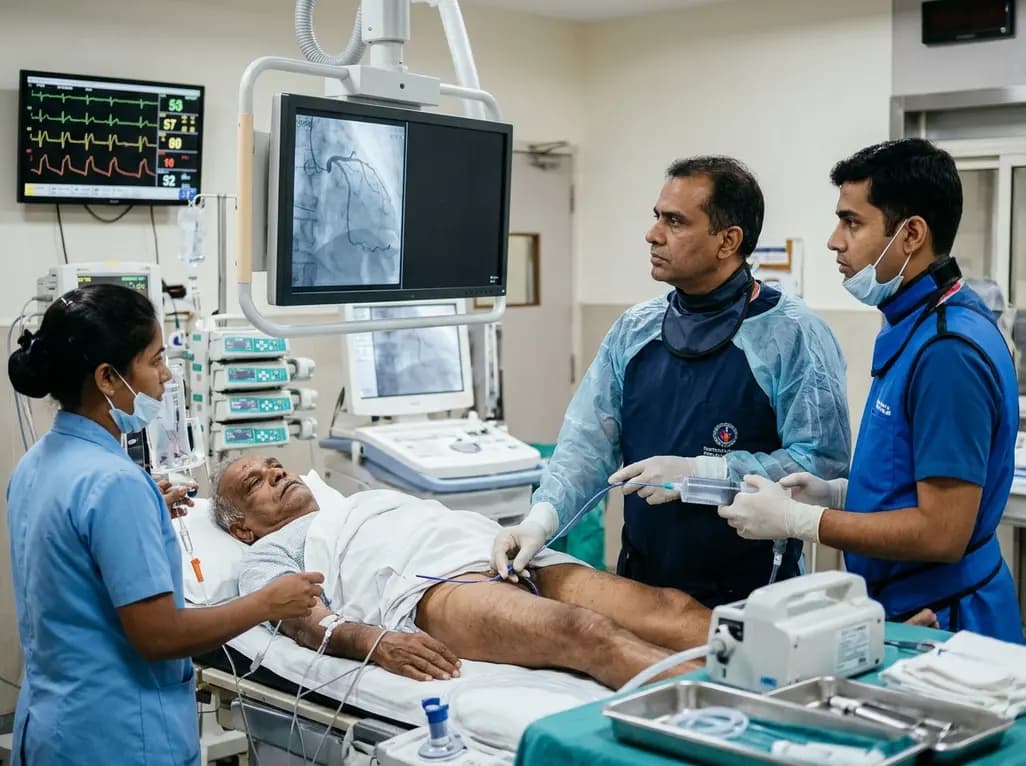
An elderly man with partially repaired Tetralogy of Fallot presented with STEMI caused by coronary embolism rather than atherosclerosis. Successful treatment with sustained mechanical aspiration thrombectomy underscores the vital need for high clinical vigilance in adult congenital heart disease.
Today

Demanding exhaustive hormonal profiling can inadvertently discourage clinical studies involving females. Methodological standards must align with the specific scientific question to expand, not restrict, equitable evidence for women.
Today

A recent study demonstrates that spinal oxygen sensors do not require mitochondrial electron transport to trigger sympathetic excitation during acute hypoxia, revealing new insights into how mitochondrial oxidative stress modulates autonomic tone in cardiovascular and neurological diseases.
Today

A novel calcium polyphosphate coacervate enables injectable bone implants with in situ hierarchical porosity via phase separation and gas foaming, significantly enhancing cell proliferation, energy metabolism, and osteogenic differentiation for minimally invasive bone defect repair.
Today

Following regulatory scrutiny from FSSAI regarding promotional representations and lean muscle preservation claims, Dr. Reddy's Laboratories and Nestlé Health Science are currently reviewing the branding and marketing strategy for their joint nutritional supplement Celevida GLP+.
Today
