.webp&w=384&q=75)

Loading, please wait...
Loading, please wait...

Global public health trends indicate a clear shift toward abortion law liberalization to reduce maternal mortality. Africa has emerged as a leader in this movement. Many nations have successfully expanded legal grounds for safe procedures over the last twenty years. Despite these regional advancements, Nigeria continues to operate under restrictive, century-old laws. Consequently, the country faces high rates of unsafe abortions and preventable deaths. Addressing these legal barriers is essential for improving women's health outcomes across the continent.
A recent scoping review identified several vital elements that facilitate abortion law liberalization. Firstly, scaling up awareness through targeted research provides policymakers with the necessary evidence for change. Medical societies also play a critical role. For example, they advocate for patient safety and high professional standards. Additionally, the transnational influence of international human rights norms exerts significant pressure on national governments. Multi-stakeholder coalitions and active women's movements further drive the momentum for reform. Moreover, these groups help navigate complex policy landscapes through strategic collaboration.
Stakeholders in Nigeria must adopt a collective approach to achieve meaningful policy reform. Experts suggest that liberalizing laws would significantly decrease the incidence of illegal, unsafe procedures. Furthermore, providing accessible safe abortion services aligns with global human rights standards. Currently, restrictive laws do not stop abortions. Instead, they only make them more dangerous for the most vulnerable women. Therefore, aligning domestic legislation with regional protocols remains a top priority for healthcare advocates and researchers.
The primary goal is to improve maternal health by reducing the deaths and complications associated with unsafe, clandestine abortions performed by untrained practitioners.
Medical societies provide clinical evidence and professional legitimacy to advocacy efforts. They frame abortion access as a public health necessity rather than just a legal or moral issue.
No, legal reform must be accompanied by the provision of accessible services and provider training. Sensitizing stakeholders and implementing clinical guidelines are also vital for successful outcomes.
Disclaimer: This content is for informational and educational purposes only. It does not constitute medical or legal advice. Refer to the latest local and national guidelines for clinical practice.
References
Ogunne KO et al. A scoping review of abortion law liberalisation in Africa and prospects for Nigeria. Afr J Reprod Health. 2026 Feb 24. doi: 10.29063/ajrh2026/v30i3s.7. PMID: 41738331.
World Health Organization. Abortion Care Guideline. Geneva: WHO; 2022. Available from: https://www.who.int/publications/i/item/9789240039483
Center for Reproductive Rights. The World's Abortion Laws. 2024. Available from: https://reproductiverights.org/maps/worlds-abortion-laws/

Read summarized clinical updates, watch expert medical content, and earn CME certifications right from your smartphone.
Open your smartphone camera to scan and install.





A scoping review explores how abortion law liberalization in Africa can reduce maternal mortality, highlighting key drivers for legal reform in Nigeria....
7 months ago
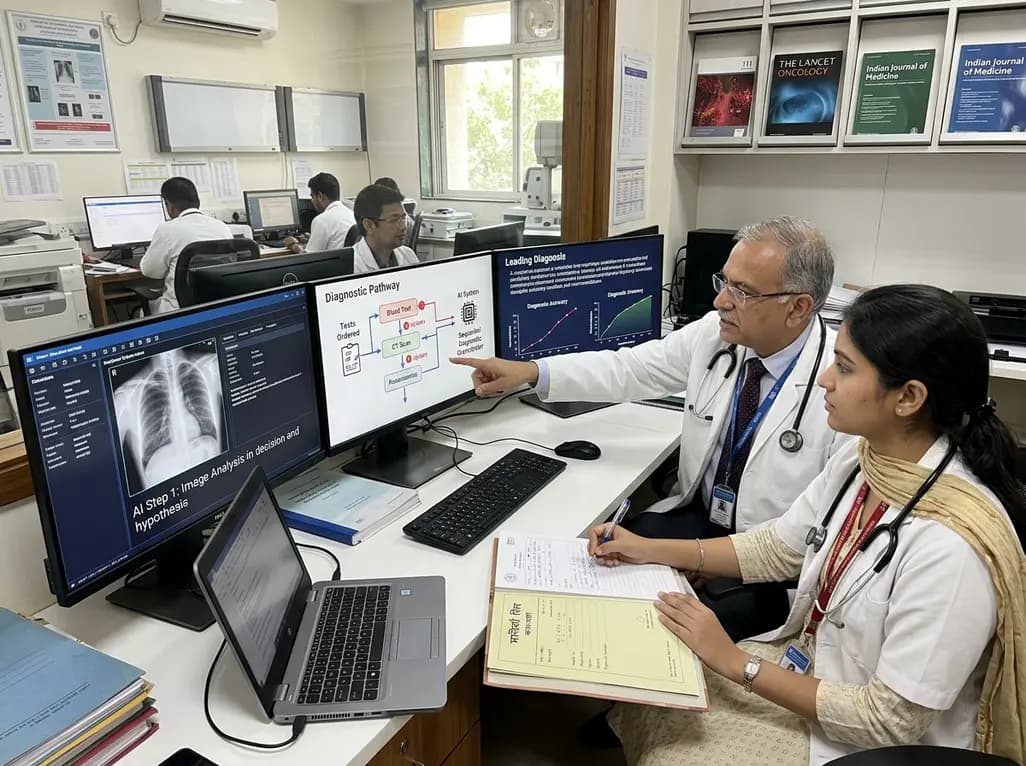
A breakthrough peer-reviewed study demonstrates that a sequential AI diagnosis system can mirror real-world clinical reasoning. By ordering stepwise tests and updating hypotheses dynamically, this multi-agent orchestrator achieved superior diagnostic accuracy while reducing investigative costs.
Today

A prenatal case highlights severe glutaric acidemia type II presenting as bilateral hyperechoic cystic kidneys at 18 weeks. Whole-exome sequencing revealed a novel homozygous ETFDH frameshift variant, demonstrating the power of rapid genetic testing in fetal renal anomalies.
Today

Review how tailored exercise programs benefit frail older patients with heart failure. Explore pathophysiological mechanisms, individualized training prescriptions, and strategies to overcome adherence barriers in clinical practice.
Yesterday

This comparative study evaluates posterior labral tears with and without glenohumeral instability, highlighting distinct demographic patterns, MRI underestimation in stable shoulders, and successful arthroscopic repair outcomes.
Yesterday

A clinical study demonstrates that early intervention with tocilizumab, either as monotherapy or bridged with corticosteroids, achieves significant proptosis reduction and resolves active inflammation in treatment-naive thyroid eye disease.
Yesterday
