.webp&w=384&q=75)

Loading, please wait...
Loading, please wait...

The evolution of biotechnology has reached a significant milestone with AbNatiV2 antibody design. This deep learning tool assesses the "nativeness" of candidate sequences to ensure pharmaceutical stability and low toxicity. Natural immune systems produce antibodies that balance binding strength with minimal self-reactivity. However, identifying these optimal candidates manually remains a complex challenge. Consequently, researchers now use nativeness scoring to select developable leads from synthetic libraries efficiently.
While the original AbNatiV model established a baseline for nativeness assessment, it faced limitations with unpaired sequences. Therefore, experts developed AbNatiV2 by training the architecture on over 20 million sequences. This enhanced version significantly improves classification across diverse test sets. Moreover, it accurately detects subtle changes in nativeness during the CDR grafting process. Furthermore, the model helps identify candidates that are less likely to cause adverse reactions in patients by mimicking natural repertoires.
The introduction of the p-AbNatiV2 model marks a substantial leap forward for conventional antibody engineering. This cross-attention model was fine-tuned on nearly 4 million paired human sequences. Specifically, it assesses the likelihood of VH/VL pairing with remarkable precision. In held-out tests, the system correctly identifies native pairs 74% of the time. Thus, it outperforms most existing pairing models used in the industry today.
In addition, clinicians and biotech researchers can leverage this tool for humanization and de novo design. By ensuring sequences look "native," they minimize the risk of immunogenicity. This is critical for the safety of new monoclonal antibody therapies. This tool supports design decisions at the single-residue, Fv-sequence, and paired-domain levels. Consequently, AbNatiV2 represents an essential asset for modern biopharmaceutical research and development.
Nativeness refers to how closely a synthetic antibody sequence matches those found in natural human or camelid immune systems. High nativeness scores usually correlate with better folding, stability, and lower toxicity.
AbNatiV2 utilizes an expanded dataset of 20 million sequences and introduces p-AbNatiV2. This new component handles paired VH-VL sequences, allowing for more accurate conventional antibody assessment compared to the unpaired AbNatiV1.
The model was trained on newly sequenced and curated camelid repertoires. Therefore, it offers robust classification for nanobodies, helping researchers identify stable single-domain antibodies for therapeutic use.
Disclaimer: This content is for informational and educational purposes only. It does not constitute medical advice or endorsement of any specific software or treatment. Refer to the latest local and national guidelines for clinical practice.
References
1. Ramon A et al. Deep learning assessment of nativeness and pairing likelihood for antibody and nanobody design with AbNatiV2. MAbs. 2026 Dec 31. doi: 10.1080/19420862.2026.2646361. PMID: 41947016.
2. Ramon A, et al. AbNatiV: VQ-VAE-based assessment of antibody and nanobody nativeness for hit selection, humanisation, and engineering. bioRxiv. 2025. doi: 10.1101/2025.10.31.685806.
3. Shin JE, et al. Machine Learning Models for Nanobody Developability Trained on a Custom Multi-Readout Dataset. BioLogic Summit. 2026.
"
Read summarized clinical updates, watch expert medical content, and earn CME certifications right from your smartphone.
Open your smartphone camera to scan and install.





AbNatiV2 uses deep learning to evaluate antibody and nanobody nativeness, streamlining the design of stable, low-toxicity therapeutic candidates....
6 months ago
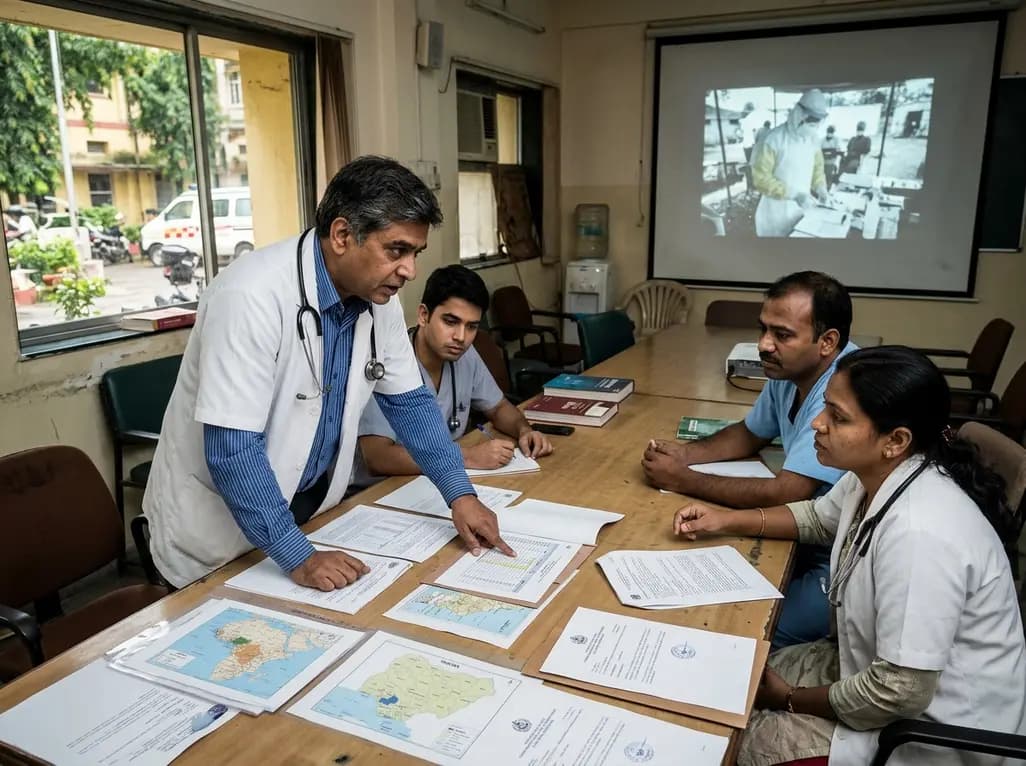
Following Nigeria's first recorded Ebola case linked to regional travel, the Africa CDC has convened an emergency ministerial summit. This alert underscores critical clinical priorities for healthcare professionals, including differentiating early viral infection from malaria, implementing barrier nursing, and triage.
Today

Leucine Rich Bio has introduced South Asia's first comprehensive vaginal microbiome test, BugSpeaks. By profiling microbial dysbiosis, pathogens, and antimicrobial resistance, this next-generation diagnostic platform provides clinicians with deeper insights into recurrent infections, fertility, and reproductive health.
Today

Review how tailored exercise programs benefit frail older patients with heart failure. Explore pathophysiological mechanisms, individualized training prescriptions, and strategies to overcome adherence barriers in clinical practice.
Today

This comparative study evaluates posterior labral tears with and without glenohumeral instability, highlighting distinct demographic patterns, MRI underestimation in stable shoulders, and successful arthroscopic repair outcomes.
Today

A clinical study demonstrates that early intervention with tocilizumab, either as monotherapy or bridged with corticosteroids, achieves significant proptosis reduction and resolves active inflammation in treatment-naive thyroid eye disease.
Today
