.webp&w=384&q=75)

Loading, please wait...
Loading, please wait...

Nursing students frequently encounter immense clinical stress, which can severely hinder their learning and professional growth. Identifying effective tools to manage this burden is essential for maintaining a high standard of nursing education. A recent randomized controlled trial highlights that a structured 4A stress management intervention significantly outperforms mobile self-help programs in improving student outcomes. This finding offers a clear pathway for educators to better support their students through peer-led, facilitator-driven frameworks.
The 4A model provides a comprehensive framework for handling daily and clinical stressors. It encourages students to either Avoid unnecessary stress, Alter the stressor through communication, Adapt by changing expectations, or Accept the things beyond their control. In this study, 105 undergraduate nursing students participated in a five-week program. One group engaged in an in-person, peer-teaching intervention based on these principles, while the other used a mobile app. Notably, the facilitator-led group demonstrated a much sharper reduction in clinical stress levels.
Beyond reducing stress, the study measured how these interventions influenced clinical self-efficacy. Higher self-efficacy correlates with better clinical performance and professional confidence. The results showed that students in the 4A-based intervention group reported significantly higher self-efficacy scores post-test. Conversely, the mobile self-help program did not provide the same level of improvement. This suggests that the interactive nature of facilitator-led training helps students internalize coping strategies more effectively than solitary app-based learning. Consequently, educators should prioritize structured training to build more resilient nursing cohorts.
The success of the 4A intervention likely stems from its peer-teaching design. This approach fosters a supportive environment where students can share real-world clinical challenges. Furthermore, peer-led models are highly scalable and cost-effective for institutions with limited faculty resources. Although neither intervention significantly altered the participants' professional identity, the improvements in stress levels and self-efficacy are vital for long-term retention. Therefore, integrating these structured sessions into the nursing curriculum could prevent burnout before students even enter the workforce full-time.
The 4A model stands for Avoid, Alter, Adapt, and Accept. It teaches individuals to identify whether a stressor can be changed or if their response to it must be modified.
The 4A intervention utilized a peer-teaching, facilitator-led format. This structure provides social support, accountability, and practical application, which are often lacking in self-directed mobile programs.
Disclaimer: This content is for informational and educational purposes only. It does not constitute professional medical or educational advice. Refer to the latest local and national guidelines for clinical practice.
References
Bakhshi F et al. An Enhanced 4A‑Based Stress‑Management Intervention for Nursing Students: A Randomized Controlled Comparison With a Mobile Self‑Help Program. Nurse Educ. 2026 May 07. doi: 10.1097/NNE.0000000000002177. PMID: 42096256.
Mayo Clinic. Try the 4 A's for stress relief. Mayo Clinic Health System. Published 2021.
HelpGuide.org. Stress Management: Techniques and Strategies to Deal with Stress. Published 2024.

Read summarized clinical updates, watch expert medical content, and earn CME certifications right from your smartphone.
Open your smartphone camera to scan and install.





A randomized trial found that a structured 4A-based stress management intervention significantly outperforms mobile apps in reducing clinical stress for stu...
5 months ago
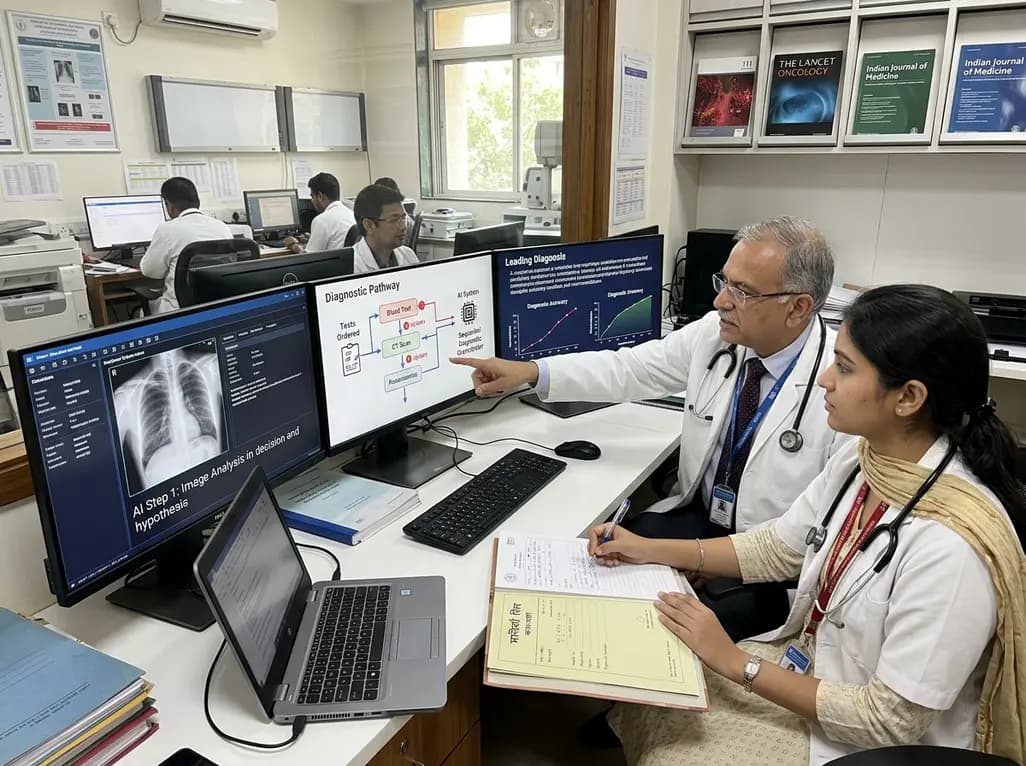
A breakthrough peer-reviewed study demonstrates that a sequential AI diagnosis system can mirror real-world clinical reasoning. By ordering stepwise tests and updating hypotheses dynamically, this multi-agent orchestrator achieved superior diagnostic accuracy while reducing investigative costs.
Today

A prenatal case highlights severe glutaric acidemia type II presenting as bilateral hyperechoic cystic kidneys at 18 weeks. Whole-exome sequencing revealed a novel homozygous ETFDH frameshift variant, demonstrating the power of rapid genetic testing in fetal renal anomalies.
Today

Review how tailored exercise programs benefit frail older patients with heart failure. Explore pathophysiological mechanisms, individualized training prescriptions, and strategies to overcome adherence barriers in clinical practice.
Yesterday

This comparative study evaluates posterior labral tears with and without glenohumeral instability, highlighting distinct demographic patterns, MRI underestimation in stable shoulders, and successful arthroscopic repair outcomes.
Yesterday

A clinical study demonstrates that early intervention with tocilizumab, either as monotherapy or bridged with corticosteroids, achieves significant proptosis reduction and resolves active inflammation in treatment-naive thyroid eye disease.
Yesterday
