.webp&w=384&q=75)

Loading, please wait...
Loading, please wait...

Fontan-associated liver disease (FALD) remains a significant and progressive complication for patients living with single-ventricle physiology. Recently, breakthroughs in bioengineering have introduced a sophisticated Fontan-associated liver disease model to better understand the underlying mechanics of this condition. This 3D bioengineered human liver sinusoid incorporates both hepatocytes and endothelial cells within a multilayered construct. Consequently, it allows researchers to study the complex interaction between chronically elevated central venous pressure (CVP) and hypoxia that defines Fontan physiology.
The new platform utilizes a perfusable architecture that mimics the liver's natural microenvironment. Furthermore, the model operates under tunable flow and oxygen levels to replicate the pathological CVP levels seen in clinical cases. Because the researchers employed electron microscopy and microindentation, they confirmed the structural and mechanical fidelity of the sinusoid analogues. Therefore, this model provides a highly accurate representation of human liver tissue responses to hemodynamic stress. Specifically, the sinusoid analogues maintained their endothelial coverage and hepatic viability over 21 days of culture.
During the study, researchers observed that elevated pressure and hypoxia triggered specific cellular pathways associated with FALD. Specifically, endothelial activation occurred through the expression of VCAM-1 and ET-1. Additionally, hepatocellular stress was evident by the presence of HIF1α. These molecular changes led to fibronectin-rich tissue remodeling and altered hepatic functions, including changes in albumin and bile acid production. Consequently, these findings align closely with the early-stage FALD pathology observed in pediatric and adult patients. This bioengineered model successfully reproduced key features of liver injury, enabling a controlled environment for mechanistic interrogation.
The platform's high sensitivity to metabolic and mechanical cues makes it an ideal tool for testing novel therapeutic interventions. Moreover, the ability to maintain hepatic function in a perfusable system for three weeks allows for long-term study of disease progression. This innovation enables controlled interrogation of liver injury without relying solely on limited animal models. Ultimately, this progress in modeling may lead to improved diagnostic markers and personalized treatment strategies for patients surviving the Fontan procedure.
FALD is primarily driven by the chronically elevated central venous pressure and reduced pulsatile blood flow inherent in Fontan circulation, which leads to hepatic congestion and hypoxia.
Unlike traditional cell cultures, this 3D model incorporates multiple cell types and tunable hemodynamic flow, accurately mimicking the mechanical and metabolic stresses that cause liver injury in Fontan patients.
The study highlighted several biomarkers of injury, including endothelial activation markers like VCAM-1 and ET-1, as well as the hypoxia-inducible factor HIF1α and changes in albumin and LDH levels.
Disclaimer: This content is for informational and educational purposes only. It is not intended as medical advice or to replace the professional judgment of a healthcare provider. Refer to the latest local and national guidelines for clinical practice.
References
1. Rezapourdamanab S et al. A Dynamic 3D Human Liver Sinusoid Model for Mechanistic Interrogation of Fontan-Associated Liver Disease. Adv Sci (Weinh). 2026 Apr 08. doi: 10.1002/advs.202524337. PMID: 41949899.
2. Munsterman ID et al. Liver fibrosis in the Fontan circulation: A review. World J Hepatol. 2019.
3. Rychik J et al. The Fontan survivor: A review of liver issues. Cardiology in the Young. 2013.

Read summarized clinical updates, watch expert medical content, and earn CME certifications right from your smartphone.
Open your smartphone camera to scan and install.





A new 3D bioengineered liver sinusoid model mimics Fontan-associated liver disease (FALD) pathology to study pressure and hypoxia-induced liver injury....
6 months ago
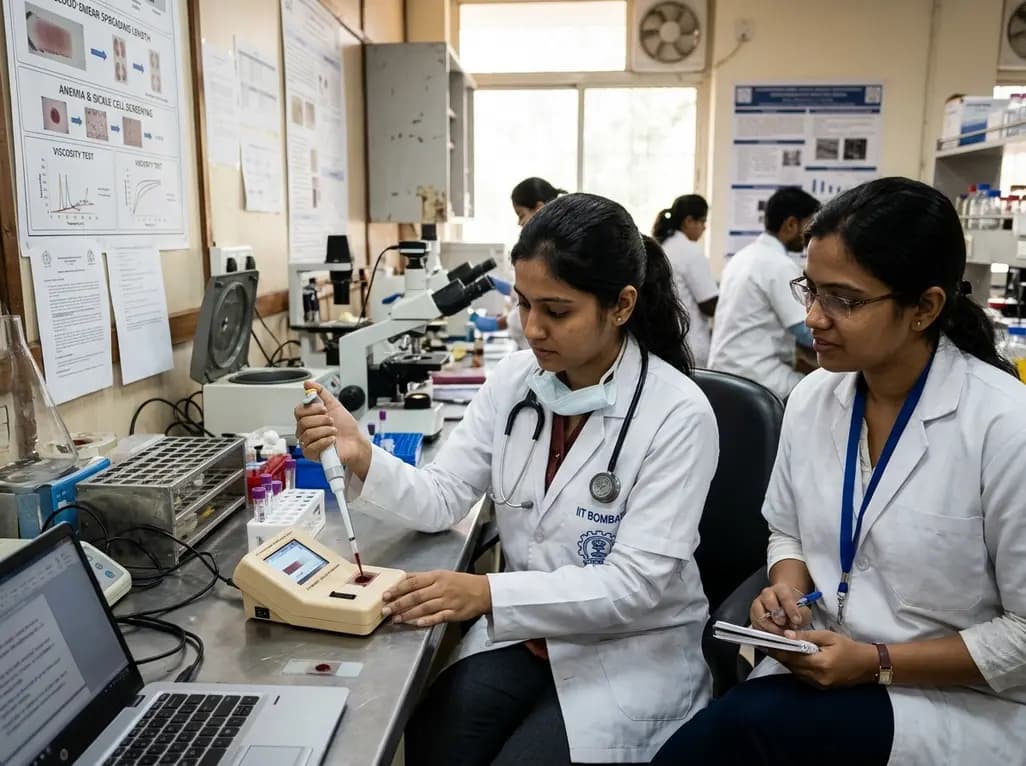
Researchers at IIT Bombay have engineered an automated, cost-effective point-of-care device that diagnoses anaemia and sickle cell disease from a single drop of blood. By measuring blood smear spreading length, this portable tool assesses blood viscosity to offer rapid screening in resource-limited healthcare centers.
Today

A population-based study of 20,928 children reveals that small vulnerable newborns face sex-divergent mental capital outcomes at ages 6-7: term SGA girls show higher behavioral difficulties and lower resilience, while preterm non-SGA boys experience increased behavioral problems.
Today
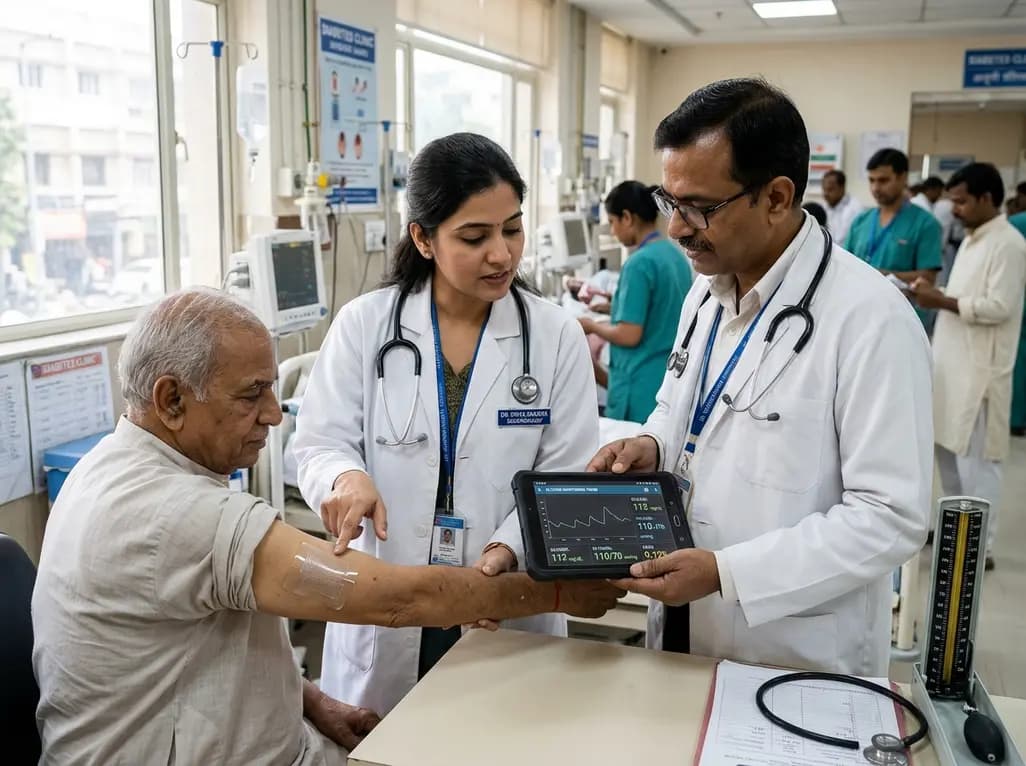
A breakthrough ultrathin multimodal sensor decouples physical hemodynamic monitoring from disposable electrochemical calibration, achieving long-term wearable glucose prediction with 81.36% accuracy and a 9.12% MARD. This offers a robust, drift-free solution for outpatient metabolic surveillance.
Today

A comparative review of tension band wiring and intramedullary screw fixation in thumb metacarpophalangeal arthrodesis, evaluating union rates, hardware complications, and clinical outcomes.
Today

Following regulatory scrutiny from FSSAI regarding promotional representations and lean muscle preservation claims, Dr. Reddy's Laboratories and Nestlé Health Science are currently reviewing the branding and marketing strategy for their joint nutritional supplement Celevida GLP+.
Today
