.webp&w=384&q=75)

Loading, please wait...
Loading, please wait...

Managing fundal coloboma-associated retinal detachment presents significant challenges due to the complex anatomy of the intercalary membrane. Therefore, clinicians often utilize 25G vitrectomy for coloboma RD to address these difficult cases. Recent clinical evidence highlights that this microincision approach offers a high primary success rate while significantly improving functional outcomes. Furthermore, identifying specific risk factors is essential for reducing the likelihood of redetachment in these patients.
The study analyzed sixty eyes of patients with an average age of 18.4 years. Results showed a clear male predominance, with 85% of cases presenting with bilateral fundal colobomas. Notably, surgeons localized nearly 78.3% of retinal breaks to the intercalary membrane (ICM). Using 25G microincision vitrectomy surgery, the primary anatomical success rate reached 80%. Consequently, after secondary procedures, the overall success rate increased to 94.7%. Patients also experienced a significant visual improvement, with mean logMAR values shifting from 1.95 to 1.42.
Despite high success rates, long-term complications require careful monitoring. Cataract development was the most common issue, affecting nearly 42% of eyes. Additionally, researchers noted silicone oil emulsification in 15% and ocular hypertension in 8.3% of the cohort. Proliferative vitreoretinopathy (PVR) and the presence of multiple ICM breaks significantly predicted primary failure. Moreover, a lack of preoperative laser prophylaxis increased the risk of redetachment. These findings suggest that meticulous endolaser and careful management of the vitreous base are vital for durable results.
Research indicates that approximately 78.3% of retinal breaks in coloboma-associated detachments occur within the intercalary membrane (ICM).
Primary surgery with 25G vitrectomy achieves anatomical success in 80% of cases, while subsequent resurgery can push the overall success rate to nearly 95%.
The presence of proliferative vitreoretinopathy (PVR), multiple intercalary membrane breaks, and a lack of previous laser prophylaxis are significant predictors of redetachment.
Disclaimer: This content is for informational and educational purposes only. It does not constitute medical advice or establish a doctor-patient relationship. Refer to the latest local and national guidelines for clinical practice.
References
Yarrarapu S et al. Clinical presentation, association, laser prophylaxis, and long-term surgical outcomes of 25G vitrectomy in fundal coloboma with retinal detachment. Indian J Ophthalmol. 2026 Mar 12. doi: 10.4103/IJO.IJO_1774_25. PMID: 41817575.
Gopal L, Badrinath SS, Sharma T, et al. Surgical management of retinal detachment in patients with coloboma of choroid. Ophthalmology. 1991;98(5):804-809.
Rishi E, Rishi P, Kothari A, et al. Surgical outcomes of 25-gauge pars plana vitrectomy for retinal detachment in eyes with choroidal coloboma. Retin Cases Brief Rep. 2014;8(2):127-131.
"
Read summarized clinical updates, watch expert medical content, and earn CME certifications right from your smartphone.
Open your smartphone camera to scan and install.





A study explores the efficacy of 25G vitrectomy in fundal coloboma-associated retinal detachment, reporting high anatomical success and visual improvement....
7 months ago

The HELO study evaluates hearing function in virologically suppressed persons living with HIV. Learn how chronic inflammation, vascular factors, and antiretroviral therapy impact auditory decline and why regular audiological monitoring is critical for aging patients.
Today

A population-based study of 20,928 children reveals that small vulnerable newborns face sex-divergent mental capital outcomes at ages 6-7: term SGA girls show higher behavioral difficulties and lower resilience, while preterm non-SGA boys experience increased behavioral problems.
Today
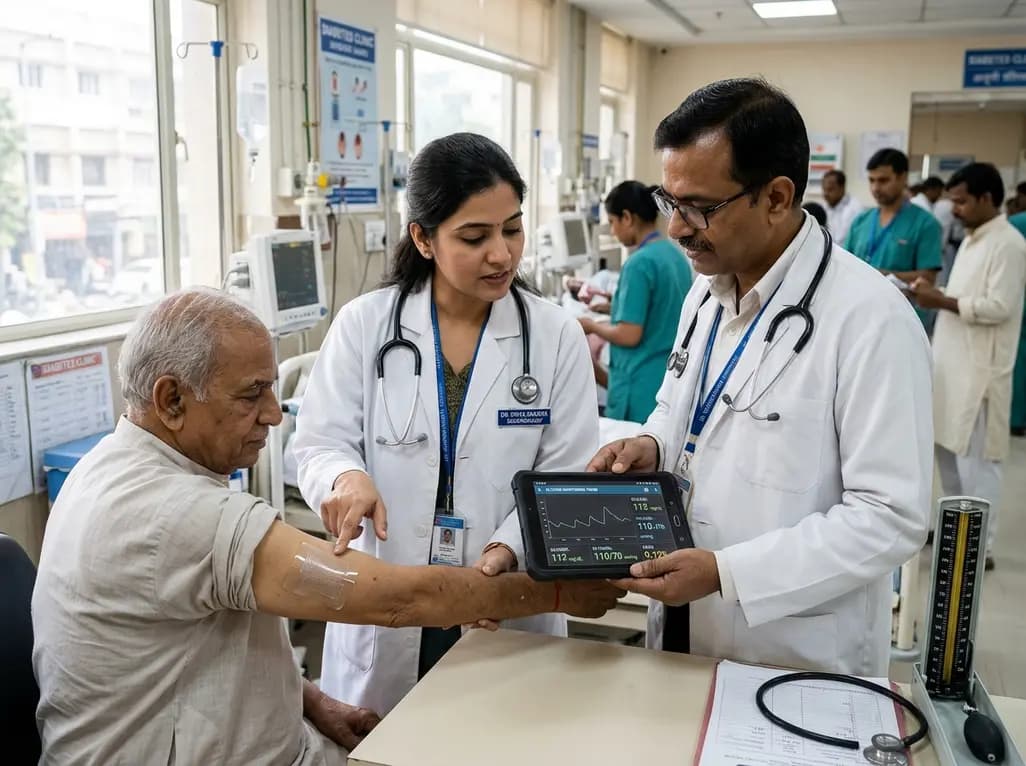
A breakthrough ultrathin multimodal sensor decouples physical hemodynamic monitoring from disposable electrochemical calibration, achieving long-term wearable glucose prediction with 81.36% accuracy and a 9.12% MARD. This offers a robust, drift-free solution for outpatient metabolic surveillance.
Today
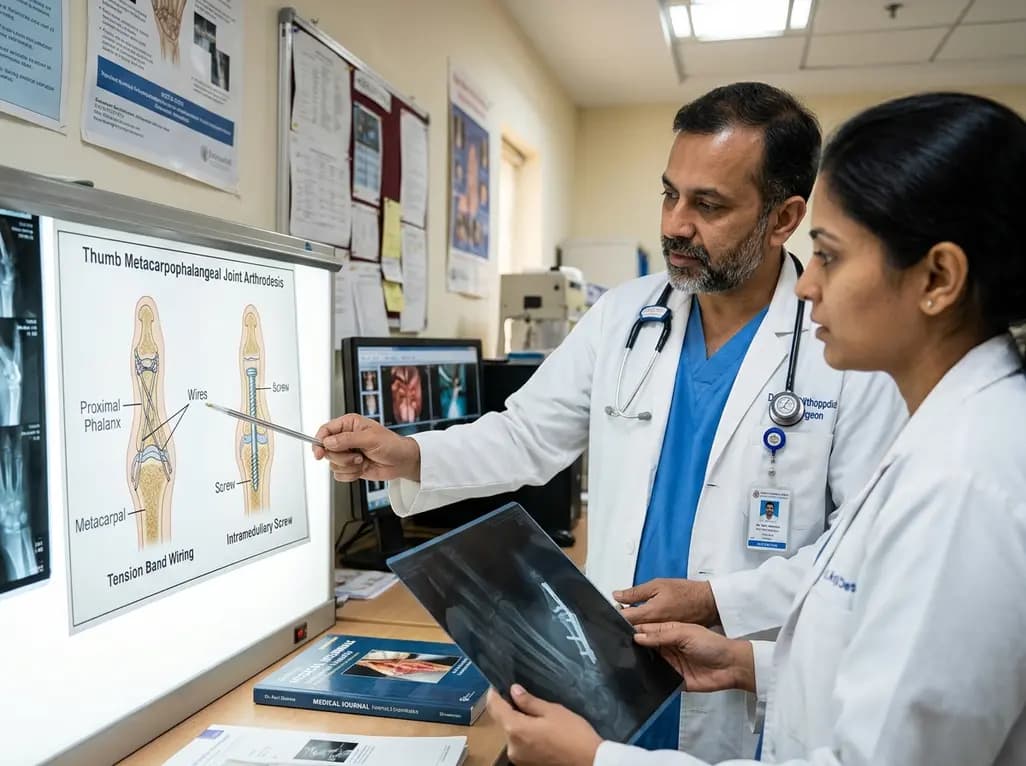
A comparative review of tension band wiring and intramedullary screw fixation in thumb metacarpophalangeal arthrodesis, evaluating union rates, hardware complications, and clinical outcomes.
Today

Following regulatory scrutiny from FSSAI regarding promotional representations and lean muscle preservation claims, Dr. Reddy's Laboratories and Nestlé Health Science are currently reviewing the branding and marketing strategy for their joint nutritional supplement Celevida GLP+.
Today
