.webp&w=384&q=75)

Loading, please wait...
Loading, please wait...
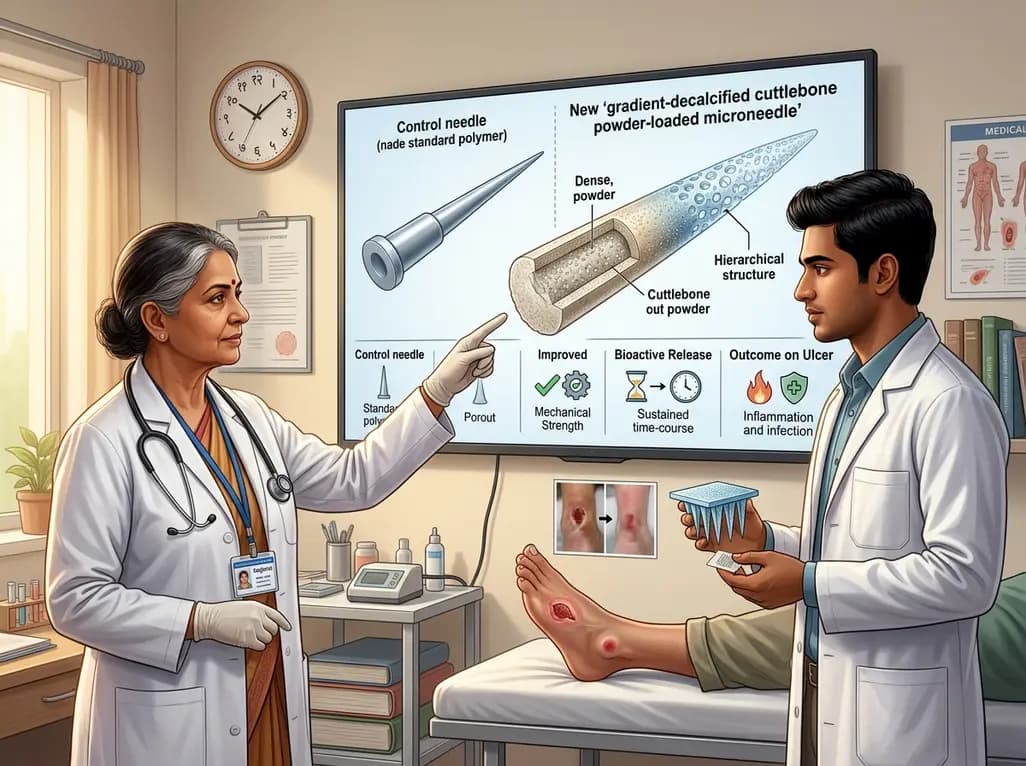
Chronic wounds represent a significant hurdle in modern diabetic wound management, particularly in countries like India where the prevalence of metabolic disorders is soaring. Traditional treatments often fail because they do not address the complex interplay of persistent infection and impaired tissue regeneration. This new study highlights an innovative solution: gradient-decalcified cuttlebone powder-loaded microneedles. These devices represent a sophisticated leap forward in bioengineering. By utilizing natural materials like cuttlebone, researchers have developed a patch that penetrates the skin effectively while releasing therapeutic agents. Specifically, these microneedles integrate silver nanoparticles and specialized hydrogels to create a synergistic healing environment. This approach is not just about covering a wound but actively remodeling the damaged tissue. Consequently, healthcare providers can look forward to more effective strategies for tackling non-healing ulcers. As we delve deeper into this technology, it becomes clear that the hierarchical design is the key to its success. Furthermore, the use of marine-derived materials underscores a growing trend in sustainable biomedical research. Ultimately, this technology aims to break the vicious cycle of inflammation that characterizes chronic diabetic complications. By delivering treatment directly to the dermis, it bypasses many of the limitations associated with topical creams.
The pathology of diabetic ulcers is notoriously complex. For instance, the persistence of bacteria like Staphylococcus aureus creates a biofilm that resists standard antibiotics. Moreover, the local microenvironment is often stuck in a pro-inflammatory phase. This prevents the transition to the proliferative phase necessary for healing. Consequently, traditional topical applications often lack the depth of penetration required to reach the underlying vascular bed. Furthermore, short retention times of ointments necessitate frequent dressing changes, which can further irritate the skin. Therefore, a solution that provides sustained release while bypassing the stratum corneum is essential. This is where the microneedle technology offers a distinct advantage. By creating micro-channels, these devices ensure that bioactive components reach the target site directly. Additionally, the mechanical properties of the microneedles must be precisely tuned. If they are too soft, they cannot penetrate the skin; if they are too brittle, they may break prematurely. Thus, the development of materials that balance strength and flexibility is a primary focus for researchers today. This ensures that the therapeutic agents are delivered exactly where they are needed most. By addressing both the infection and the structural integrity of the wound, this system offers a comprehensive pathway to recovery.
Natural cuttlebone powder (CBP) is the centerpiece of this new diabetic wound management strategy. Cuttlebone has long been recognized in traditional medicine for its hemostatic and anti-inflammatory properties. However, its use in modern clinical settings has been limited by its physical form. Raw powder does not adhere well to moist wound surfaces. Furthermore, its mineralized structure can be difficult for the body to process quickly. To overcome this, researchers utilized a gradient-decalcification process using acetic acid. This technique created three distinct types of microneedles: undecalcified, partially decalcified, and completely decalcified. Among these, the partially decalcified CBP microneedles (PDCBP@MNs) emerged as the superior choice. These microneedles maintain enough mechanical strength to pierce the skin while offering a porous structure that facilitates the steady release of silver ions and calcium. Consequently, the gradient approach allows for a customized release profile that matches the physiological needs of a healing wound. Moreover, the integration of these particles into a gelatin methacryloyl (GelMA) matrix provides a biocompatible environment for cell growth. This synergy between natural minerals and synthetic polymers is a hallmark of advanced tissue engineering. By optimizing the mineral content, the researchers have created a tool that is both robust and highly bioactive.
In addition to CBP, the inclusion of silver (Ag) nanoparticles is crucial for addressing the infectious component of diabetic ulcers. Silver has a well-documented history of antimicrobial efficacy. When combined with the hierarchical microneedle design, it provides a sustained defense against both Gram-positive and Gram-negative bacteria. Specifically, the study showed significant inhibition of Pseudomonas aeruginosa and Staphylococcus aureus. These two pathogens are frequently responsible for the failure of standard diabetic wound management protocols. Furthermore, the microneedles are backed by a chitosan hydrogel. Chitosan is known for its ability to maintain a moist wound environment, which is essential for cell migration. Consequently, this multi-layered system addresses multiple facets of the wound healing process simultaneously. While the silver kills bacteria, the chitosan hydrogel protects the wound from external contaminants. Meanwhile, the CBP components stimulate angiogenesis, or the formation of new blood vessels. This tripartite approach ensures that the wound is not only clean but also actively regenerating. Moreover, the sustained release mechanism means that the therapeutic effect lasts longer than conventional treatments. This reduces the burden on patients who would otherwise require daily interventions. Therefore, the integration of these materials represents a highly efficient delivery system.
In vivo studies conducted on diabetic mouse models have provided compelling evidence for the efficacy of these microneedles. The results demonstrated that the PDCBP@MNs significantly accelerated wound closure compared to control groups. This was observed through increased collagen deposition and improved vascular maturation. Specifically, the treated wounds showed a more organized extracellular matrix, which is a key indicator of successful remodeling. Furthermore, local inflammation markers were notably reduced. This suggests that the microneedles effectively transition the wound from a chronic inflammatory state to an active healing state. Consequently, the study highlights the potential for this technology to be translated into human clinical practice. For clinicians specializing in diabetic wound management, these findings are particularly promising. They offer a way to treat ulcers that have previously been resistant to standard care. Additionally, the mechanical stability of the microneedles ensures that they remain effective even in mobile areas of the body. This is a common challenge with traditional patches that often peel off. By promoting rapid re-epithelialization, the system reduces the risk of secondary infections and long-term complications. Ultimately, this research paves the way for more durable and effective wound care solutions.
The development of gradient-decalcified cuttlebone powder-loaded microneedles marks a significant milestone in regenerative medicine. By combining ancient knowledge of natural materials with modern nanotechnology, researchers have created a potent tool for diabetic wound management. The ability to fine-tune the mechanical and bioactive properties of the microneedles through gradient decalcification is a major innovation. Furthermore, the inclusion of antimicrobial silver ensures that the system can handle the complexities of infected diabetic ulcers. Consequently, this hierarchical design maximizes the therapeutic potential of each individual component. As we look to the future, further clinical trials will be necessary to confirm these results in human subjects. However, the initial data is incredibly encouraging. Moreover, the use of cost-effective materials like cuttlebone could make this technology accessible in low-resource settings. This is particularly important for global health, as diabetes continues to affect millions worldwide. Therefore, this translational strategy holds great promise for improving the quality of life for patients suffering from chronic wounds. By providing a comprehensive, synergistic treatment, we can finally hope to break the cycle of diabetic foot complications. Continuous innovation in this field will undoubtedly lead to even more refined and patient-specific therapies in the years to come.
Cuttlebone powder, derived from the internal shell of cuttlefish, is naturally rich in calcium carbonate and bioactive trace elements. These components are essential for promoting hemostasis and stimulating the growth of new blood vessels. In this microneedle system, the powder is processed through gradient decalcification to optimize its integration with the polymer matrix. Consequently, it provides a structural framework that supports cell proliferation while gradually releasing minerals that accelerate the natural healing process in chronic diabetic wounds.
Traditional dressings often fail because they cannot penetrate the thick, necrotic tissue of a diabetic ulcer or provide long-term therapeutic release. In contrast, these microneedles create microscopic channels that bypass the outer skin barrier, delivering silver nanoparticles and cuttlebone components directly into the deeper dermal layers. This ensures a higher local concentration of the drug. Furthermore, the hydrogel backing maintains a moist environment, which is crucial for remodeling tissue and preventing the wound from drying out or becoming reinfected.
Silver nanoparticles are included primarily for their potent antimicrobial properties against a wide spectrum of bacteria, including antibiotic-resistant strains. In the context of diabetic ulcers, bacterial infection is a major barrier to healing. By incorporating these nanoparticles into the microneedle matrix, the system provides a sustained release of silver ions. This effectively inhibits the growth of pathogens like Pseudomonas aeruginosa. Consequently, this reduces local inflammation and allows the body's regenerative processes to take over without the constant interference of infectious agents.
Disclaimer: This content is for informational and educational purposes only. It does not constitute medical advice or establish a doctor-patient relationship. Always seek the advice of a qualified healthcare provider regarding any medical condition. Refer to the latest local and national guidelines for clinical practice.
References
Zhai N et al. Gradient-Decalcified Cuttlebone Powder-Loaded Hierarchical Microneedles: A Synergistic Therapeutic Strategy for Remodeling the Diabetic Wound. Adv Healthc Mater. 2026 Jul 19. doi: 10.1002/adhm.71455. PMID: 42473021.
Bhardwaj V et al. Microneedles: An emerging delivery system for drug and gene delivery. Drug Deliv. 2021;28(1):115-132.
Vowden P, Vowden K. The role of silver in the management of chronic wounds. Journal of Wound Care. 2017;26(10):571-578.
"
Read summarized clinical updates, watch expert medical content, and earn CME certifications right from your smartphone.
Open your smartphone camera to scan and install.





New research introduces gradient-decalcified cuttlebone powder-loaded microneedles for diabetic wound management. These hierarchical systems balance mechanical strength and bioactive release to accelerate healing, reduce inflammation, and combat infection in chronic diabetic ulcers.
6 days back

A community survey in Blantyre, Malawi, shows that sex differences in tuberculosis immunoreactivity emerge during early adulthood, peaking at age 21 with 1.58-fold higher conversion risk in males. Tobacco and alcohol use drive community transmission, highlighting the need for targeted active case finding.
2 days back

An 11-year Swedish registry study of 618 uterine sarcoma patients found that minimally invasive surgery yielded survival comparable to open surgery in early stages. However, adjuvant chemotherapy conferred no survival benefit in localized or advanced disease, highlighting stage and histology as key outcomes.
2 days back

A cross-sectional study evaluates post-intensive care syndrome in cardiac patients 2-4 weeks post-ICU discharge, highlighting cognitive, psychological, and functional impairments and the need for structured multidisciplinary rehabilitation.
2 days back
Anterior cruciate ligament reconstruction failure lacks uniform definition. A narrative review proposes an integrative framework incorporating objective and subjective instability, persistent pain, restricted motion, graft rupture, and secondary meniscal injury to standardize clinical reporting.
2 days back

A UK Biobank study of 471,540 participants reveals that metabolic syndrome increases incident gastric cancer risk by 36% (HR=1.36). A positive trend was observed with accumulating metabolic components, with waist circumference showing the strongest association, highlighting modifiable risk targets.
3 days back
