.webp&w=384&q=75)

Loading, please wait...
Loading, please wait...
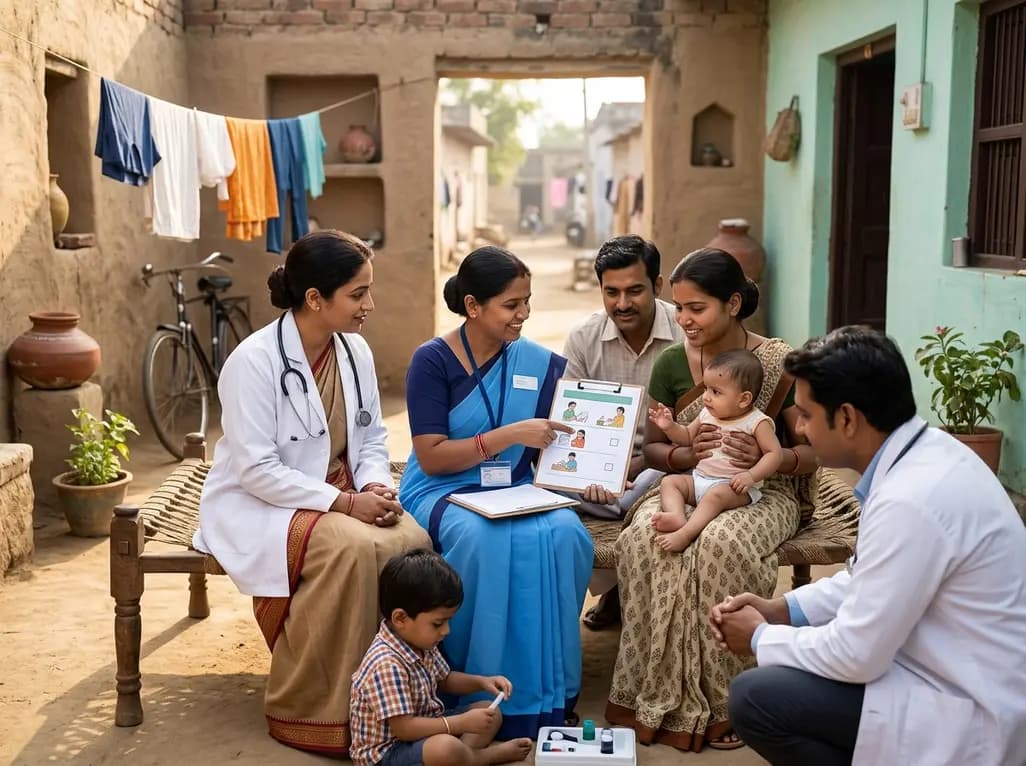
Home visiting (HV) services represent a cornerstone of community-based maternal and child health interventions. These programs are designed to provide essential support to families, particularly those at risk of experiencing significant health disparities. Evidence-based home visiting models have shown remarkable potential in improving child development, maternal mental health, and family economic stability. Despite these clear benefits, many eligible families remain underutilized by the very populations they are meant to serve. This gap between eligibility and enrollment often stems from complex internal and external barriers. Furthermore, families who do manage to enroll frequently drop out before they can receive the full dosage of visits. Consequently, achieving sustained family engagement in home visiting is a primary objective for public health researchers and practitioners alike. Understanding why caregivers choose to participate or withdraw is vital for optimizing these services. By focusing on internal constructs of engagement, clinicians can better tailor their outreach strategies. This study utilizes the family engagement framework developed by the Cross-Model Collaboration and Data Sharing project to examine these critical internal factors. Ultimately, the goal is to ensure that vulnerable families receive the longitudinal support necessary for healthy developmental outcomes.
Caregivers often enter home visiting programs with specific motivations that influence their long-term participation. Qualitative analysis reveals that parents find the in-home service model particularly appealing because it removes logistical barriers like transportation and childcare. Many parents express a high level of satisfaction with their current parenting skills but remain eager to learn new strategies. This indicates that family engagement in home visiting is driven by a desire for continuous growth rather than just a reaction to crisis. Providers can leverage this by framing services as a tool for empowerment and skill enhancement. When caregivers see the program as a way to achieve their own parenting goals, they are more likely to remain committed. The study found that the provision of emotional and tangible support was a major draw for mothers. Participants often highlighted that having a supportive professional come into their natural environment created a sense of comfort. Therefore, highlighting these benefits during the initial recruitment phase is essential. If programs can align their offerings with the internal motivations of parents, the likelihood of sustained engagement increases significantly. This alignment ensures that the intervention feels relevant and valuable to the daily lives of the families involved.
One of the most significant hurdles to family engagement in home visiting is a lack of clear information during the enrollment phase. Parents in the study reported that they needed more detailed information about the qualifications of the home visitors themselves. This informational gap often leads to hesitation, as caregivers are naturally protective of their home environment. They want to know exactly who will be entering their space and what expertise that individual brings to the table. For many families, the professional background and personal demeanor of the provider are decisive factors. Consequently, providing transparent details about provider training and certifications can foster early trust. When programs fail to communicate these details, caregivers may perceive the service as intrusive or unnecessary. Therefore, the decision-making process is heavily influenced by how much information is shared upfront. Clinicians and program coordinators should prioritize clear communication about the benefits and the personnel involved. By demystifying the role of the home visitor, programs can reduce the perceived risk of participation. This approach addresses the internal concerns of caregivers, making the transition from potential candidate to active participant much smoother and more successful.
The relationship between the provider and the caregiver is the most critical component of family engagement in home visiting. Trust is not built overnight; it requires consistent transparency and professional reliability from the very first interaction. Parents often feel more comfortable when they understand the collaborative nature of the program. They are not looking for someone to criticize their parenting but rather for a partner in their child’s development. The qualitative findings suggest that highlighting the collaborative aspect of HV can significantly improve rapport. When providers are perceived as knowledgeable and personable, families are less likely to drop out prematurely. In contrast, a lack of transparency regarding the visit's purpose can lead to skepticism and withdrawal. Therefore, providers must be trained in behavioral strategies that promote engagement and rapport-building. This includes being clear about the frequency of visits and the specific goals of each session. By maintaining open lines of communication, providers can address any internal fears or misconceptions that the family might have. A strong, trust-based relationship acts as a buffer against external life stressors that might otherwise cause a family to disengage from the program.
Administrative burdens are often cited as a major reason why families disengage from essential services. Complex enrollment processes and excessive paperwork can overwhelm caregivers who are already managing high-stress environments. The study emphasized that simplifying these administrative steps is crucial for maintaining family engagement in home visiting. Parents are more likely to follow through with enrollment when the process is streamlined and user-friendly. Minimizing the time between the initial referral and the first home visit is also essential for maintaining momentum. If the process is too cumbersome, the initial interest of the caregiver may fade, leading to attrition. Therefore, program managers should look for ways to reduce the amount of redundant data collection required from families. Utilizing technology to facilitate easier communication and scheduling can also help. When the administrative path is clear, caregivers can focus more on the substantive benefits of the program. This reduction in friction helps ensure that families reach the "full dosage" of the intervention. Ultimately, a family-centered approach to administration reflects a program's respect for the caregiver's time and energy. This, in turn, fosters a more positive attitude toward the services provided.
The results of this study have broad implications for how community health programs are designed and implemented. To improve family engagement in home visiting, organizations must focus on enhancing the enrollment experience. This involves not only providing better information but also ensuring that the workforce is culturally competent and empathetic. In the context of maternal health, where vulnerability is high, the quality of initial outreach is paramount. Programs should consider implementing "warm hand-offs" between medical providers and home visitors to build immediate credibility. Additionally, feedback loops should be established to allow parents to voice their concerns about the service delivery. By listening to the needs of the community, programs can adapt to better serve diverse populations. This qualitative insight highlights that internal engagement is not just about the curriculum being taught; it is about the experience of the service itself. When families feel respected and informed, they are much more likely to become long-term advocates for the program. For clinicians in India and beyond, these findings emphasize the need for a more personalized, less bureaucratic approach to family outreach. Strengthening the internal factors of engagement will ultimately lead to better health outcomes for children and more resilient family units.
Providers can bridge information gaps by offering detailed profiles of home visitors and clearly outlining their professional qualifications. Transparency regarding the curriculum and the goals of each visit helps demystify the process for caregivers. When families understand the expertise and purpose behind the service, they feel more secure in their decision to enroll. Clear communication reduces the perceived invasiveness of home visits and builds early trust between the caregiver and the program.
Administrative simplification is vital because it reduces the cognitive and logistical burden on high-stress families. Complex paperwork and long waiting periods can lead to frustration and early dropout. By streamlining enrollment and using user-friendly scheduling tools, programs show respect for the family's time. Reducing these barriers allows caregivers to focus on the educational and emotional benefits of the program, which significantly increases the likelihood of long-term retention and program completion.
Engagement is often higher when the program aligns with the caregiver's existing goals for their child's development. While many parents are satisfied with their current skills, they possess a natural desire to learn new, evidence-based strategies. By positioning home visiting as a tool for personal growth and empowerment, providers can tap into this internal motivation. When caregivers see the service as a pathway to achieving their parenting aspirations, they remain more consistently engaged and committed.
Disclaimer: This content is for informational and educational purposes only and does not constitute medical advice or a professional recommendation. It is intended to summarize research findings for healthcare professionals. Always consult with qualified medical experts and refer to the latest local and national guidelines for clinical practice and community health interventions.
References
Baziyants GA et al. A Qualitative Study of Internal Engagement Factors in Home Visiting Programs. Matern Child Health J. 2026 Jul 19. doi: 10.1007/s10995-026-04296-7. PMID: 42473008.
Cruz M et al. Barriers to and Systems Solutions for Increasing Early Childhood Home Visiting Referrals by Health Care Providers Serving Urban and Rural Communities. Fam Community Health. 2022 Oct-Dec;45(4):254-263. doi: 10.1097/FCH.0000000000000343.
U.S. Department of Health and Human Services. New HHS Study Finds Home Visiting Services Improve Family Wellbeing. Mother and Infant Home Visiting Program Evaluation (MIHOPE) study results. September 11, 2025.

Read summarized clinical updates, watch expert medical content, and earn CME certifications right from your smartphone.
Open your smartphone camera to scan and install.





This qualitative study explores internal engagement factors in home visiting programs, highlighting the need for better provider information and simpler enrollment to improve family participation, child well-being, and parenting strategies among at-risk populations.
5 days back
A community survey in Blantyre, Malawi, shows that sex differences in tuberculosis immunoreactivity emerge during early adulthood, peaking at age 21 with 1.58-fold higher conversion risk in males. Tobacco and alcohol use drive community transmission, highlighting the need for targeted active case finding.
Yesterday

An 11-year Swedish registry study of 618 uterine sarcoma patients found that minimally invasive surgery yielded survival comparable to open surgery in early stages. However, adjuvant chemotherapy conferred no survival benefit in localized or advanced disease, highlighting stage and histology as key outcomes.
Yesterday

A cross-sectional study evaluates post-intensive care syndrome in cardiac patients 2-4 weeks post-ICU discharge, highlighting cognitive, psychological, and functional impairments and the need for structured multidisciplinary rehabilitation.
2 days back

Anterior cruciate ligament reconstruction failure lacks uniform definition. A narrative review proposes an integrative framework incorporating objective and subjective instability, persistent pain, restricted motion, graft rupture, and secondary meniscal injury to standardize clinical reporting.
Yesterday

A UK Biobank study of 471,540 participants reveals that metabolic syndrome increases incident gastric cancer risk by 36% (HR=1.36). A positive trend was observed with accumulating metabolic components, with waist circumference showing the strongest association, highlighting modifiable risk targets.
2 days back
