.webp&w=384&q=75)

Loading, please wait...
Loading, please wait...
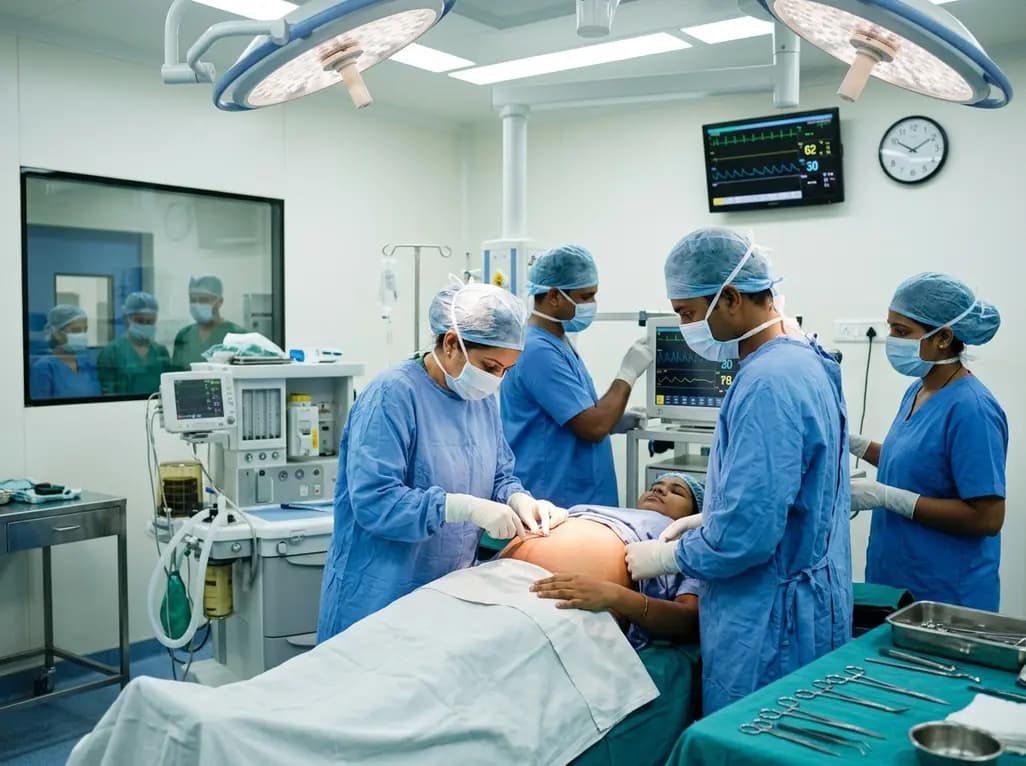
The latest National Family Health Survey (NFHS-6) has brought a critical obstetric trend in Southern India to the forefront. Most notably, Karnataka C-section rates have escalated significantly, raising vital questions about childbirth practices across the region. Indeed, according to newly released data, surgical deliveries in the state have climbed to 45.7% of all births. Consequently, this sharp upward trajectory highlights a growing reliance on surgical interventions, prompting intense debate among healthcare professionals.
To understand why Karnataka C-section rates have soared, we must examine both demand-side and supply-side dynamics. On the demand side, a growing number of expectant mothers are actively opting for elective surgical procedures. A comprehensive pilot study conducted in the Tumakuru district in 2025 confirmed this behavioral shift. It revealed that many women choose C-sections due to perceived convenience and fear of labor pain. Consequently, a misconception has emerged that surgical delivery is a safer option than natural childbirth. This subjective perception often overrides clinical necessity, leading to planned surgeries without appropriate medical indications.
Conversely, supply-side factors play an equally powerful role in promoting surgical deliveries. In many urban settings, the increasing medicalisation of childbirth has led to a lower threshold for surgical intervention. Doctors often face immense time constraints, and the predictable scheduling of a caesarean delivery offers administrative convenience. Additionally, defensive medicine practices, where clinicians perform surgeries to mitigate potential legal risks, contribute further to this rising trend. Thus, a combination of maternal preference and defensive clinical practices has driven this sharp increase.
The most striking revelation from the NFHS-6 data is the profound disparity in childbirth practices between private and public facilities. In Karnataka's private sector, an astonishing 63% of all births are conducted via caesarean section. Conversely, public health facilities report a much lower surgical delivery rate of 34%. This substantial difference strongly suggests that financial incentives and institutional models are shaping clinical decisions. Furthermore, experts argue that the commercialized nature of private healthcare can incentivize unnecessary medical interventions. This is because C-sections are far more lucrative than natural births.
Meanwhile, this divide has also led to a noticeable shift in where patients seek maternal care. Specifically, public facility deliveries declined from 64.8% in NFHS-5 to 58.1% in NFHS-6. This downward trend is particularly evident in urban areas, where only 45% of deliveries take place in government hospitals. By contrast, the rural figure remains higher at 68.4%. As private hospitals continue to expand in every locality, they capture a larger market share. However, this shift exposes more families to high out-of-pocket expenses, further widening the healthcare gap.
While surgical sections are undoubtedly life-saving when medically indicated, their overuse poses significant health risks to mothers and newborns. Public health officials have expressed serious concern that high surgical delivery rates do not correlate with better health outcomes. In fact, major abdominal surgery carries inherent risks, including post-operative hemorrhage, surgical site infections, and anesthesia complications. Furthermore, mothers undergoing C-sections are significantly more vulnerable to severe postpartum complications. These include sepsis and thromboembolism, which can ultimately contribute to maternal mortality.
Newborns also face unique challenges when delivered surgically without prior labor. The natural process of labor helps clear amniotic fluid from a baby's lungs, preparing them for breathing. Consequently, infants born via elective C-sections are at a higher risk of respiratory distress syndrome. Additionally, surgical births can delay the initiation of breastfeeding, which is crucial for neonatal immunity. Therefore, obstetricians must carefully weigh these potential complications against the benefits of natural birth. Ultimately, they must ensure that clinical interventions are strictly reserved for genuine medical emergencies.
To curb the alarming rise in unnecessary surgeries, healthcare advocates are calling for robust regulatory oversight and standardized clinical guidelines. Currently, India lacks a highly centralized, strictly enforced regulatory framework governing obstetric practices in private hospitals. Public health activists emphasize that without well-established criteria, clinicians enjoy complete discretion, which sometimes leads to over-medicalisation. Consequently, introducing standardized protocols, such as the World Health Organization's Robson classification, would help hospitals systematically audit their practices. This allows them to monitor C-section rates based on specific obstetric characteristics.
Furthermore, these standardized guidelines should extend to other commonly overused surgical procedures, such as hysterectomies. Observers note that both procedures are frequently pushed in private institutions, where profit-driven motives occasionally influence clinical recommendations. Indeed, by implementing clear clinical pathways, the government can ensure that surgical interventions are performed only when strictly necessary. This regulatory shift would protect patients from unnecessary physical harm. Additionally, it would alleviate the financial burden on families who are often pressured into expensive surgeries.
Recognizing the severity of the situation, the Karnataka state government is actively planning several corrective measures to promote natural births. One of the primary initiatives involves reforming the patient consent process. Specifically, the department plans to add a mandatory information box in consent forms. This box will clearly outline the physiological benefits of vaginal delivery and the risks of surgery. This simple step aims to empower expectant mothers with objective information. Ultimately, it helps them make well-informed decisions rather than choosing surgery based on misconceptions.
Additionally, the government is focusing on improving the overall experience of natural childbirth by promoting non-invasive pain management techniques. By making labor more comfortable, health departments hope to reduce the elective demand for C-sections. However, experts warn that these educational steps must be combined with stronger regulatory actions to be truly effective. Indeed, upgrading public health infrastructure and training midwifery cadres are essential steps. Only through a sustained, collaborative effort can the state successfully reverse this trend and ensure safer outcomes.
Q1: Why are C-section rates significantly higher in private hospitals compared to public facilities?
The stark contrast in C-section rates between private and public hospitals is driven by commercial interests and institutional structures. Indeed, private hospitals operate on a profit-driven model where surgical procedures yield higher margins. Additionally, private clinicians face time constraints and find scheduled surgeries more convenient. In contrast, public facilities adhere closer to standard guidelines, keeping surgical rates lower.
Q2: What are the primary health risks associated with unnecessary caesarean deliveries?
Unnecessary caesarean sections expose both mothers and infants to avoidable medical risks. For mothers, a C-section is a major surgery that increases the likelihood of severe infections and postpartum hemorrhage. Furthermore, it heightens the risk of uterine rupture in future pregnancies. For newborns, surgical delivery without labor can cause respiratory issues and delay early breastfeeding initiation.
Q3: How is the Karnataka government planning to address the rising surgical delivery rates?
The Karnataka government is introducing corrective measures focused on patient education and clinical support. Specifically, key strategies include incorporating an information section in consent forms that outlines the benefits of natural delivery. Furthermore, the state is promoting non-invasive pain management techniques during labor to make vaginal births less intimidating. However, experts emphasize that these steps must be reinforced with strict audits.
Disclaimer: This content is for informational and educational purposes only. It does not constitute medical advice or replace professional judgment. Refer to the latest local and national guidelines for clinical practice.
References

Read summarized clinical updates, watch expert medical content, and earn CME certifications right from your smartphone.
Open your smartphone camera to scan and install.





A deep dive into the National Family Health Survey (NFHS-6) data showing a sharp rise in surgical deliveries in Karnataka, the public-private healthcare divide, clinical risks of elective surgeries, and the urgent need for standardized medical guidelines to safeguard maternal and newborn health.
6 days back
A community survey in Blantyre, Malawi, shows that sex differences in tuberculosis immunoreactivity emerge during early adulthood, peaking at age 21 with 1.58-fold higher conversion risk in males. Tobacco and alcohol use drive community transmission, highlighting the need for targeted active case finding.
2 days back
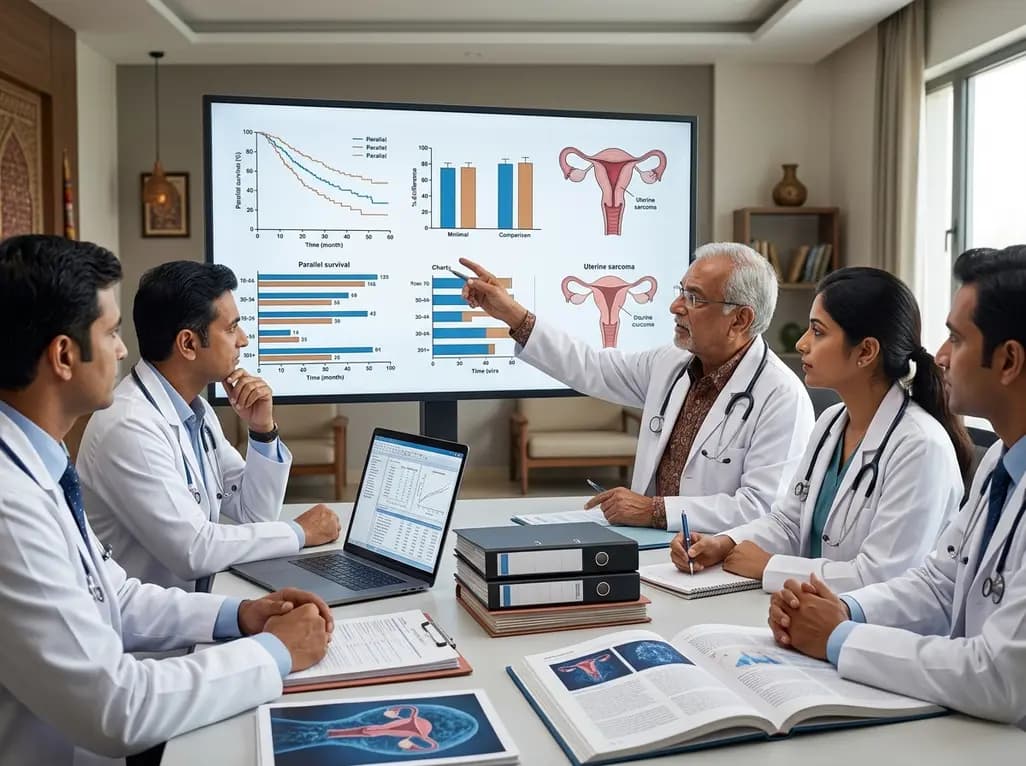
An 11-year Swedish registry study of 618 uterine sarcoma patients found that minimally invasive surgery yielded survival comparable to open surgery in early stages. However, adjuvant chemotherapy conferred no survival benefit in localized or advanced disease, highlighting stage and histology as key outcomes.
2 days back
A cross-sectional study evaluates post-intensive care syndrome in cardiac patients 2-4 weeks post-ICU discharge, highlighting cognitive, psychological, and functional impairments and the need for structured multidisciplinary rehabilitation.
2 days back
Anterior cruciate ligament reconstruction failure lacks uniform definition. A narrative review proposes an integrative framework incorporating objective and subjective instability, persistent pain, restricted motion, graft rupture, and secondary meniscal injury to standardize clinical reporting.
2 days back
A UK Biobank study of 471,540 participants reveals that metabolic syndrome increases incident gastric cancer risk by 36% (HR=1.36). A positive trend was observed with accumulating metabolic components, with waist circumference showing the strongest association, highlighting modifiable risk targets.
3 days back
