.webp&w=384&q=75)

Loading, please wait...
Loading, please wait...
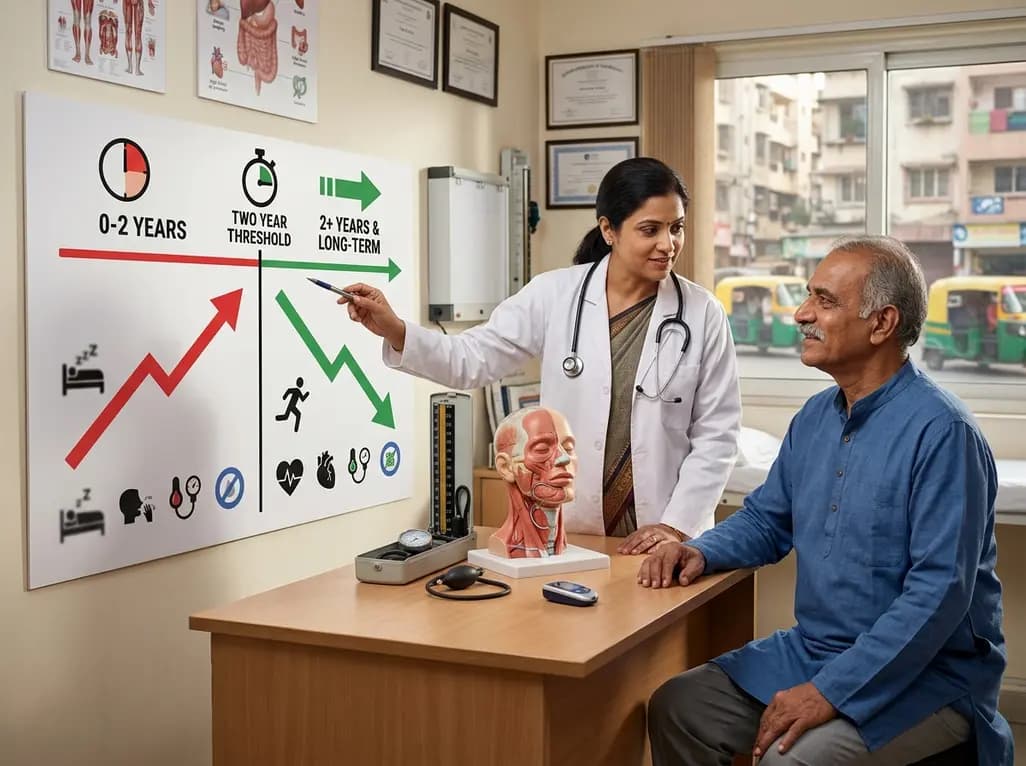
Obstructive sleep apnea (OSA) remains a major global health challenge, significantly increasing the risk of metabolic and heart-related complications. While positive airway pressure (PAP) therapy serves as the gold standard, many patients struggle with long-term adherence. Consequently, researchers have turned their attention to alternative treatments like hypoglossal nerve stimulation (HGNS). Recently, a significant study published in JAMA Otolaryngology–Head & Neck Surgery investigated the relationship between this surgical intervention and HGNS cardiovascular outcomes. This analysis is particularly relevant for Indian clinicians managing a growing population of OSA patients who are non-adherent to standard CPAP therapy. By evaluating the incidence of cardiovascular disease (CVD) among those undergoing implantation, the study provides crucial data on whether surgical neurostimulation can mitigate the downstream systemic risks typically associated with untreated sleep-disordered breathing. Understanding these associations is vital for refining patient selection and improving long-term prognosis.
This retrospective cohort study utilized the Merative MarketScan Commercial Database, analyzing data from 2015 to 2024. Researchers identified 3,786 adult patients who underwent HGNS implantation. They matched these individuals to a control group of 3,395 patients who met HGNS candidacy criteria but did not receive the implant. Specifically, these controls were diagnosed with OSA and were non-adherent to PAP therapy. The investigators employed propensity scores to balance the cohorts based on baseline covariates and the duration of confirmed OSA. Notably, because surgical interventions often require time to manifest systemic physiological changes, the researchers modeled HGNS as a time-varying covariate. This approach allowed them to distinguish between outcomes occurring within the first two years and those appearing after the two-year mark. While the database lacked specific OSA and CVD severity markers for matching, the large-scale nature of the population provides a robust overview of real-world outcomes in a diverse clinical setting.
The study revealed fascinating insights regarding the incidence of diabetes and hypertension after implantation. For patients without baseline cardiovascular disease, the immediate post-surgical period presented unexpected trends. Within the first two years, HGNS was not associated with a reduced risk of diabetes and actually showed a higher hazard for hypertension diagnosis. However, a significant shift occurred after the two-year threshold. Specifically, the hazard ratio for a new diabetes diagnosis dropped to 0.19, indicating a substantial protective effect. Similarly, the hazard for hypertension decreased to 0.49 after two years. These results suggest that the physiological benefits of improved airway patency and reduced sympathetic activation take time to translate into measurable metabolic improvements. This delayed benefit underscores the importance of long-term patient follow-up. Physicians should counsel patients that while the device addresses immediate sleep symptoms, the systemic metabolic advantages are cumulative and manifest significantly over several years of consistent use.
When examining patients with pre-existing diabetes or hypertension, the study further highlighted the protective potential of neurostimulation against major cardiovascular events. Initially, patients undergoing HGNS experienced a higher hazard of minor and major cardiovascular events within the first 24 months. Researchers hypothesize that this may stem from more frequent healthcare interactions during the titration and postoperative phase, leading to higher detection rates. Nevertheless, the trend reversed sharply in the long term. After two years, the hazards for both minor and major events began to decrease significantly. For minor events, the hazard ratio eventually reached 0.42, while major events saw a reduction to a hazard ratio of 0.40. These findings indicate that HGNS cardiovascular outcomes may involve a significant reduction in stroke, myocardial infarction, and other severe complications after the initial adjustment period. For clinicians, these data provide a compelling argument for HGNS as a disease-modifying therapy rather than just a symptomatic fix for nocturnal airway obstruction.
In India, the prevalence of OSA is rising alongside the epidemic of metabolic syndrome and coronary artery disease. Many Indian patients find CPAP machines cumbersome due to lifestyle factors, humidity, or cultural perceptions. Therefore, the availability of long-term data on HGNS is critical for local practice. Indian otolaryngologists and sleep specialists can use these findings to guide patients who are hesitant about surgical interventions. Moreover, the significant reduction in diabetes risk after two years is particularly relevant in the "diabetes capital of the world." By improving sleep quality and reducing the hypoxic burden, HGNS may assist in stabilizing blood glucose levels and autonomic function. It is essential, however, for practitioners to manage expectations regarding the initial two-year period. Emphasizing that the "heart-healthy" benefits are part of a long-term wellness trajectory will improve patient confidence and encourage adherence to the post-surgical titration protocols required for optimal stimulator performance.
While the findings are promising, several limitations must be considered when interpreting these results. The retrospective nature of the study and the reliance on insurance claim codes mean that some clinical nuances, such as exact apnea-hypopnea index (AHI) levels or oxygen saturation nadirs, were unavailable. Furthermore, the lack of data on race and socioeconomic status is a notable gap, especially when considering the diversity of the Indian population. The initial spike in cardiovascular diagnoses after surgery remains a point of interest; it likely reflects surveillance bias rather than a direct negative effect of the device. Consequently, future prospective trials are necessary to verify these associations and explore the specific mechanisms underlying the observed risk reductions. Investigating whether different patient subgroups—such as those with specific obesity phenotypes or anatomical airway structures—experience varying degrees of cardiovascular benefit will be the next step in personalized sleep medicine. For now, the current data strongly motivate the continued use and study of HGNS in the broader OSA treatment landscape.
Research suggests that HGNS provides a delayed but substantial protective effect against diabetes. In the first two years post-implantation, there is no significant change in risk. However, after this initial period, the hazard for a new diabetes diagnosis drops by approximately 81%. This reduction likely stems from improved insulin sensitivity and reduced nocturnal sympathetic surges associated with more consistent airway patency and better sleep architecture over time.
The observed increase in cardiovascular and hypertension diagnoses within the first two years is likely due to surveillance bias. Patients with a new implant undergo frequent medical follow-ups, device titration studies, and specialist visits. This increased clinical contact provides more opportunities for physicians to identify and code for pre-existing or emerging conditions that might have otherwise gone undiagnosed in a less monitored control population.
For patients with baseline hypertension, HGNS is associated with a significant reduction in the risk of major cardiovascular events, such as myocardial infarction or stroke, starting two years after the procedure. Data show that the hazard ratios for these major events can drop to as low as 0.40 in the long term, suggesting that the therapy effectively mitigates the chronic cardiovascular strain caused by untreated obstructive sleep apnea.
Disclaimer: This content is for informational and educational purposes only. It is not intended as medical advice or a substitute for professional clinical judgment. Diagnostic and treatment decisions should be made by qualified healthcare providers. Refer to the latest local and national guidelines for clinical practice.
References
Kondamuri N et al. Hypoglossal Nerve Stimulation and the Incidence of Cardiovascular Disease. JAMA Otolaryngol Head Neck Surg. 2026 Jul 16. doi: 10.1001/jamaoto.2026.1777. PMID: 42461651.
Strollo PJ Jr, et al. Upper-airway stimulation for obstructive sleep apnea. N Engl J Med. 2014;370(2):139-149. doi:10.1056/NEJMoa1308659.
Kondamuri N, et al. Clinical Outcomes of Hypoglossal Nerve Stimulation Versus Continuous Positive Airway Pressure in Obstructive Sleep Apnea. PubMed/TriNetX Study. 2026 Apr.

Read summarized clinical updates, watch expert medical content, and earn CME certifications right from your smartphone.
Open your smartphone camera to scan and install.





A retrospective cohort study indicates that while hypoglossal nerve stimulation (HGNS) for OSA may show initial hazard spikes, it is associated with a significant reduction in long-term cardiovascular risks, including diabetes and hypertension, after a two-year threshold.
Last week

A community survey in Blantyre, Malawi, shows that sex differences in tuberculosis immunoreactivity emerge during early adulthood, peaking at age 21 with 1.58-fold higher conversion risk in males. Tobacco and alcohol use drive community transmission, highlighting the need for targeted active case finding.
Yesterday

An 11-year Swedish registry study of 618 uterine sarcoma patients found that minimally invasive surgery yielded survival comparable to open surgery in early stages. However, adjuvant chemotherapy conferred no survival benefit in localized or advanced disease, highlighting stage and histology as key outcomes.
Yesterday

A cross-sectional study evaluates post-intensive care syndrome in cardiac patients 2-4 weeks post-ICU discharge, highlighting cognitive, psychological, and functional impairments and the need for structured multidisciplinary rehabilitation.
Yesterday
Anterior cruciate ligament reconstruction failure lacks uniform definition. A narrative review proposes an integrative framework incorporating objective and subjective instability, persistent pain, restricted motion, graft rupture, and secondary meniscal injury to standardize clinical reporting.
Yesterday

A UK Biobank study of 471,540 participants reveals that metabolic syndrome increases incident gastric cancer risk by 36% (HR=1.36). A positive trend was observed with accumulating metabolic components, with waist circumference showing the strongest association, highlighting modifiable risk targets.
2 days back
