.webp&w=384&q=75)

Loading, please wait...
Loading, please wait...
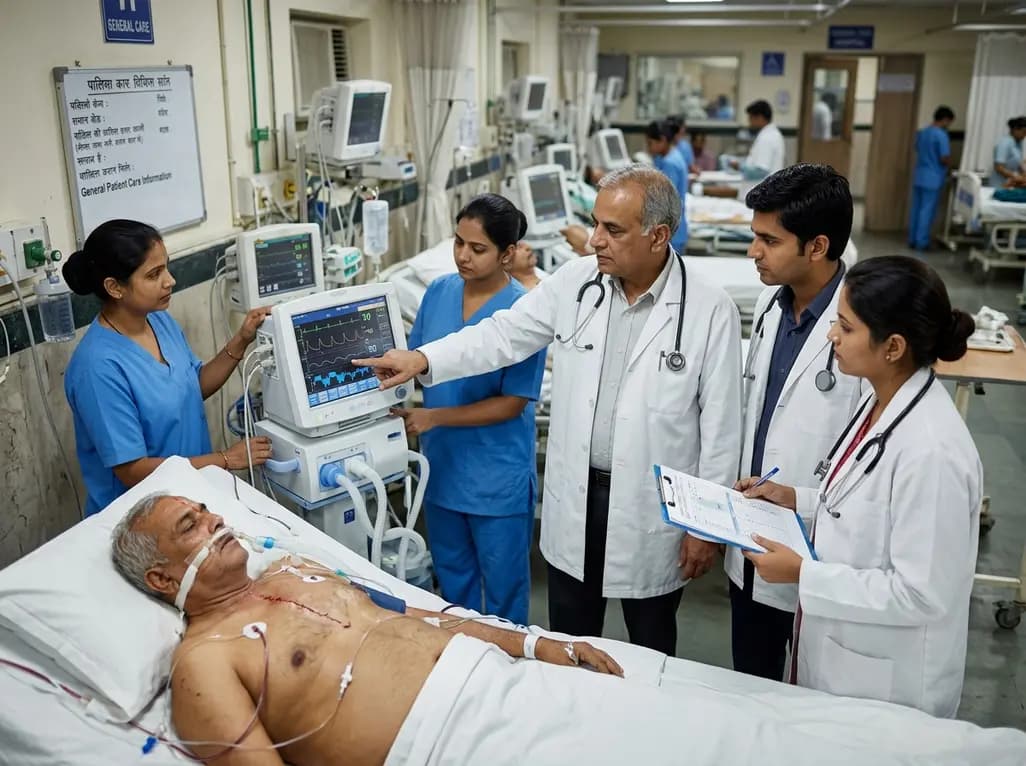
Acute Stanford Type A aortic dissection (ATAAD) represents one of the most critical emergencies in cardiothoracic surgery, requiring immediate intervention and intensive postoperative management. Despite advancements in surgical techniques and cardiopulmonary bypass, extubation failure after ATAAD remains a major clinical challenge. This adverse event is characterized by the need for reintubation within a specific timeframe after planned removal of the endotracheal tube. In the context of aortic repair, failure rates often exceed those seen in routine general anesthesia cases. Consequently, identifying patients at high risk is essential for improving survival rates and reducing the length of intensive care unit (ICU) stays. Factors such as prolonged bypass times, systemic inflammatory responses, and the complexity of the surgery itself contribute to this increased vulnerability.
Research indicates that failure to maintain spontaneous breathing post-extubation is not merely a respiratory issue but often reflects the patient\'s overall physiological status. In India, where many ATAAD patients present with advanced malperfusion or delayed diagnosis, the stress of surgery can lead to multi-organ dysfunction. Therefore, clinicians must adopt a highly vigilant approach during the weaning phase. Understanding the underlying mechanisms—whether they are primary surgical complications or secondary pulmonary infections—allows for more tailored interventions. By focusing on predictive modeling and robust postoperative protocols, medical teams can mitigate the risks associated with premature extubation in this fragile population.
Clinical scoring systems serve as indispensable tools for risk stratification in the ICU. Recent evidence highlights that the Acute Physiology and Chronic Health Evaluation II (APACHE II) and the German Registry of Acute Aortic Dissection Type A (GERAADA) scores are particularly effective in predicting extubation failure. Specifically, studies have shown that patients who fail extubation often possess significantly higher preoperative scores. An APACHE II threshold of approximately 12.5 has been identified as a sensitive marker for potential reintubation. This score integrates various physiological parameters, reflecting the baseline severity of the illness and the body\'s diminished reserve to handle the transition to spontaneous ventilation.
Moreover, the GERAADA score, which was originally designed to predict 30-day mortality after ATAAD surgery, has shown promise in identifying respiratory risk. A threshold of 21.9% for the GERAADA score serves as a critical alert for intensivists. Notably, the GERAADA score accounts for specific dissection-related variables such as malperfusion and the extent of the dissection, which APACHE II might overlook. When both scores are elevated, the likelihood of successful extubation diminishes. However, clinicians should not rely solely on these numbers; instead, they should use them as a foundation for a comprehensive clinical assessment. Integrating these predictive thresholds into daily ICU rounds helps in prioritizing high-risk patients for more intensive pre-extubation optimization and closer post-extubation monitoring.
One of the most enlightening findings in recent research is the distinction between the timing and causes of extubation failure after ATAAD. Early reintubation, occurring within the first 24 hours, is frequently driven by surgical or hemodynamic factors. These may include sudden hemorrhage, acute heart failure, or neurological complications that compromise the airway. In contrast, late reintubation—defined as occurring more than 24 hours after the initial extubation—is predominantly caused by respiratory issues. These issues often manifest as secretion retention, impaired airway clearance, and the subsequent development of pulmonary infections or pneumonia.
Specifically, late failures represent over 75% of reintubation cases in some cohorts. This suggests that while a patient might initially meet the traditional criteria for extubation, such as adequate gas exchange and stable hemodynamics, they may lack the muscular strength or cough reflex to maintain a clear airway over the long term. This disparity highlights a major gap in conventional weaning protocols. Focusing solely on oxygenation (PaO2/FiO2 ratio) or carbon dioxide levels may lead to a false sense of security. Consequently, evaluating the patient\'s ability to clear secretions through effective coughing is arguably as important as assessing their ventilator-independent gas exchange capacity.
Given that impaired airway clearance is a primary driver of delayed failure, postoperative management must evolve beyond simple oxygen support. Conventional methods like nasal prongs or high-flow nasal oxygen (HFNO) are beneficial for oxygenation but do not always address the problem of thick secretions and weak cough. Therefore, intensivists should prioritize aggressive airway clearance strategies. This includes regular chest physiotherapy, the use of mucolytics, and frequent suctioning to prevent secretion plugs. In some cases, the prophylactic use of non-invasive ventilation (NIV) or bilevel positive airway pressure (BiPAP) may provide the necessary respiratory support while the patient regains full strength.
Furthermore, early mobilization plays a crucial role in preventing pulmonary complications. Encouraging patients to sit up or even take assisted steps shortly after surgery can significantly improve lung expansion and diaphragmatic function. Notably, humidification of inhaled gases is another vital component, as it prevents the drying of secretions, making them easier to expectorate. However, these interventions require a multidisciplinary approach involving nurses, physiotherapists, and respiratory therapists. By shifting the focus from \"ventilation support\" to \"airway hygiene,\" clinicians can significantly reduce the incidence of late reintubation. This proactive stance is especially critical in the first 48 to 72 hours post-extubation, where the risk of secretion retention is at its peak.
The implementation of risk-based extubation protocols can transform ICU outcomes for ATAAD patients. When a patient presents with an APACHE II score above 12.5 or a GERAADA score exceeding 21.9%, the clinical team should consider a more cautious weaning approach. This might involve longer periods of pressure support trials or the use of specific \"weaning bundles\" designed to enhance the cough reflex. Additionally, pre-extubation assessments should explicitly include a \"cuff leak test\" to rule out laryngeal edema and a quantitative evaluation of secretion volume. If a patient is deemed high-risk, keeping the intubation equipment ready and ensuring a higher nurse-to-patient ratio for the first few hours after extubation is a prudent strategy.
Ultimately, the goal is to balance the benefits of early extubation—such as reduced risk of ventilator-associated pneumonia—with the dangers of premature removal. While the DeLong test suggests that APACHE II and GERAADA scores have similar predictive accuracy, using them in tandem provides a more holistic view of the patient\'s status. In Indian clinical settings, where resources can sometimes be constrained, these scores offer a cost-effective way to identify who needs the most attention. Future prospective studies are required to validate these exploratory thresholds and determine if specialized post-extubation care can truly lower mortality and ICU length of stay. For now, the integration of these scoring systems into standard care remains a highly recommended strategy for any cardiac ICU managing aortic dissections.
The primary risk factors for extubation failure after ATAAD include high preoperative APACHE II and GERAADA scores. Specifically, an APACHE II score greater than 12.5 and a GERAADA score over 21.9% are strong independent predictors. Other significant factors include prolonged cardiopulmonary bypass time, older age, and preoperative malperfusion syndromes. These variables reflect the patient\'s overall physiological fragility and reduced capacity to maintain spontaneous ventilation and airway hygiene post-surgery.
Early reintubation, occurring within the first 24 hours post-extubation, is usually attributed to surgical complications such as active bleeding, tamponade, or sudden hemodynamic instability. In contrast, late reintubation occurs after 24 hours and is primarily driven by respiratory failures. These are often caused by impaired airway clearance, secretion retention, and subsequent pneumonia. Recognizing this timing allows clinicians to shift their focus from surgical vigilance to aggressive pulmonary care as the recovery progresses.
APACHE II and GERAADA scores are significant because they quantify the severity of the patient\'s condition before and after surgery. APACHE II provides a general assessment of acute physiology and chronic health, while GERAADA is tailored specifically to the unique risks of Stanford Type A aortic dissection. By using identified thresholds, these scores help intensivists identify high-risk individuals who may benefit from delayed extubation or more intensive post-extubation airway clearance strategies, thereby optimizing ICU resource allocation.
Disclaimer: This content is for informational and educational purposes only and does not constitute medical advice, diagnosis, or treatment. Always seek the advice of a qualified healthcare provider regarding a medical condition. The findings discussed are based on retrospective data and require prospective clinical validation. Refer to the latest local and national guidelines for clinical practice.
References
Zhuo L et al. Risks and outcomes of extubation failure after acute stanford Type A aortic dissection: a retrospective cohort study based on propensity score matching. J Cardiothorac Surg. 2026 Jul 12. doi: 10.1186/s13019-026-04454-6. PMID: 42437932.
Sugiyama K et al. Impact of GERAADA score in patients with acute type A aortic dissection. J Cardiothorac Surg. 2022; 17:127. doi: 10.1186/s13019-022-01878-w.
Huo X et al. Risk Factors for Postoperative Mortality in Patients with Acute Stanford Type A Aortic Dissection. Int J Gen Med. 2021;14:7007-7015. doi: 10.2147/IJGM.S330325.
"
Read summarized clinical updates, watch expert medical content, and earn CME certifications right from your smartphone.
Open your smartphone camera to scan and install.





Extubation failure after acute Stanford Type A aortic dissection (ATAAD) repair significantly impacts ICU recovery. This study identifies APACHE II and GERAADA scores as critical predictors, highlighting the need for specialized airway clearance strategies to prevent late respiratory complications.
Last week

A community survey in Blantyre, Malawi, shows that sex differences in tuberculosis immunoreactivity emerge during early adulthood, peaking at age 21 with 1.58-fold higher conversion risk in males. Tobacco and alcohol use drive community transmission, highlighting the need for targeted active case finding.
Yesterday

An 11-year Swedish registry study of 618 uterine sarcoma patients found that minimally invasive surgery yielded survival comparable to open surgery in early stages. However, adjuvant chemotherapy conferred no survival benefit in localized or advanced disease, highlighting stage and histology as key outcomes.
Yesterday
A cross-sectional study evaluates post-intensive care syndrome in cardiac patients 2-4 weeks post-ICU discharge, highlighting cognitive, psychological, and functional impairments and the need for structured multidisciplinary rehabilitation.
Yesterday
Anterior cruciate ligament reconstruction failure lacks uniform definition. A narrative review proposes an integrative framework incorporating objective and subjective instability, persistent pain, restricted motion, graft rupture, and secondary meniscal injury to standardize clinical reporting.
Yesterday

A UK Biobank study of 471,540 participants reveals that metabolic syndrome increases incident gastric cancer risk by 36% (HR=1.36). A positive trend was observed with accumulating metabolic components, with waist circumference showing the strongest association, highlighting modifiable risk targets.
2 days back
