.webp&w=384&q=75)

Loading, please wait...
Loading, please wait...
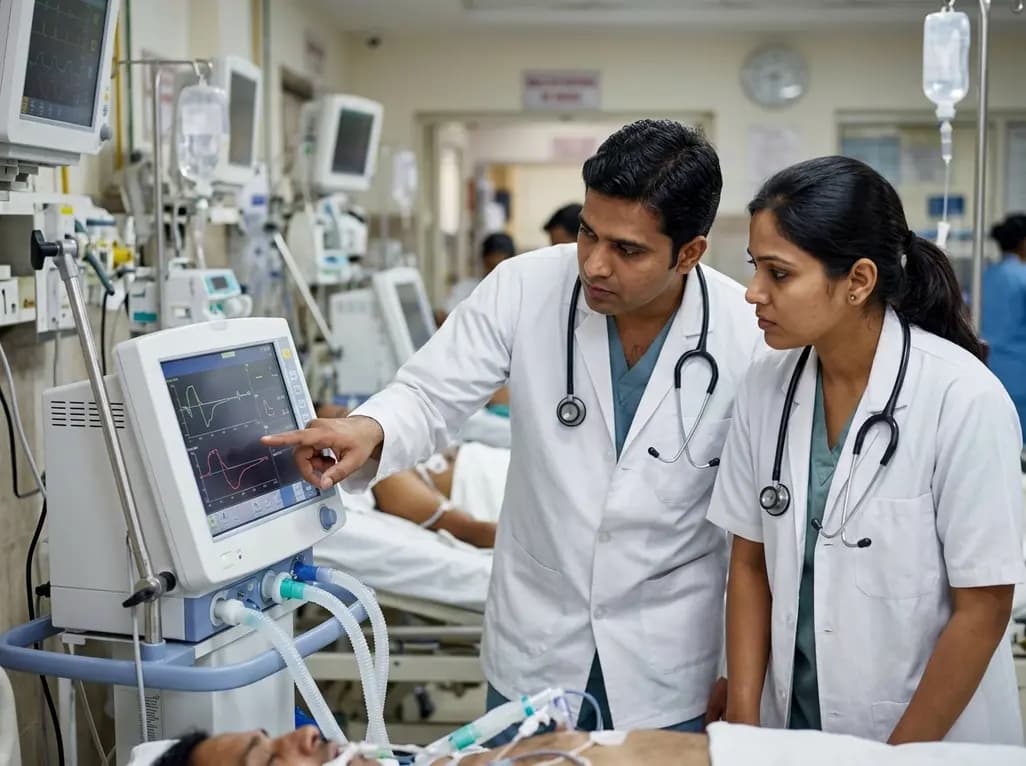
Patient-ventilator asynchrony identification remains a significant challenge for clinicians managing critically ill patients in the intensive care unit (ICU). This complex phenomenon occurs when there is a mismatch between the patient's neural respiratory drive and the mechanical support provided by the ventilator. Studies suggest that nearly one-quarter of all mechanically ventilated patients experience frequent asynchronies. Consequently, these events often lead to prolonged ventilation, increased sedation needs, and higher mortality rates. Therefore, the ability of ICU staff to recognize these interactions early is vital for safe ventilatory management. However, identifying these subtle events on a ventilator screen requires significant expertise and bedside clinical acumen. This systematic review and meta-analysis shed light on the specific factors that influence how well professionals identify these events. Specifically, it examines variables such as professional background, formal training, and years of clinical experience. In India, where ICU beds are often managed by a diverse mix of medical professionals, understanding these factors is crucial for standardizing respiratory care. Furthermore, as mechanical ventilation technology becomes increasingly complex, the human factor in monitoring remains the most critical link in the chain of survival. By analyzing recent data, we can better understand how to train our multidisciplinary teams effectively and improve overall patient safety.
Formal training significantly influences the accuracy of patient-ventilator asynchrony identification among healthcare workers. The recent meta-analysis demonstrates that healthcare professionals who receive targeted education in mechanical ventilation perform substantially better than those without such training. Specifically, structured workshops and simulation-based learning improve the recognition of complex triggers and cycling issues. In many Indian hospitals, intensive care training varies widely between different institutions and regions. Consequently, there is often a significant gap between theoretical knowledge and practical bedside application. Moreover, the study highlights that even relatively brief educational interventions can lead to a measurable increase in diagnostic accuracy. This finding suggests that continuous medical education (CME) programs focusing on waveform analysis are essential for maintaining high standards of care. Furthermore, the systematic review indicates that professionals who actively engage in periodic refresher courses maintain higher proficiency levels over time. Therefore, hospital administrators should prioritize structured ventilation curricula for all ICU staff members, including residents and fellows. In addition to formal classroom sessions, hands-on training with real-time waveform feedback provides an invaluable learning experience for clinicians. By bridging this educational divide, healthcare systems can reduce the incidence of unrecognized asynchronies and improve clinical outcomes.
The specific role and clinical experience of a healthcare provider play a pivotal role in the successful identification of asynchronies. Interestingly, the meta-analysis found that physicians and respiratory therapists often outperform nursing staff in identifying specific types of asynchrony. This discrepancy is likely due to the depth of specialized respiratory physiology training traditionally received by these professional groups. However, since nurses are at the bedside constantly, their ability to spot subtle respiratory changes is equally important for patient safety. Experience also correlates with better identification, but it is not a perfect predictor of skill. Specifically, years of general ICU experience do not always translate to high proficiency in complex waveform interpretation. Instead, focused experience in managing difficult-to-wean cases seems to be a more beneficial predictor of competency. In the context of Indian healthcare, where doctor-to-patient ratios may be high, the role of trained nursing staff becomes even more critical. Consequently, empowering nurses with the tools for better patient-ventilator asynchrony identification could significantly improve monitoring frequency. Furthermore, interdisciplinary rounds that include discussions on ventilator waveforms can help bridge the knowledge gap between different roles. By fostering a collaborative environment, ICU teams can utilize the collective experience of all members to ensure no mismatch goes unnoticed.
Proficiency in waveform analysis is the cornerstone of effective patient-ventilator asynchrony identification. Clinicians must be able to interpret pressure, flow, and volume scalars in real-time to detect issues like double triggering or ineffective efforts. The meta-analysis points out that visual inspection of these waveforms is currently the most common method of identification in clinical practice. Unfortunately, this method is highly subjective and remains prone to human error, even among experienced specialists. Specifically, the sensitivity of clinicians in identifying asynchrony via waveforms is often lower than what is required for optimal management. This reality highlights a critical need for standardized assessment tools and improved waveform education across all medical specialties. Moreover, the introduction of advanced monitoring software and automated detection systems might assist clinicians in the future. However, these technologies are not yet universally available, especially in resource-constrained settings across India. Consequently, the reliance on manual waveform interpretation remains high in most intensive care units. Furthermore, understanding the underlying pathophysiology of different asynchronies allows clinicians to adjust ventilator settings more logically. For instance, recognizing an ineffective trigger requires an understanding of auto-PEEP and trigger sensitivity settings. Therefore, mastering the art of waveform reading is not just a technical skill but a clinical necessity for modern critical care.
Adapting these meta-analysis findings to the Indian clinical landscape is essential for improving local critical care standards. In India, the ICU environment is often characterized by a high volume of patients and a wide variety of ventilator brands. Consequently, patient-ventilator asynchrony identification becomes even more complex due to this equipment heterogeneity. The systematic review underscores the importance of standardized training, which is particularly relevant for Indian hospitals aiming for international quality accreditation. Moreover, the integration of dedicated respiratory therapists into the core ICU team is still an evolving practice in many parts of the country. In addition, the high burden of acute respiratory distress syndrome (ARDS) and tropical respiratory diseases in India necessitates precise ventilatory management. Furthermore, the meta-analysis suggests that odds ratios for successful identification improve significantly with specialized certifications. Therefore, Indian medical societies should consider developing national guidelines for ventilator competency and certification. Such initiatives would provide a clear benchmark for ICU professionals across different states and hospital types. Moreover, leveraging digital health platforms for remote waveform monitoring could help smaller centers access expert advice. By addressing these systemic factors, the quality of respiratory care can be elevated nationwide, leading to shorter ICU stays for ventilated patients.
Looking ahead, the future of patient-ventilator asynchrony identification lies in a combination of better education and advanced technological support. While human expertise remains paramount, new tools such as artificial intelligence and machine learning are showing promise in assisting waveform analysis. Specifically, these systems can provide real-time alerts to bedside clinicians, prompting them to re-evaluate ventilator settings before complications occur. However, the systematic review emphasizes that technology cannot replace the clinical judgment of a well-trained professional. Therefore, the focus must remain on strengthening the human element through continuous education. Moreover, future research should explore the impact of specific teaching methodologies, such as virtual reality or gamified learning, on clinician proficiency. In addition, there is a need for multi-center trials to validate the efficacy of standardized asynchrony identification protocols in diverse clinical settings. As our understanding of patient-ventilator interaction deepens, so too must our commitment to professional development. Consequently, regular auditing of ventilator management practices within the ICU can identify areas for improvement. By staying updated with the latest evidence, ICU professionals can ensure they are providing the most sophisticated care possible. Furthermore, fostering a culture of curiosity regarding ventilator waveforms will ultimately benefit both the medical staff and the patients they serve.
The primary factors include formal specialized training in mechanical ventilation, the specific professional role (such as physician or respiratory therapist), and focused clinical experience. Specifically, those who undergo targeted workshops show much higher accuracy. Additionally, professionals who regularly manage complex respiratory cases develop better pattern recognition skills. Consequently, a combination of structured education and consistent bedside practice is the most effective way to improve diagnostic proficiency in the ICU.
Waveform analysis is difficult because it requires a deep understanding of respiratory mechanics and the ability to interpret dynamic visual data in real-time. Many asynchronies, such as ineffective triggers, are subtle and easily missed during a routine bedside check. Moreover, different ventilator models display waveforms differently, which can lead to confusion. Furthermore, the lack of standardized training across various healthcare disciplines means that many clinicians never master the nuances of flow and pressure scalars.
Asynchrony significantly hinders recovery by increasing the work of breathing and causing patient discomfort. This often leads to a higher requirement for sedatives and neuromuscular blocking agents, which can prolong the duration of mechanical ventilation. Specifically, frequent asynchronies are linked to higher rates of ventilator-induced lung injury and diaphragmatic dysfunction. Consequently, patients may face longer ICU stays and an increased risk of mortality if these issues are not identified and corrected promptly.
Disclaimer: This content is for informational and educational purposes only. It does not constitute professional medical advice, diagnosis, or treatment. Always seek the advice of your physician or other qualified healthcare provider with any questions you may have regarding a medical condition. Refer to the latest local and national guidelines for clinical practice.
References
Enriquez-Popayan AM et al. Factors associated with intensive care professionals' ability to identify patient-ventilator asynchronies: A systematic review and meta-analysis. Intensive Crit Care Nurs. 2026 Jul 12. doi: undefined. PMID: 42437551.
Thille AW, Rodriguez P, Cabello B, Lellouche F, Brochard L. Patient-ventilator asynchrony during assisted mechanical ventilation. Intensive Care Med. 2006 Oct;32(10):1515-22.
Blanch L, Villagra A, Sales B, et al. Asynchronies during mechanical ventilation are associated with mortality. Intensive Care Med. 2015 Apr;41(4):633-41.
"
Read summarized clinical updates, watch expert medical content, and earn CME certifications right from your smartphone.
Open your smartphone camera to scan and install.





Patient-ventilator asynchrony is common and dangerous. A new meta-analysis identifies the key factors, including training and professional role, that determine how well ICU staff can identify these events to improve patient outcomes.
Last week

A community survey in Blantyre, Malawi, shows that sex differences in tuberculosis immunoreactivity emerge during early adulthood, peaking at age 21 with 1.58-fold higher conversion risk in males. Tobacco and alcohol use drive community transmission, highlighting the need for targeted active case finding.
Yesterday

An 11-year Swedish registry study of 618 uterine sarcoma patients found that minimally invasive surgery yielded survival comparable to open surgery in early stages. However, adjuvant chemotherapy conferred no survival benefit in localized or advanced disease, highlighting stage and histology as key outcomes.
Yesterday

A cross-sectional study evaluates post-intensive care syndrome in cardiac patients 2-4 weeks post-ICU discharge, highlighting cognitive, psychological, and functional impairments and the need for structured multidisciplinary rehabilitation.
Yesterday
Anterior cruciate ligament reconstruction failure lacks uniform definition. A narrative review proposes an integrative framework incorporating objective and subjective instability, persistent pain, restricted motion, graft rupture, and secondary meniscal injury to standardize clinical reporting.
Yesterday
A UK Biobank study of 471,540 participants reveals that metabolic syndrome increases incident gastric cancer risk by 36% (HR=1.36). A positive trend was observed with accumulating metabolic components, with waist circumference showing the strongest association, highlighting modifiable risk targets.
2 days back
