.webp&w=384&q=75)

Loading, please wait...
Loading, please wait...
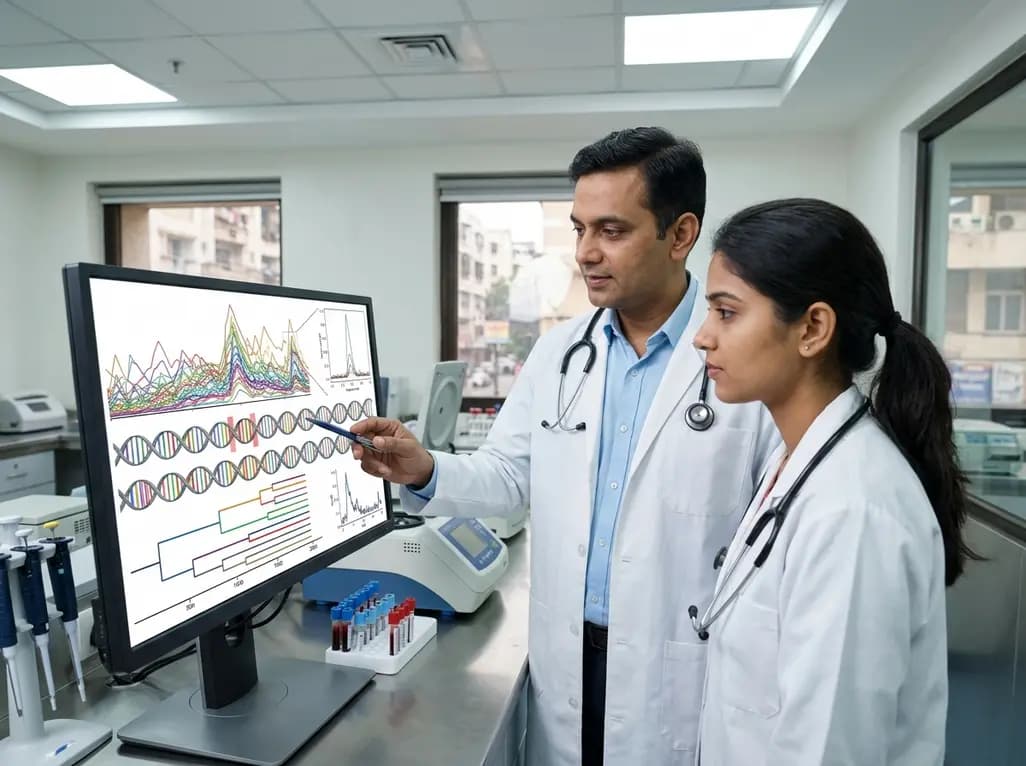
The landscape of oncology has shifted remarkably toward non-invasive diagnostic tools, particularly with the rise of liquid biopsies. For clinicians managing metastatic disease, ctDNA monitoring in melanoma has emerged as a cornerstone for tracking therapeutic efficacy and detecting early relapse. Traditionally, physicians relied on radiographic imaging and tissue biopsies to gauge patient progress. However, these methods often lack the temporal resolution required to capture the rapid evolutionary shifts of advanced tumors. Liquid biopsy technology, which analyzes circulating tumor DNA (ctDNA) shed into the blood, provides a real-time molecular snapshot of the cancer's genetic landscape. Consequently, this allows for more precise adjustments to treatment regimens, especially during complex therapies like immunotherapy. While conventional digital PCR (dPCR) and next-generation sequencing (NGS) have paved the way, they often face limitations regarding cost, turnaround time, and the ability to detect mutations in difficult genomic regions. Recent advancements in multiplexed technologies now offer a more granular view of tumor dynamics. By utilizing novel chemistries, researchers can now track multiple variants simultaneously, ensuring that even low-level subclonal changes do not go unnoticed during the patient's journey.
Universal Signal Encoding PCR, commonly known as USE-PCR, represents a significant technological leap in the field of digital PCR. Unlike standard digital PCR platforms that are typically limited to a few targets per reaction, USE-PCR utilizes a highly multiplexed chemistry. This innovation enables the measurement of up to 32 tumor-informed targets within a single reaction well. This capacity is particularly beneficial for complex malignancies where multiple mutations drive disease progression. Furthermore, the automated cloud-based workflow associated with this technology allows for the rapid design of subject-specific panels. These bespoke panels are tailored to the unique mutational profile of an individual patient's tumor, identified through initial sequencing. Notably, the USE-PCR methodology maintains high analytical performance even when incorporating new variants mid-treatment. This flexibility ensures that as the tumor evolves and new resistance mutations emerge, the monitoring tool can adapt without losing sensitivity. For oncology practices, this translates to a highly scalable and cost-effective alternative to frequent NGS runs. Moreover, the streamlined nature of the workflow significantly reduces the turnaround time, providing clinicians with actionable data much faster than traditional sequencing methods would allow.
One of the primary challenges in melanoma diagnostics is the presence of mutations in GC-rich and historically difficult-to-amplify regions. The TERT promoter is a prime example of such a locus, often serving as a critical driver in melanoma pathogenesis. Traditional sequencing and PCR-based assays frequently struggle with these areas, leading to potential false negatives or incomplete molecular tracking. However, USE-PCR has demonstrated exceptional performance in resolving these challenging loci. By successfully quantifying TERT promoter variants, clinicians gain a more comprehensive understanding of the tumor burden. Furthermore, the ability to multiplex multiple targets ensures that the assay remains robust even if the tumor sheds DNA at low levels. When monitoring ctDNA monitoring in melanoma, relying on a single variant can be risky due to tumor heterogeneity and subclonal fluctuations. By tracking a diverse array of markers, the assay provides a redundant and reliable signal of disease presence. Additionally, interpreting these results against a background of peripheral blood mononuclear cell (PBMC) genomic DNA helps eliminate false positives arising from clonal hematopoiesis of indeterminate potential. This level of analytical rigor is essential for making definitive clinical decisions based on liquid biopsy results.
The timing of blood collection is just as critical as the technology used for analysis. Historically, ctDNA surveillance has occurred at infrequent intervals, often mirroring the three-month schedule of radiographic imaging. However, recent data suggest that dense longitudinal sampling—collecting samples as frequently as every 20 days—uncovers rapid molecular shifts that less frequent intervals miss. During immunotherapy, tumors can exhibit complex response patterns, including pseudo-progression and mixed responses. Dense sampling allows oncologists to observe these fluctuations in real-time. For instance, a rapid decline in variant allele fractions (VAF) can provide early reassurance of treatment response long before it is visible on a PET-CT scan. Conversely, a sudden uptick in ctDNA levels can serve as an early warning of molecular recurrence. This proactive approach enables clinicians to consider treatment escalation or therapeutic switches much earlier than previously possible. In addition, the continuous nature of this monitoring helps distinguish between transient fluctuations and true disease progression. Consequently, patients can be spared unnecessary toxicity from ineffective treatments while ensuring that those needing aggressive intervention receive it promptly.
The sensitivity of USE-PCR allows for the detection of subclonal variants at extremely low levels, specifically below the 0.2% variant allele fraction threshold. This capability is vital because subclonal populations often drive treatment resistance and late-stage recurrence. By identifying these low-level shifts, physicians can observe the internal dynamics of the tumor as it responds to selective pressures from therapy. Notably, the study of longitudinal trajectories revealed that some variants might disappear while others persist, indicating a mixed response at the molecular level. Such high-resolution data provide a deeper understanding of clonal evolution than a single total ctDNA value ever could. Furthermore, the integration of automated workflows ensures that these complex data sets are interpreted accurately and efficiently. The use of subject-specific variants means that the background noise is minimized, and the signal-to-noise ratio is maximized. As a result, the molecular phenotypes discovered—ranging from clear response to stable disease—offer a refined prognostic outlook. This level of detail is particularly relevant in the era of precision medicine, where every patient's tumor is treated as a unique biological entity requiring a tailored management strategy.
Looking forward, the implementation of multiplexed digital PCR tools like USE-PCR could redefine the standard of care for melanoma and other solid tumors. The balance of cost, speed, and analytical depth makes it an attractive option for clinical integration, especially in regions with high patient volumes. In India, where healthcare infrastructure is rapidly evolving, the adoption of cost-effective liquid biopsy tools can significantly enhance patient outcomes in oncology. Furthermore, as we move toward more personalized vaccination and targeted therapy protocols, the need for bespoke monitoring tools will only grow. The ability to incorporate new targets into existing panels without compromising performance allows for a truly dynamic monitoring experience. Additionally, the robustness of the platform on low-input DNA samples makes it accessible for patients with low-shedding tumors or those early in their disease course. Ultimately, the goal is to shift from reactive to proactive cancer management. By utilizing dense ctDNA monitoring in melanoma, clinicians can stay one step ahead of the disease, adjusting therapies based on molecular signals that precede clinical symptoms. This evolution in practice promises to improve survival rates and enhance the quality of life for patients globally.
USE-PCR is specifically designed to handle difficult genomic regions that often fail in standard sequencing or digital PCR assays. Its unique chemistry and highly multiplexed approach allow it to maintain high sensitivity in GC-rich areas, such as the TERT promoter. This is critical for melanoma patients, as these mutations are frequent drivers of disease. Consequently, USE-PCR provides a more complete and accurate molecular profile, ensuring no vital markers are missed.
High-frequency or dense longitudinal sampling, often occurring every 20 days, captures rapid molecular changes that quarterly imaging or infrequent blood draws might overlook. This provides an early look at how the tumor is responding to immunotherapy or targeted drugs. By identifying molecular recurrence or treatment failure weeks or months before clinical symptoms appear, oncologists can make faster, more informed decisions regarding treatment adjustments, potentially improving patient outcomes significantly.
Correcting the variant allele fraction (VAF) against the background of peripheral blood mononuclear cell (PBMC) DNA is essential for diagnostic accuracy. This process helps clinicians distinguish between true tumor-derived mutations and those resulting from clonal hematopoiesis of indeterminate potential (CHIP). By filtering out these non-malignant background mutations, the assay ensures that the results specifically reflect the tumor's status. This level of precision is vital for avoiding false positives and ensuring appropriate therapy.
Disclaimer: This content is for informational and educational purposes only and does not constitute medical advice or a professional relationship. Always seek the advice of a physician or other qualified health provider with any questions you may have regarding a medical condition. The information provided is based on current research and may evolve as new data becomes available. Refer to the latest local and national guidelines for clinical practice.
References
Fischer AG et al. Individualized Longitudinal ctDNA Monitoring in Melanoma Using Multiplexed USE-PCR. Mol Diagn Ther. 2026 Jul 02. doi: 10.1007/s40291-026-00862-5. PMID: 42393480.

Read summarized clinical updates, watch expert medical content, and earn CME certifications right from your smartphone.
Open your smartphone camera to scan and install.





USE-PCR advances ctDNA monitoring in melanoma by tracking up to 32 targets, including difficult TERT promoter regions. Dense sampling identifies subclonal shifts below 0.2% VAF, offering oncologists a high-resolution tool for monitoring immunotherapy response and detecting molecular recurrence early.
3 weeks back

A community survey in Blantyre, Malawi, shows that sex differences in tuberculosis immunoreactivity emerge during early adulthood, peaking at age 21 with 1.58-fold higher conversion risk in males. Tobacco and alcohol use drive community transmission, highlighting the need for targeted active case finding.
2 days back

An 11-year Swedish registry study of 618 uterine sarcoma patients found that minimally invasive surgery yielded survival comparable to open surgery in early stages. However, adjuvant chemotherapy conferred no survival benefit in localized or advanced disease, highlighting stage and histology as key outcomes.
2 days back

A cross-sectional study evaluates post-intensive care syndrome in cardiac patients 2-4 weeks post-ICU discharge, highlighting cognitive, psychological, and functional impairments and the need for structured multidisciplinary rehabilitation.
2 days back

Anterior cruciate ligament reconstruction failure lacks uniform definition. A narrative review proposes an integrative framework incorporating objective and subjective instability, persistent pain, restricted motion, graft rupture, and secondary meniscal injury to standardize clinical reporting.
2 days back
A UK Biobank study of 471,540 participants reveals that metabolic syndrome increases incident gastric cancer risk by 36% (HR=1.36). A positive trend was observed with accumulating metabolic components, with waist circumference showing the strongest association, highlighting modifiable risk targets.
3 days back
